
Lieferung heute & morgen

Qualitätsgarantie

Willkommens-Angebote freischalten: KOSTENLOSE Lieferung | Bis zu 80 % RABATT | Kostenlose 30-Tage-JoyPlus-Testphase
App herunterladen
A glass vase often looks straightforward in product images: transparent material, decorative shape, suitable height. In practice, however, a few details determine whether it will stand steadily in everyday use, be easy to clean, and suit the flowers you have in mind. This applies just as much to a single glass flower vase as it does to a vase set for wedding decor.
A tall glass vase may be suitable for long-stemmed roses, lilies or pampas grass, but it needs a sufficiently wide and stable base. Conversely, short stems can quickly lose their grip in a large glass vase. What really matters, therefore, is not just the overall height, but also the opening diameter, base area and shape of the vase neck.
A clear glass vase can look transparent, yet still have delicate edges or a thin base. Details such as "thick-walled", "reinforced base" or "borosilicate glass" should therefore be read more carefully. They don't replace careful handling, but they do give clues about the construction. Handmade products may also have slight colour variations or tiny air bubbles.
Limescale marks and plant residue are immediately noticeable on a transparent vase. A narrow opening makes cleaning difficult, while textured or faceted surfaces may need more care. Before buying, you should be clear about whether the vase needs to be hand-washed and whether the manufacturer provides information on dishwasher safety.
For single branches, small bouquets or a table vase, 8 to 15 centimetres in height is often enough. Small glass vases are easy to group together and work well for table decorations, party favours or narrow windowsills.
A glass vase around 20 to 25 centimetres offers more flexibility for tulips, roses, eucalyptus and medium-height arrangements. For long branches, orchids or pampas grass, models around 30 centimetres or taller are suitable. An opening of about 2 to 6 centimetres often keeps single stems upright; for generous bouquets, a larger diameter is more practical.
A decorative vase should sit on a level, stable surface. A thick base, a wide footprint and a suitable weight reduce the risk of tipping over, especially with tall arrangements. This is also relevant for a vase for artificial flowers, as fake branches can be lightweight but top-heavy.
If you have children or pets, place the glass vase out of reach and away from table edges. The maximum load capacity is not stated for many models, so heavy branches or overly large bunches of flowers should be avoided.
A clear glass vase draws attention to the flowers and water, and works with a variety of interior styles. A coloured glass vase, on the other hand, makes a statement of its own. Brown or green glass, for example, suits natural dried arrangements, while faceted or wavy finishes act more as standalone decorative pieces.
For a hydroponic vase or a glass terrarium, good visibility of the water and roots, plus a suitable opening, are important. With small plant stations, you should also check whether the vase is actually intended as a planter and what components are included in the delivery.
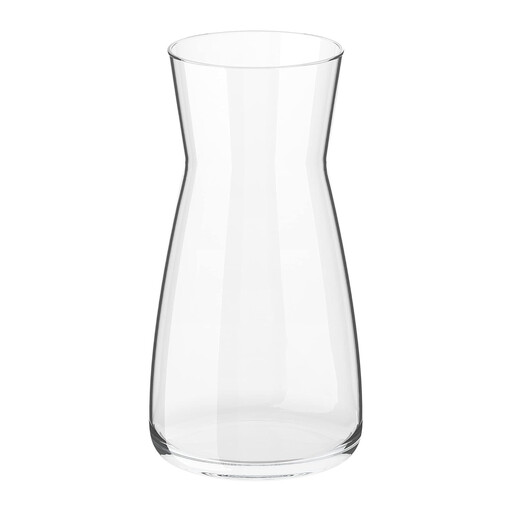
Why this product fits the profile: The 20 cm tall table vase is designed for flower arrangements and dried flowers, and remains compact to use thanks to its reinforced base.
Height and diameter are clearly stated. The polished rim and thicker base provide verifiable construction details rather than vague marketing claims.
20 cm height, 8.5 cm diameter and smooth surface; according to the product description, suitable for both fresh and dried flowers.
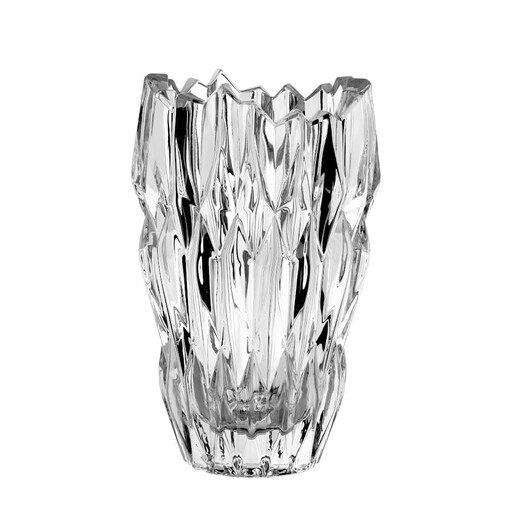
Why this product fits the profile: The geometric rhombus structure and wavy rim make the vase a visible decorative element even without flowers.
The product description states the material, height and usage limits. This makes it easier to match your choice to bouquet size and available space.
24.5 cm height, textured glass surface and, according to the description, a reinforced glass construction; suitable for single stems up to larger flower arrangements.

Why this product fits the profile: Five differently shaped glass vases within the set can be used as a hydroponic station, small planters or decorative table objects.
The different sizes and wider base make grouping easier. The delivery contents are clearly described: five vases in different mushroom shapes.
Clear borosilicate glass according to the product description, multiple shapes and uses for small plants, cuttings or branches.
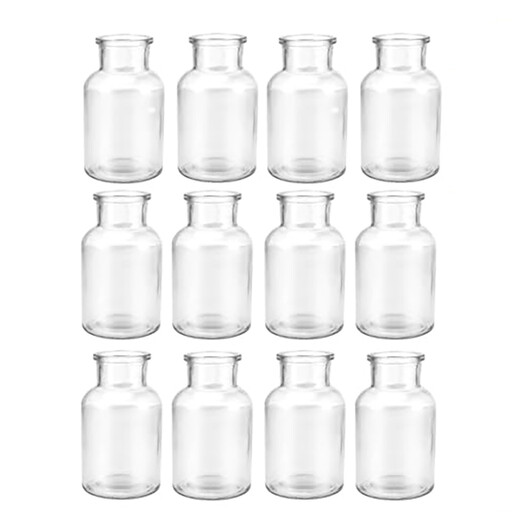
Why this product fits the profile: Twelve matching small glass vases with jute string are ideal for coordinated table rows, centrepieces and wedding decor.
The quantity and capacity of 125 ml per vase are stated. This makes it easier to calculate the requirements for multiple tables.
Delivery includes twelve vases, slim shape, jute strings and, according to the product description, dishwasher-safe.
We have put together a complete, regularly updated list of products that fully meet these strict selection criteria and the safety regulations in force in the EU.
For fresh flowers, the opening should be large enough for the number of stems. A stable base and an easy-to-clean interior are practical. A narrow vase is sufficient for single branches; a full bouquet usually needs a wider opening.
The lifespan depends on the glass thickness, workmanship, location and care. Glass can break from impact, thermal shock or tipping over. Careful cleaning, a stable surface and following the manufacturer's instructions all contribute to safe use.
Yes. Small glass vases can be arranged individually or in groups on dining tables, windowsills and sideboards. For events, sets with several identical vessels are particularly convenient, because flowers, dried flowers or individual branches can be evenly distributed across multiple places.