
Lieferung heute & morgen

Qualitätsgarantie

Willkommens-Angebote freischalten: KOSTENLOSE Lieferung | Bis zu 80 % RABATT | Kostenlose 30-Tage-JoyPlus-Testphase
App herunterladen
Glass vases often look similar in product photos, but can differ considerably in everyday use. A slim glass vase for flowers may be suitable for individual stems, but could tip over more easily with a heavy bouquet. A large model offers more room, but requires a stable surface. Sets also deserve a closer look: not every small glass vase is intended for fresh flowers, and not every decorative glass vase is dishwasher-safe.
Three typical purchasing problems occur particularly often:
The dimensions determine which floral arrangements will fit into a vase. A table vase approximately 8 to 12 cm high is often suitable for short stems, small bouquets or individual flowers. For a vase for dried flowers, the length and rigidity of the stems are also important.
A large glass vase measuring 24 to 30 cm in height can accommodate long-stemmed roses, tulips, branches or pampas grass. When checking the dimensions, consider not only the height but also:
Glass vases are available with transparent, coloured, textured and faceted surfaces. A transparent glass vase makes the water level and stems visible and suits a wide range of interior styles. Coloured glass vases, on the other hand, create a statement of their own and can also be used empty as a glass vase for decoration.
Look for clear details such as glass material, wall thickness, smooth edges and a stable base. “Unbreakable” is a particularly important claim to scrutinise when used for glass. Even thick glass remains vulnerable to knocks and sudden changes in temperature. With handmade or coloured models, slight variations in colour, bubbles or surface finish may occur.
Not every glass vase is dishwasher-safe. Some models specifically recommend hand-washing with a soft cloth and mild cleaning product. Information about dishwasher suitability should therefore be included directly in the product description.
For weddings, birthdays and larger events, flower vase sets containing several identical or colour-coordinated vases can be a practical choice. If the vases need to be set up and taken down frequently, consistent dimensions, secure packaging and easy cleaning are also important. Candles, reed diffusers and small plants each have their own usage requirements. A vase should not automatically be used for every one of these purposes.
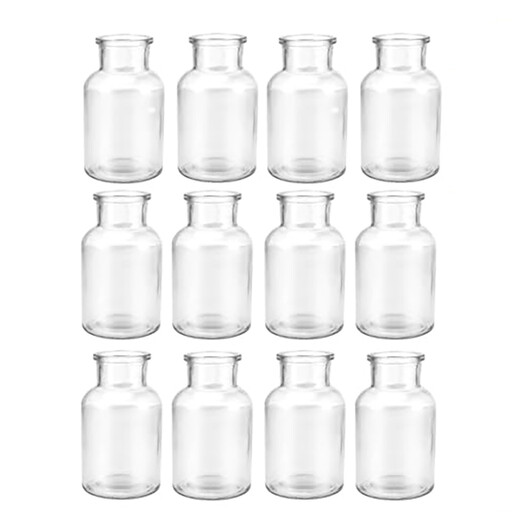
Why this product suits the profile: The set contains 12 slim mini glass vases, each with a capacity of 125 ml and attached jute string. This makes it easy to style several table settings, small celebrations or DIY projects in a coordinated way.
The quantity and individual dimensions are clearly stated. This makes it easier to assess before buying whether the vases are suitable for short stems and small arrangements.
12 vases, slim design, jute string and dishwasher-safe according to the product details.
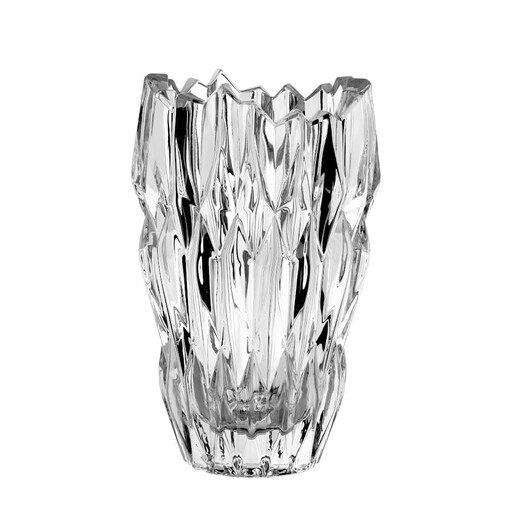
Why this product suits the profile: At 24.5 cm tall, this vase combines a faceted surface with a geometric pattern. It is designed for bouquets on dining tables, sideboards or in entranceways, and can also be used as a decorative object without flowers.
The description specifies the height, design and suitable locations. This makes it easier to coordinate the vase with your existing furniture rather than relying solely on general style terms.
24.5 cm height, textured glass, wavy rim and thickened glass according to the product description.

Why this product suits the profile: Measuring 30 cm high and 10 cm wide, this cylindrical vase is intended for longer flower stems, orchids, roses, tulips or pampas grass. It is suitable for larger arrangements at events or in living spaces.
The height and diameter are clearly stated. Before ordering, you can therefore check whether the vase will fit the intended surface and suit the stems you plan to use.
30 cm height, 10 cm diameter, clear glass and cylindrical design for longer flowers or branches.
Place every vase on a level, stable surface and leave sufficient space between it and the edge of the table. Large arrangements should not be made unnecessarily heavy. In homes with children or pets, it is advisable to position the vase out of reach. Check glass vases for visible cracks, sharp edges or damage caused during transport before use.
For a table display, an odd number of small glass vases often creates a neat, balanced look. Different heights can add structure, but should be arranged so that sightlines and areas for movement remain clear. At weddings or events, identical mini glass vases are practical when you want several tables to have a coordinated appearance.
We have put together a complete, regularly updated list of products that fully meet these strict selection criteria and the safety regulations applicable in the EU.
For dried flowers, height, opening width and weight are key factors. Long, lightweight stems need a sufficiently tall vase with a stable base. A narrow opening gathers a small number of stems together, while a wider vase is suitable for larger arrangements. The capacity does not necessarily need to be suitable for water if the vase will be used exclusively for dried flowers.
First, check the care instructions for the specific product. If dishwasher suitability is not stated, lukewarm water, a mild cleaning product and a soft cloth are a gentle choice. Abrasive cleaners and hard brushes can damage surfaces, coatings or patterns. After cleaning, the vase should be allowed to dry completely before being stored away.
The service life depends on the glass thickness, finish, cleaning method and how the vase is handled. With careful use, glass can be reused repeatedly, but it remains susceptible to breakage. Avoid sudden changes in temperature, hard knocks and overloading the vase with heavy branches. For seasonal decorations, padded storage helps protect against scratches and transport damage.