
Lieferung heute & morgen

Qualitätsgarantie

Willkommens-Angebote freischalten: KOSTENLOSE Lieferung | Bis zu 80 % RABATT | Kostenlose 30-Tage-JoyPlus-Testphase
App herunterladen
Glass vases often look similar in product photos, but can differ considerably in everyday use. A slim glass vase for flowers may look elegant on a dining table, but might only have room for a few stems. A large glass vase is suitable for long branches or pampas grass, but requires a secure position and enough space.
If you buy based solely on colour or shape, you can easily overlook important details. Three common pitfalls are particularly relevant:
For a flower vase for table decorations, compact models measuring around 8 to 12 cm in height are practical for individual blooms, short stems or small dried-flower arrangements. Small glass vases can also be arranged in groups, making them suitable for weddings, birthdays and other events.
A medium-sized vase measuring around 20 to 25 cm offers more creative flexibility. It can hold individual roses, tulips or small bouquets, and usually fits on sideboards, bedside tables or shelves. A large glass vase measuring around 30 cm in height is an appealing option for long stems, branches, orchids or a vase for pampas grass. Measure the available space before buying.
The opening determines how the arrangement sits:
A transparent glass vase leaves the water, stems and decoration fully visible. This also makes limescale and dirt easy to spot, so they should be removed regularly. With coloured glass or a coloured glass vase, the vessel itself takes centre stage. Choose the colour to complement your existing textiles, furniture and flowers.
“Thick glass” is a manufacturer’s description and should not automatically be taken to mean shatterproof. The thickness of the base, the vase’s own weight and its shape are also important. A wide, heavy base can provide greater stability for larger arrangements. With any glass product, careful handling and a level surface remain essential.
For frequent events, a vase set containing several matching vessels can simplify table planning. Check whether the individual models are described as dishwasher-safe. Decorative vases with coatings, textured finishes or metallic elements often require hand-washing with a soft cloth.
Dried flowers do not require water, but the opening should still be wide enough for the stems. A vase for dried flowers can also be combined with sand, decorative stones or small DIY elements. A glass terrarium, on the other hand, serves a different purpose: depending on the product description, it is intended for small plants, air plants or use as a tealight holder. When using candles, flames must be supervised and overheating avoided.
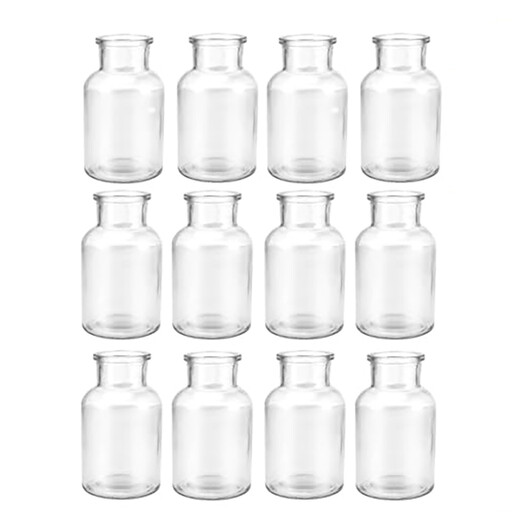
Why this product suits the profile: The set contains 12 small glass vases, each with a capacity of 125 ml, making it suitable for coordinated table decorations, DIY projects or small flower arrangements.
The number of pieces and individual size are clearly stated. This makes it easier to plan the requirements for several tables instead of buying additional vessels later.
12 vases with jute string; described as dishwasher-safe and designed for repeated use.
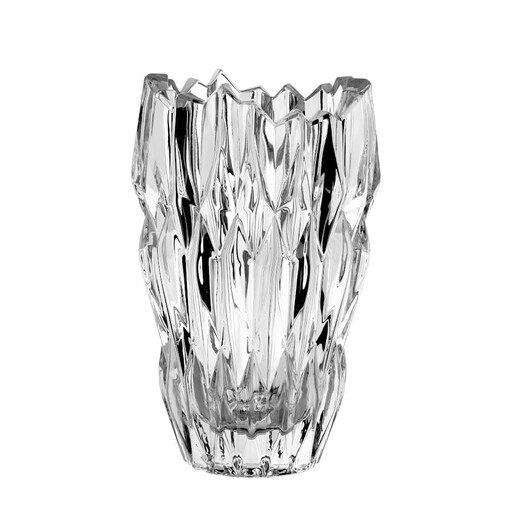
Why this product suits the profile: The textured surface and wavy rim create a decorative accent even without flowers. Measuring 24.5 cm in height, the vase is suitable for bouquets on a table, chest of drawers or desk.
The product details specify the material, dimensions and cleaning instructions. For safe use, a stable position away from children and pets is recommended.
24.5 cm height; textured glass with a smooth surface and geometric design.

Why this product suits the profile: The slim cylindrical shape is designed for long stems, orchids, roses, tulips and pampas grass. It works well with larger arrangements for home or table decorations.
The height and diameter are specified as 30 × 10 cm. The advice to use a level, stable surface helps you account for the risk of tipping with long arrangements.
30 cm height; clear glass, smooth surface and thickened construction according to the product description.
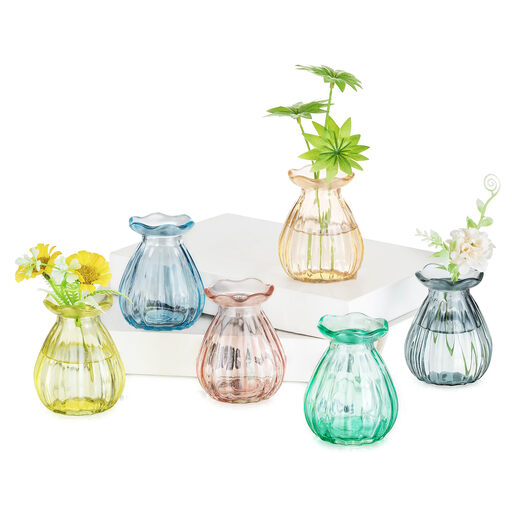
Why this product suits the profile: The set of six colours with a ribbed design is suitable for weddings, dinner parties, celebrations or a varied table display at home.
The compact height of 8.5 cm limits use to short stems, individual blooms or small bouquets. This prevents the vase from being mistakenly planned for long, top-heavy arrangements.
Six coloured vases; flower-shaped opening and ribbed glass according to the product description.
We have put together a complete, regularly updated list of products that fully meet these strict selection criteria and the safety regulations applicable in the EU.
Place every vase on a level, stable surface and avoid the edges of tables or shelves. With larger models, take the weight of the vase, water and decoration into account. Long branches can shift the centre of gravity. Children and pets should not have unsupervised access to glass vessels.
For cleaning, lukewarm water, a mild cleaning product and a soft cloth are usually sufficient. Abrasive products can make the surface look cloudy. Depending on the material’s compatibility, limescale can be removed with a mild cleaning solution; always follow the specific care instructions for the product concerned. Glass vases with visible cracks, sharp edges or serious damage should no longer be used.
Small to medium-height models are generally easier to position on a dining table. A table vase should not significantly obstruct the view between diners. When hosting several guests, a vase set with low vessels can make conversation around the table easier.
The lifespan depends on the glass thickness, workmanship, handling, transport and care. Glass can break if knocked, exposed to temperature changes or dropped. Models with a stable base and careful cleaning can be used repeatedly when handled correctly, but no general lifespan can be given.
A traditional glass vase does not require electricity. Ongoing costs mainly come from water, flowers and, where applicable, cleaning products. With dried flowers, artificial flowers or a decorative arrangement without water, these costs are lower. A glass terrarium with a tealight, however, should only be used under constant supervision.