Start by choosing a sewing machine based on the actual construction of your glasses case. For simple fabric seams, a straightforward set of basic features is a sensible starting point. If you’re using felt, lining or several layers, test the thickest section with a sample of your materials. If the machine will regularly need to be put away from a shared table, weight, footprint and storage matter too. Extra feeding or speed-control features are most relevant if you’ll actually use them.
Who this guide is for
Seamstresses making cases with thick edges
If you’re planning a felt or lined case, check whether the machine can feed your particular fabric layers and seams. FunFabric describes glasses cases made from thick wool felt or padded, lined fabric; for the 1522 LIMITED EDITION, Janome specifies a presser-foot pressure that can be adjusted in three steps.
Seamstresses using a shared table
If the machine needs to be set up and put away regularly, weight, footprint and storage are just as important as the sewing features. Elna publishes the dimensions of the eXplore 320S, while PFAFF describes the passport 2.0 as designed for small spaces and portability.
Beginners making a simple case
If you’d like to start by mastering a manageable number of seams and settings, basic mechanical features may be a good fit. TÜV SÜD considers mechanical sewing machines suitable for simple sewing tasks and occasional use; according to the manufacturer, the Brother XN1700 has a selector dial.
What to look for when buying
| What matters |
What to check before buying |
Who it matters most to |
| Fabric layers and thick edges |
Check the planned fabric construction, presser-foot lift and, if applicable, adjustable presser-foot pressure. Test the thickest section using suitable offcuts. |
If I’m making a felt or lined case, I want to know whether the machine can feed the thickest section. Around 33 % of consumers put fabric layers first. |
| Setting up and putting away |
Compare the machine’s dimensions and weight with your available table and storage space. Allow extra room for the foot control, fabric and cable. |
If the machine needs to be put away between uses, I look at its weight and footprint, without forgetting to leave room for the project. Around 25 % of consumers prioritise moving the machine off the table. |
| An easy-to-follow introduction |
Look for clear stitch selection, understandable instructions and the presser feet you need. Check that the basic features are suitable for your case. |
For my first case, or one I’ll only make occasionally, I want to feel confident using the basic controls. Around 25 % of consumers put ease of use first. |
| Fastenings and finishing touches |
Decide on the fastening in advance. If you plan to sew in a zip, check whether the right presser foot is included with the specific offer. |
If I want a particular fastening on my case, I’d like to check the steps and accessories I’ll need beforehand. Around 17 % of consumers prioritise fastenings and finishing touches. |
Avoiding common assumptions
-
“Heavy Duty” or a wide range of stitches doesn’t prove a machine can handle every thick case seam
Manufacturer claims about features or intended projects don’t show how a machine will handle your particular felt or lining seam.
Test the thickest section you’re planning to sew with suitable offcuts before cutting out several cases.
-
For a shared table, checking the machine’s width alone is enough
Your project, foot control and accessories also take up space and can affect how practical the machine is on a shared work surface.
Compare the machine’s dimensions and weight with the space available for setting it up and storing it. Allow extra room for fabric and accessories too.
-
A case project made with one brand proves that every model is suitable
Elna specifically names the eXcellence 680+ for its case tutorial; this doesn’t prove that the same construction has been tested on the eXplore 320S.
Always match project tutorials and performance claims to the specific machine model and material they refer to.
An overview of brands relevant to glasses cases
Brother
The XN1700 is an entry-level mechanical model with a selector dial and a zip foot included.
- Its mechanical controls and zip foot may be useful for straightforward case seams.
- The information about the XN1700 doesn’t prove it can handle every thick felt or lining seam, and it doesn’t automatically apply to other Brother models.
Janome
The 1522 LIMITED EDITION combines mechanical controls with presser-foot pressure that can be adjusted in three steps. The manufacturer lists several colour options.
- Adjustable presser-foot pressure and the manufacturer’s stated weight of 6 kg are features to consider if you’re working with different fabrics or moving the machine frequently.
- The manufacturer’s information about the types of fabric the machine can handle isn’t an independent test of your planned case or a guarantee for every material thickness.
elna
According to the manufacturer, the mechanical eXplore 320S has adjustable presser-foot pressure and published dimensions.
- Elna lists a zip foot and a rigid cover as standard accessories. You can also compare the published dimensions with the space you have available.
- The published glasses-case project was sewn on the eXcellence 680+ and doesn’t prove that the eXplore 320S has been tested for making cases.
PFAFF
The manufacturer describes the passport 2.0 as designed for small spaces and portability. It has built-in IDT dual feed and a speed control.
- Its stated weight of 6,3 kg and speed control are worth considering if you need to move the machine or adjust your sewing speed.
- The manufacturer’s claims about even fabric feeding aren’t an independent test using your planned felt or lining construction.
SINGER
The manufacturer positions the Heavy Duty 4423 for projects using materials such as denim and canvas; its presser-foot pressure is adjustable.
- A zip foot is listed as an included accessory and may be useful for a case with a zip.
- The “Heavy Duty” name and the manufacturer’s claims aren’t a guarantee that the machine can handle every thick case edge. An availability notice on the manufacturer’s website doesn’t tell you what other retailers have in stock.
Joybuy products for simple sewing projects
These Joybuy products are options for simple sewing projects where a compact or portable design may be useful. Check the construction of your case particularly carefully before choosing a machine for thick felt edges or multiple layers.
 No image available
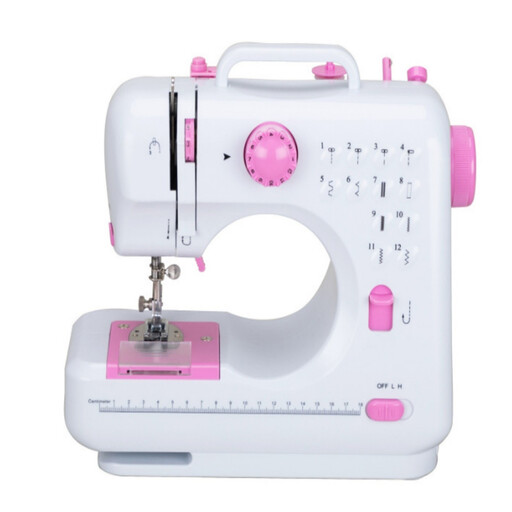
Mini household sewing machine, 12 stitch types, single- and twin-needle options
The mini design may be a good fit if you need to store the machine away from a shared table. Check how it handles your particular fabric construction before sewing thick case edges.
The product name lists 12 stitch types, single- and twin-needle options, two speed settings and a sewing kit.
View at Joybuy
 No image available
IAGREEA mini sewing machine, 12 stitches, Dual Power, pink
Described as portable in the title, this machine may suit simple sewing projects if you want to move it between uses.
The title lists 12 stitches, Dual Power and an LED light.
View at Joybuy
 No image available
IAGREEA Home mini sewing machine YASM-505A, 12 stitches, purple
The listing describes this model as portable and suitable for simple sewing projects. Before buying, check that it’s right for the materials you plan to use for your case.
The product name lists 12 built-in stitches and reverse sewing.
View at Joybuy
 No image available
Electric entry-level sewing machine, 12 stitch programmes
Described as an entry-level model in the title, this machine may be suitable for simple sewing projects. Pay particular attention to its stated material limit when choosing a machine for a case.
The product name lists a double thread, two speeds, forward and reverse sewing, and foot pedal and hand switch operation. For this model, the product description specifies a maximum material thickness of 2,5 mm or up to six layers of lightweight denim; this isn’t a guarantee that it can handle thick felt edges.
View at Joybuy
Frequently asked questions
Is a mechanical sewing machine enough for a simple glasses case?
For a simple fabric project you’ll only make occasionally, a mechanical machine can be a sensible starting point. The key considerations are the fabric construction, the seams you need and the fastening. Don’t judge whether a machine can handle a thick felt edge by the stitch count alone.
What should I do before using the machine for the first time at a shared table?
Start by reading the instructions for your specific model and familiarising yourself with threading, the bobbin, the mains connection and the foot control. Brother also recommends checking the presser foot with the machine switched off. Keep space clear on the table for fabric and the power cable.
How can I avoid needing extra accessories for a case fastening?
Before buying, decide whether you want to use a zip, for example, and check the steps involved against what’s actually included. The manufacturers list a zip foot as an included accessory for both the Brother XN1700 and the elna eXplore 320S.
Are the manufacturer’s guarantee and your statutory rights the same thing?
No. Your statutory rights are legal rights against the seller; a guarantee is a voluntary promise with its own terms and conditions. The Verbraucherzentrale recommends that, if there’s a fault, you first discuss your right to have it remedied with the seller.
What does CE marking mean on an electric sewing machine sold in Germany?
For products covered by relevant EU rules, CE marking is the manufacturer’s declaration that the product meets the applicable requirements. It isn’t an independent award or a central EU approval. In its market surveillance, the Bundesnetzagentur lists checks such as the marking, product identity, manufacturer details and German-language instructions. This does not prove that a specific listing is compliant.


