
Lieferung heute & morgen

Qualitätsgarantie

Willkommens-Angebote freischalten: KOSTENLOSE Lieferung | Bis zu 80 % RABATT | Kostenlose 30-Tage-JoyPlus-Testphase
App herunterladen
A glasses and cups set may seem straightforward at first glance. In practice, however, products can vary considerably in capacity, material, care requirements and intended use. A set may look attractive, but prove unsuitable for everyday use if the cups are difficult to stack or the glasses are intended only for cold drinks.
Three common purchasing mistakes are particularly likely to lead to unnecessary expense:
That is why choosing the right set should start with the specific product details, rather than the style.
For a set of glasses for 4 people, four or six identical glasses are practical. Water glasses holding around 24 to 30 cl are suitable for everyday use. For juice, spritzers or larger servings, 38 cl or more may be a sensible choice.
With a coffee cup set, the right size depends on the drink:
Also check whether the stated capacity reflects the actual usable volume or simply describes the maximum capacity. A glass should not be filled right to the brim.
Glass is transparent and suitable for water, juice, cocktails, wine or whisky. However, it can break if knocked. For households with children, picnics or use on the patio, plastic options made from PP or PS can be a practical alternative. Terms such as “shatter-resistant” or “splinter-free” should always be checked against the specific product details.
Ceramic cups and stoneware cups retain heat and generally feel stable in the hand. With handmade products featuring reactive glaze, colours and surfaces may vary from one piece to another. This is a design feature, not an indication that every piece will look identical.
Double-wall glasses have an insulating layer of air between the glass walls. This can make the outside more comfortable to hold when serving hot or cold drinks. Check the information relating to microwaves, dishwashers and thermal shock. Not every double-wall glass is approved for every application.
For dishwasher-safe glasses and cups, it is important to check that this feature is explicitly stated. Decorated rims, handmade glazes and delicate surfaces may benefit from gentle hand washing, even when the product is described as dishwasher-safe.
As a general rule, avoid sudden changes in temperature with glass. A cold glass should not be filled immediately with very hot liquid. For cups, also check:
Wine, whisky and cocktails involve further differences. Wine glasses usually have a stem, while whisky glasses are often compact and stable. Cocktail glasses should be selected according to their capacity and the type of drink. For example, a 6-cl glass is not comparable with a 25-cl margarita glass.
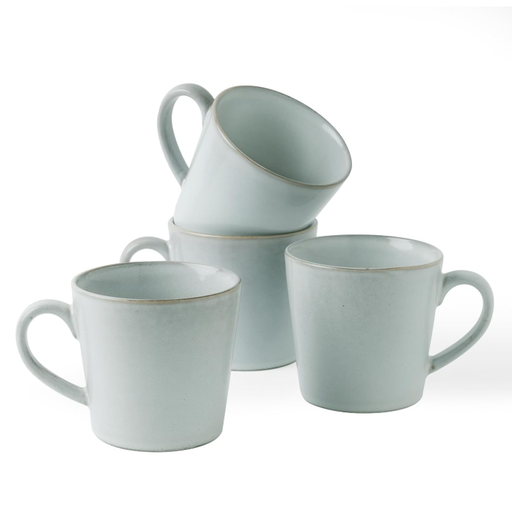
Why this product suits this profile: This four-piece stoneware set covers the everyday needs of couples, small families or an office. Each cup holds 14 oz and, according to the product information, is suitable for coffee, tea and other drinks.
The number of pieces and capacity are clearly stated. The reactive glaze also makes it clear that individual cups may look different.
Four stoneware cups, described as microwave- and dishwasher-safe; ergonomic handle.
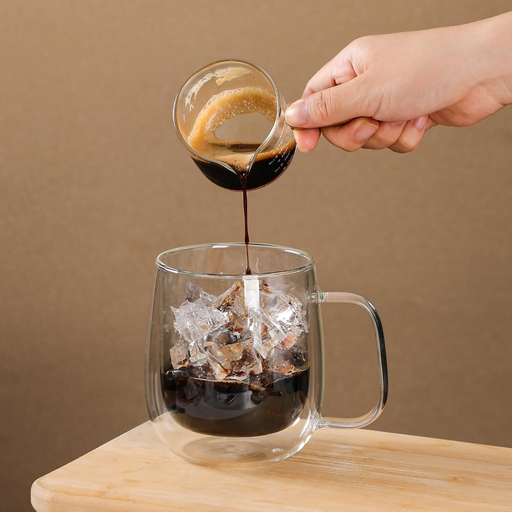
Why this product suits this profile: The double-wall construction and 350 ml capacity will appeal to coffee lovers who want to serve larger portions as well as hot and cold drinks.
The product description explicitly states that it has a double wall and handle, a 350 ml capacity and is dishwasher-safe.
Two clear glass mugs with handles; designed for hot and cold drinks and described as dishwasher-safe.
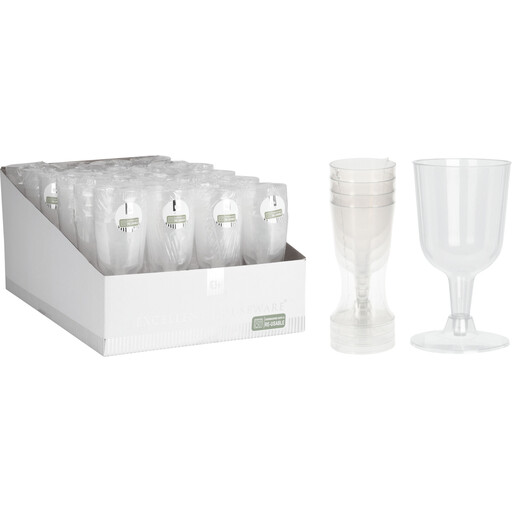
Why this product suits this profile: This four-piece polypropylene set is ideal for families, outdoor use and events where low weight and resistance to breakage are important.
The PP material specification clearly distinguishes this product from glass. This makes it easier to plan for outdoor use or households with children.
Four 160 ml PP wine glasses; described as shatter-resistant, lightweight and dishwasher-safe.
We have put together a complete, regularly updated list of products that fully meet these strict selection criteria and the safety regulations applicable in the EU.
For two people, sets containing two to four pieces are sufficient, provided they are washed regularly. For families and hosts, four to six water glasses together with matching cups are more practical. If you often host parties, an additional set of drinking glasses can be useful so that you have spares available.
This depends on the individual product. A double wall alone does not mean that a glass is approved for microwave use. Check the manufacturer’s information regarding microwaves, dishwashers and changes in temperature. If a product is not clearly labelled, it should not be used in the microwave.
Their lifespan depends on the material, how they are used, cleaning and storage. Stoneware and ceramic can be damaged at the edges if knocked. Glass is vulnerable to damage from falls and temperature changes. Plastic options are less prone to breaking in certain situations, but may develop scratches over time. Suitable storage and following the care instructions will help your tableware remain usable at home for longer.