
Lieferung heute & morgen

Qualitätsgarantie

Willkommens-Angebote freischalten: KOSTENLOSE Lieferung | Bis zu 80 % RABATT | Kostenlose 30-Tage-JoyPlus-Testphase
App herunterladen
A glasses and cups set should be practical for everyday use, complement your existing crockery and remain suitable for as long as possible. However, product images and marketing claims do not always lead to the right purchasing decision. Capacity, material and care instructions are often only considered superficially. This can mean that a set is too small for its intended purpose, reacts poorly to changes in temperature or is not suitable for the dishwasher.
The stated capacity of “200 ml” or “250 ml” usually describes the maximum volume. If the vessel is filled to the rim, however, there is little room left for foam, ice cubes or safe handling. For coffee, tea and mixed drinks, it is therefore important to consider how much can actually be served comfortably.
A 200 ml glass set, for example, is suitable for smaller soft drinks, coffee variations or individual hot drinks. For cocktails with ice, however, a cocktail glass set with a 200 ml capacity may be rather limited.
Borosilicate glass is known for its comparatively good resistance to changes in temperature. Even so, this material can be damaged by severe, sudden temperature changes. A glass taken from the freezer should not be filled immediately with boiling water. Knocks against hard surfaces can also cause breakage.
With double-walled glasses, you should also follow the care instructions provided by the relevant manufacturer. The insulating effect can make the outside more comfortable to hold, but it does not replace careful handling.
Not every glasses and cups set is automatically suitable for the dishwasher. Statements such as “easy to clean” or “low maintenance” are less clear than the specific designation “dishwasher-safe”. Metal handles, decorations or delicate surfaces may come with additional restrictions.
Before buying, you should therefore check the material, dishwasher approval and temperature instructions directly in the product details.
The size of the set should also suit your household. Two glasses are space-saving for couples or occasional use. A six-piece set is more practical if you regularly entertain guests or want all household members to use the same crockery.
Borosilicate glass is often used for double-walled coffee glasses. The material is transparent and, according to product information, may be designed to withstand heat for certain applications. Nevertheless, the individual care instructions always apply.
Crystal glass is used for some wine, cocktail and champagne glasses. The term describes the type of glass or the material composition of the particular product and should not automatically be equated with greater resistance to breakage.
Porcelain and ceramic are widely used for espresso cups and tea cups. They feel different in use from thin-walled glasses and may be dishwasher-safe, depending on the product. Metal components can restrict use in a microwave or dishwasher.
The shape has a greater influence on how a glass or cup is used than its appearance alone. A conical martini glass is designed for cocktails, while a tall champagne flute is intended for sparkling wine and Prosecco. With margarita glasses in particular, the wide rim should be paired with a suitable place to set the glass down and sufficient storage space.
For everyday use, sturdy shapes with an easy-to-grip rim are often more convenient. With double-walled cups, users should bear in mind that they may not be stackable, depending on their design.
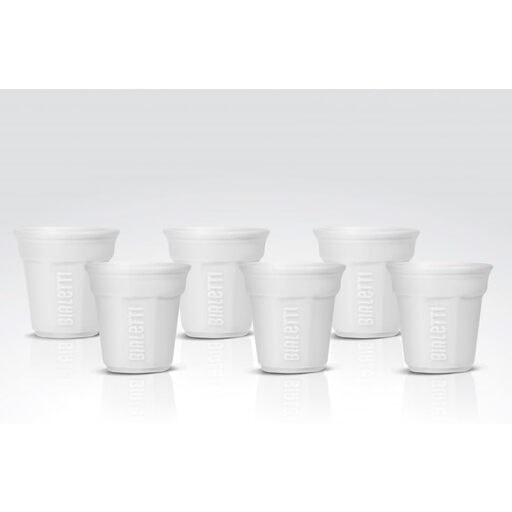
Why this product suits this profile: This six-piece espresso cup set includes six matching porcelain cups, each with a capacity of 90 ml. It is a good fit for households that want to serve espresso regularly and consistently.
The individual capacity of 90 ml and the number of pieces are clearly stated. This makes it easier to assess your needs than an unclear general description.
Porcelain, six cups, geometric shape and dishwasher-safe according to the product information.
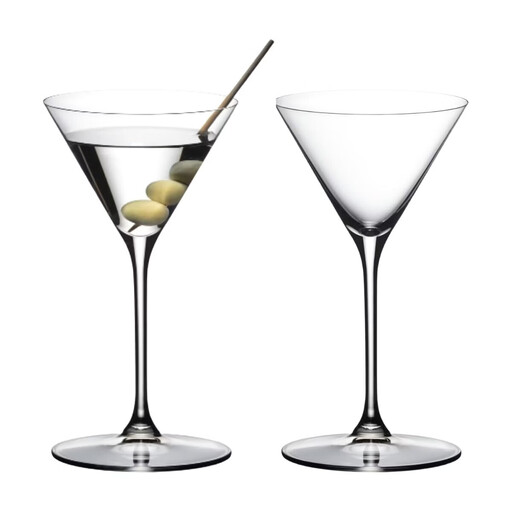
Why this product suits this profile: These two cocktail glasses made from clear crystal glass are aimed at users who want to serve martinis and similar drinks in a shape designed for them.
The 200 ml capacity, set size and dishwasher suitability are clearly specified.
Crystal glass, conical cocktail shape, two glasses and dishwasher-safe according to the product description.
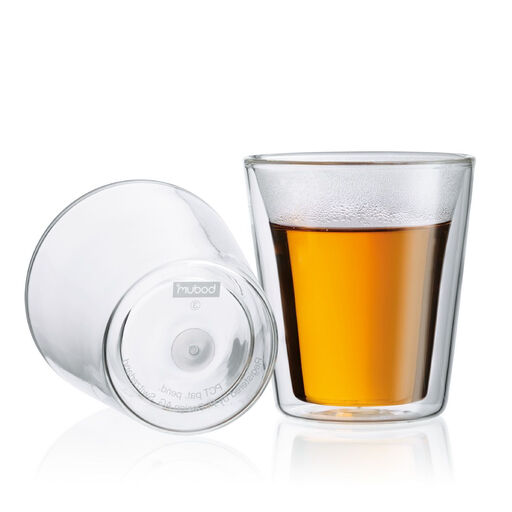
Why this product suits this profile: This six-piece set is designed for households where hot and cold drinks are regularly served in the same style of glass.
The double-walled design and 0.2 l capacity are clearly stated. Dishwasher suitability also reduces the amount of extra care required.
Six double-walled glasses made from borosilicate glass according to the product description, designed for hot and cold drinks and dishwasher-safe.
Other suitable options include the Bialetti FIRENZE SET 2 BICC 200ML with its double-walled design and the RIEDEL Champagne Flute Set with two champagne glasses and a capacity of 250 ml. For cocktails that need a wider rim, the Margarita Glass 250ml 4 is available as a set of four. If you prefer small hot drinks, the Cléa 8-cl Double-Walled Glass Espresso Cup is a double-walled espresso cup made from borosilicate glass.
We have put together a complete, regularly updated list of products that fully meet these strict selection criteria and the safety regulations applicable in the EU.
For a two-person household, two to four pieces per type of drink are often sufficient. If you regularly have guests, a six-piece set is more practical. It is important to take into account the available cupboard space and how often the items will be used.
That depends on the specific model. Some double-walled glasses are explicitly described as dishwasher-safe, while others require hand washing. The manufacturer’s information should be checked before buying and before the first wash.
For espresso, 80 to 90 ml is standard. For coffee, tea or smaller hot drinks, 200 to 270 ml may be suitable. If you add milk, foam or ice, allow a little extra room and do not fill the vessel to the rim.