
Lieferung heute & morgen

Qualitätsgarantie

Willkommens-Angebote freischalten: KOSTENLOSE Lieferung | Bis zu 80 % RABATT | Kostenlose 30-Tage-JoyPlus-Testphase
App herunterladen
A glass kettle combines a visible water level with a modern kitchen design. For families, tea and coffee lovers, or households that regularly need hot water, looks are not the only consideration. Capacity, temperature control, cleaning and safety features all determine whether the appliance remains practical over time.
A 2200-watt kettle can heat water quickly, but the actual time also depends on the amount of water added, its starting temperature and the design of the heating element. If you only need one cup, filling a 1.7-litre model to the top wastes energy unnecessarily. The water-level indicator and a clearly visible minimum mark are therefore just as important as the wattage.
A kettle with temperature control may offer several settings, fixed programmes or gradual temperature selection. A display showing the current water temperature is more practical than displaying only the target temperature. Different settings can be useful for green tea, coffee brewing or warm water. When preparing baby food, always follow the instructions on the packaging and observe the required drinking temperature.
A cordless kettle is usually lifted from its base without being connected by a cable. The power supply still comes through the base station’s mains cable. A 360-degree swivel base makes it easier to place the kettle down from different directions, while cable storage keeps the worktop tidy. Before buying, you should also check that the base is stable and that the electrical connection locks securely into place.
Heat-resistant safety glass or borosilicate glass lets you see the water level and boiling process. At the same time, the outside becomes hot during operation. A handle positioned a safe distance from the glass and a lid that closes securely are therefore important design features.
Many models combine glass with stainless steel, for example in the heating element, filter or base. The term BPA-free kettle refers to the relevant plastic components and should be stated explicitly in the product information. Aigostar models list LFGB, CE and other certifications, among others. Such details come from the respective manufacturers’ information and should not be interpreted as medical claims.
A 1.7-litre kettle is suitable for several cups or a larger household. For individuals, small kitchens or occasional use, a 1.0-litre model may take up less space. The key points are:
An automatic shut-off ends the heating process once the water reaches boiling point. Boil-dry and overheat protection can switch the appliance off if too little or no water has been added. However, these functions do not replace careful operation.
A removable limescale filter catches deposits when pouring and can be rinsed separately. With a kettle with tea infuser, the infuser should also be easy to remove. For tea residue, pieces of fruit or herbs, removable components and a wide filling opening are particularly useful. Descale the appliance according to the water hardness and frequency of use, following the instructions.
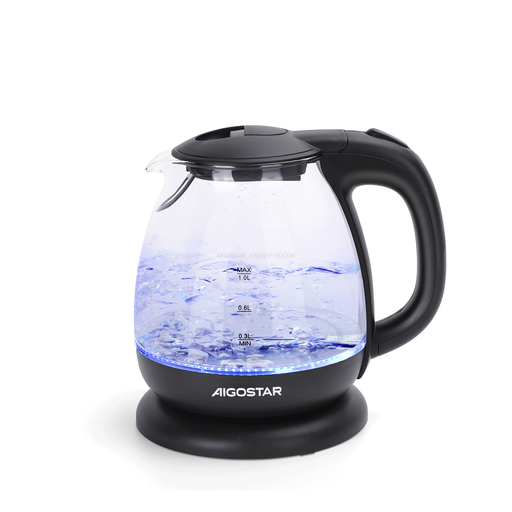
Why this product suits this profile: The compact 1.0-litre capacity is ideal for smaller households and limited worktop space. The blue LED light indicates that the water is heating.
The automatic shut-off and boil-dry protection address two common safety gaps found in simpler models. The 360-degree base makes everyday handling easier.
1.0-litre capacity, 1850–2200 watts, visible water-level monitoring and LFGB certification listed in the product description.
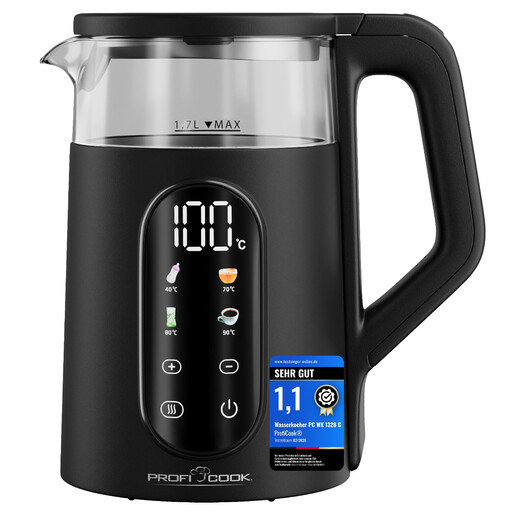
Why this product suits this profile: This model combines a 1.7-litre capacity with temperature selection from 40 to 100 °C, a real-time display and a keep-warm function. It is well suited to households that enjoy a range of hot drinks.
The temperature control is more precise than a generic rapid-boil function. The concealed stainless-steel heating element minimises contact with the water and makes cleaning easier.
40–100 °C, 1850–2200 watts, keep-warm function, touch controls, plus automatic and manual shut-off according to the product information.
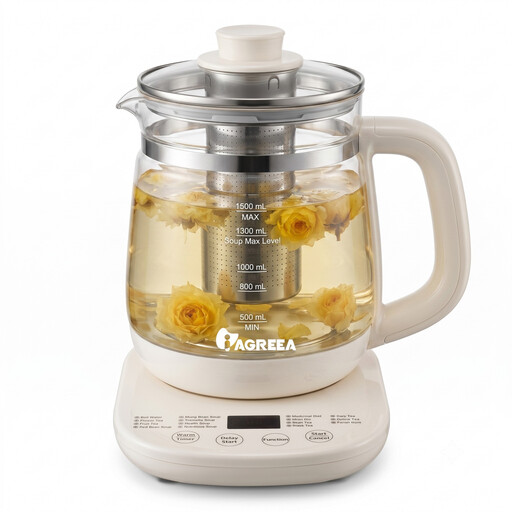
Why this product suits this profile: With 14 pre-set programmes, a tea infuser and six temperature settings, this wellness kettle is aimed at users who want to do more than simply boil water.
The wide opening and removable parts make thorough cleaning easier. Temperature selection and the keep-warm function reduce the need to reboil water for different drinks.
1.5 litres, 800 watts, six constant temperature settings, 14 programmes, a stainless-steel tea infuser and automatic keep-warm function according to the manufacturer’s description.
We have put together a complete, regularly updated list of products that fully meet these strict selection criteria and the safety regulations applicable in the EU.
For reliable operation, the water should be between the minimum and maximum marks. The lid must be closed before switching the kettle on. The glass container, base, cable and plug must not be immersed in water. Unplug the appliance and allow it to cool completely before cleaning.
Electricity costs depend on the wattage, amount of water and frequency of use. A simple guide is provided by this calculation:
Power in kilowatts × operating time in hours × electricity price per kilowatt-hour = cost.
For smaller quantities, filling the kettle with only the required amount is therefore more important than choosing the highest possible maximum wattage. Limescale in areas with hard water increases heating time and should be removed regularly. A glass kettle with a concealed heating element and removable filter can make care easier, but it still needs to be descaled regularly.
Its lifespan depends on usage, descaling, material quality and careful handling. Cracks in the glass, a damaged cable or a loose base are all reasons to stop using the appliance. Without specific warranty and manufacturer information, it is not possible to give a reliable general lifespan.
Yes, unless the manufacturer explicitly advises otherwise. If your tap water is high in limescale, the filter and interior should be checked more often and descaled according to the instructions. Visible deposits are not just an aesthetic issue; they can also affect heat transfer.
This depends on the drink and the relevant product instructions. Different types of tea are often prepared at different temperatures. For baby food, the instructions on the packaging and checking the drinking temperature are the only factors that matter. Temperature control does not replace checking the temperature before consumption.