
Lieferung heute & morgen

Qualitätsgarantie

Willkommens-Angebote freischalten: KOSTENLOSE Lieferung | Bis zu 80 % RABATT | Kostenlose 30-Tage-JoyPlus-Testphase
App herunterladen
A glass oven dish can be used to bake casseroles, serve food and store leftovers. However, not every glass dish is right for every household. Purchases often disappoint because product descriptions only mention important details in passing: the usable interior surface, the temperature limit or the lid’s restricted use.
This buying guide explains what households, keen home cooks and baking enthusiasts should look for in a glass baking dish. You will then find a selection of models for different kitchen and usage situations.
A dish measuring 29 × 29 cm needs a corresponding amount of space in the oven, on the kitchen shelf and in the dishwasher. However, the inner dimensions determine the surface that can actually be used. High sides can increase the capacity, but they also take up more storage space.
Before buying, check:
A glass oven dish with lid is practical for storing food. However, the lid is often made of plastic and must not automatically be placed in the oven or microwave. The lid of the 5five Keepeat measuring 22 × 22 cm is made of polypropylene; according to the product information, it is not suitable for the oven, microwave or dishwasher. The glass dish itself, on the other hand, is described as suitable for these uses.
The lid should therefore only be fitted once the dish has cooled down. The specific care and temperature instructions for the product in question take priority.
Glass can be designed for high oven temperatures and still be damaged by an abrupt change. Do not place a hot oven-safe glass dish directly on a cold stone worktop, and do not put a frozen dish straight into a fully preheated oven unless the manufacturer expressly permits this.
Cracks, chips and deep scratches are also reasons to stop using a dish. Damaged glass dishes should not be used further.
Some models, such as the 5five Keepeat range, are made from borosilicate glass, according to the product information. This material is often used in kitchen products when a dish is intended to withstand changing temperatures. However, this does not mean that the dish is protected against every thermal shock.
When choosing a general-purpose glass baking dish, pay particular attention to the suitability explicitly stated:
For the products listed, the stated oven limits range from up to 300 °C or 400 °C, depending on the model. A higher rating is only relevant if you actually need to use that temperature in your kitchen.
A square glass baking dish often makes efficient use of the available space for lasagne, potato bakes or brownies. A round glass baking dish is suitable for cakes, quiches and tarts. An oval oven dish can be practical for elongated dishes or for serving food at the table.
As a guide:
The capacity is not the same as the recommended filling level. When preparing food that rises significantly, leave enough space below the rim.
Buying a dishwasher-safe oven dish reduces the cleaning required. However, check whether this applies only to the glass or to the lid as well. Plastic lids often have different restrictions.
A microwave-safe oven dish allows you to heat food directly in the dish. Metallic decorations, plastic lids and damaged glass must not be used in the microwave. For freezing, the product description should explicitly state that the dish is suitable.

Why this product suits the profile: The square shape provides a useful surface for classic oven dishes and cakes. It has a capacity of 4.2 litres.
The product information specifies the shape, dimensions and capacity, as well as suitability for the oven, microwave, freezer and dishwasher.
4.2-litre capacity, 29 × 29 × 6 cm dimensions and stated oven use up to 300 °C.
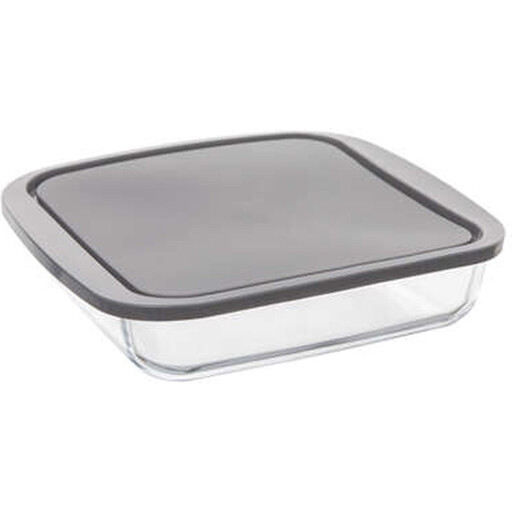
Why this product suits the profile: The square borosilicate glass dish combines food preparation and storage in one compact format.
The restrictions applying to the polypropylene lid are clearly stated: it must not be used in the oven, microwave or dishwasher.
1.8-litre capacity, 22 × 22 × 5 cm dimensions and glass with stated oven use up to 400 °C.
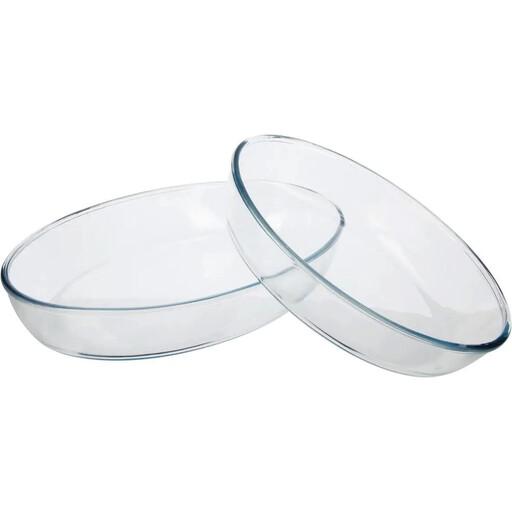
Why this product suits the profile: Two oval dishes cover different portion sizes and are suitable for both sweet and savoury oven dishes.
The different dimensions mean you do not have to use a large dish for small quantities or a small dish for family portions.
Two sizes, microwave and dishwasher suitability, plus stated oven use up to 300 °C.
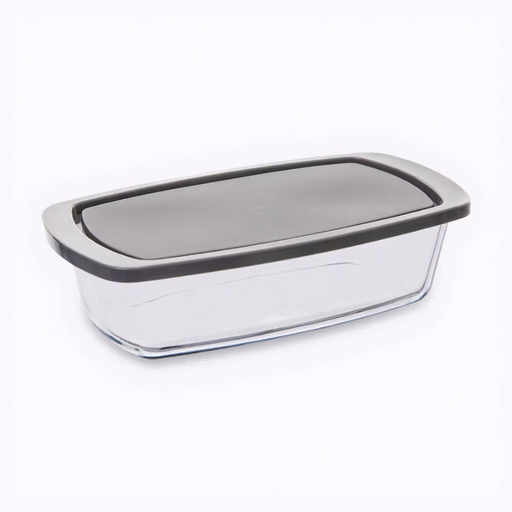
Why this product suits the profile: The elongated shape is designed for loaf cakes, bread and smaller bakes. The lid helps with storage after baking.
The product information distinguishes between the borosilicate glass and polypropylene lid, and specifies suitability for the oven, microwave and dishwasher.
2.3-litre usable capacity, 27.4 × 14.3 × 7.3 cm dimensions and a separate lid for storage.
We have put together a complete, regularly updated list of products that fully meet these strict selection criteria and the safety regulations applicable in the EU.
This depends on the specific model. A microwave-safe oven dish may be used in the microwave if the product information expressly states this. Plastic lids may be excluded. For example, with the 22 cm Keepeat dish, only the glass bowl is intended for microwave use.
A direct change can create stresses in the material because of the significant temperature difference. Even if a glass dish is described as freezer-safe and oven-safe, you should follow the instructions regarding temperature changes. It is safer to allow the dish to defrost gradually first.
For smaller quantities, around 1.6 to 2.3 litres is often sufficient. For several people, dishes holding approximately 3.8 to 4.2 litres are more practical. The type of food, the available oven width and the desired depth of the dish are also important. A glass baking and storage dish with a lid can be useful if leftovers are regularly kept in the fridge.