
Lieferung heute & morgen

Qualitätsgarantie

Willkommens-Angebote freischalten: KOSTENLOSE Lieferung | Bis zu 80 % RABATT | Kostenlose 30-Tage-JoyPlus-Testphase
App herunterladen
A glassware set should be practical for everyday use, suit your table and be easy to clean. Yet unclear product descriptions and decorative promises can often lead to disappointing purchases. It’s worth checking a few technical details before buying, especially when choosing drinking glasses, coffee glasses or wine glasses.
A capacity of 350 ml usually refers to how much a glass holds when filled to the brim. In everyday use, however, glasses are rarely filled right to the top. Medium-sized drinking glasses of around 250 to 400 ml are often versatile enough for water, juice or long drinks. Smaller glasses holding 80 to 100 ml are better suited to espresso, liqueurs or small desserts.
With wine glasses, a larger capacity doesn’t automatically mean greater practical value. A 625 ml or 950 ml Bordeaux glass gives full-bodied red wines more room to breathe, but it also takes up more storage space and needs extra care when loading the dishwasher.
When choosing dishwasher-safe glasses, you should also consider their shape, wall thickness and care instructions. Thin-walled crystal wine glasses may be labelled as dishwasher-safe, but should be spaced apart from other dishes and washed on a gentle programme.
Dishwasher-safe mugs also benefit from being loaded carefully. Handles should not touch one another, and chipped or cracked ceramics should no longer be used.
Terms such as ‘thermal’, ‘premium’ or ‘crystal clear’ tell you little without specific information about materials and care. Look for details such as borosilicate glass, crystal glass or ceramic, as well as capacity, number of pieces and whether the item is dishwasher-safe.
With a ceramic mug set, the glaze, microwave suitability and finish around the edges also matter. A simple design, such as white coffee mugs, may be more practical for everyday use than a highly decorated surface if you want to avoid scratches and changes in colour.
Sets of four to six are often a practical choice for homes and offices, as they let you serve several people at once. A drinking glass set with glasses holding 250 to 400 ml is suitable for a variety of cold drinks. For espresso or small after-dinner drinks, 80 to 100 ml glasses are more practical.
Coffee mugs with a capacity of 415 ml can be a good choice for large coffees, tea or hot chocolate. Cafés and restaurants should also consider whether replacements are available, whether sets come in consistent quantities and how much storage space they need.
Before buying, check:
A Bodum glassware set with a double-walled design may need extra storage space because of its shape. With wine glasses, height is often the deciding factor.
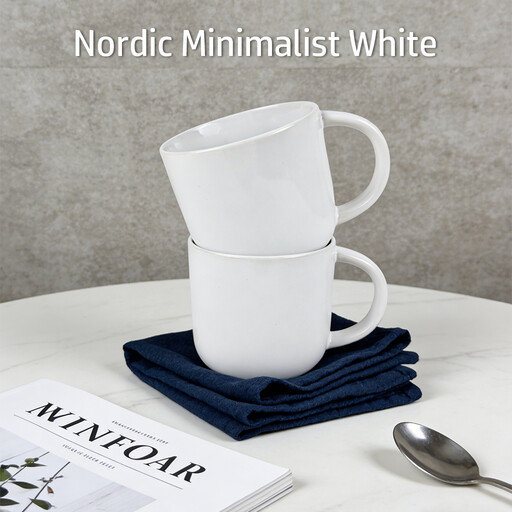
Why this product suits this profile: These four white ceramic mugs, each with a capacity of 415 ml, are suitable for homes, offices, cafés and restaurants. Their understated design works well with a range of tableware.
The capacity, number of pieces and material are clearly stated. This makes it easier to decide whether the mugs are suitable for generous servings.
Lead-free ceramic, microwave-safe and dishwasher-safe according to the product description; the set contains four matching mugs.
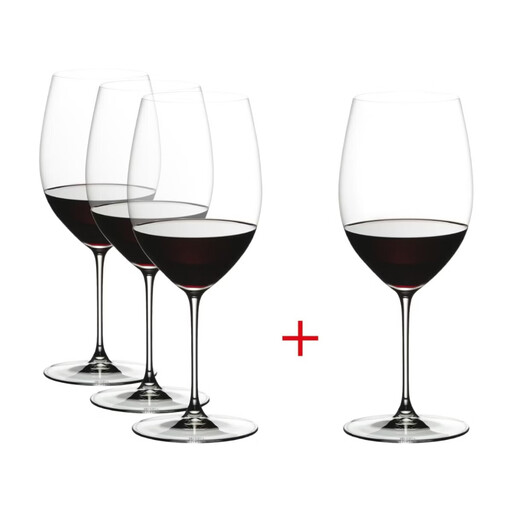
Why this product suits this profile: The set contains four machine-blown crystal glasses, each with a capacity of 625 ml. Their shape is designed for full-bodied red wines such as Cabernet Sauvignon and Merlot.
The choice isn’t based solely on a large bowl shape: the wine styles, capacity, material and number of glasses are all specified.
Four crystal glasses, around 23.5 cm tall and dishwasher-safe according to the product description.
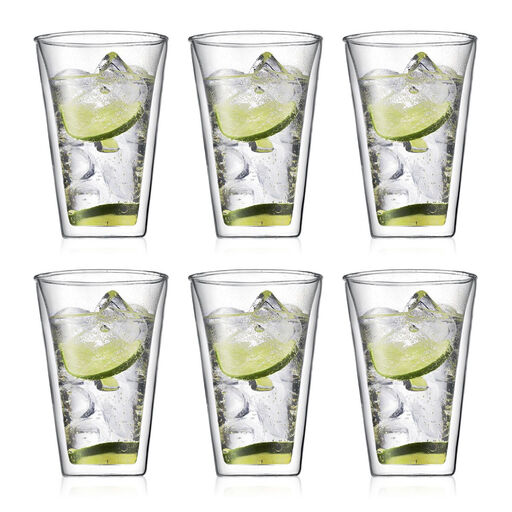
Why this product suits this profile: These six double-walled glasses, each with a capacity of 0.4 l, are a great option for homes, offices and hosts who regularly serve several hot or cold drinks.
Rather than relying on a vague ‘thermal’ label, the product is clearly described as double-walled and has a specified capacity.
A set of six with a double-walled design; the stated capacity of 0.4 l makes it easier to plan how you’ll use them.
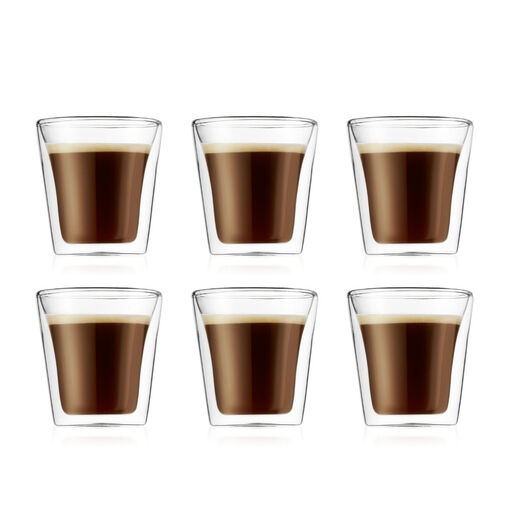
Why this product suits this profile: This compact size is designed for espresso, whisky, liqueurs or small desserts, and makes a useful addition to an existing drinking glass set.
The smaller capacity means you won’t end up using a large glass for short drinks. The product description clearly states what the glasses are suited to.
Six 0.1 l glasses with a double-walled, heat-resistant borosilicate glass design, according to the product description.
We’ve put together a complete, regularly updated list of products that meet these strict selection criteria and fully comply with the safety regulations in force in the EU.
Four to six glasses may be enough for two people. Sets of six or more are more practical if you often have guests, have a larger family or need glasses for commercial use. You can also add specialist espresso glasses, coffee glasses or wine glasses.
That depends on the specific material and the manufacturer’s instructions. Borosilicate glass is often used for hot drinks. Before use, check that the product is explicitly approved for the temperature range you need. Sudden, extreme changes in temperature can also damage glass.
Its lifespan depends on the material, wall thickness, how it’s used and how it’s cleaned. Damaged glasses should no longer be used. Crystal wine glasses should be spaced well apart in the dishwasher, while ceramic mugs and sturdy drinking glasses are generally easier to handle day to day. So it’s not just the purchase price that matters: choosing the right set for how you’ll use it is important too.