
Lieferung heute & morgen

Qualitätsgarantie

Willkommens-Angebote freischalten: KOSTENLOSE Lieferung | Bis zu 80 % RABATT | Kostenlose 30-Tage-JoyPlus-Testphase
App herunterladen
A glassware set can look much the same in product photos, yet differ significantly in everyday use. Glasses that are too small, fragile rims or unclear care instructions can quickly lead to disappointing purchases. Whether you are shopping for your home, a celebration or commercial use, it is therefore important to look beyond the design.
The stated capacity of “350 ml” usually refers to the volume measured up to the rim. In practice, water, juice and long drinks need room for ice, garnishes or a safe distance from the rim. A drinking glass set with a capacity of 250 ml is better suited to smaller portions, while 350 to 400 ml gives you more room to work with.
Double-walled thermal glasses have two layers of glass with a gap between them. This construction can protect your hand from direct contact with the drink and reduce condensation. However, you should always check the specific product description: not every glass is approved for boiling liquids, microwave use or sudden temperature changes.
For dishwasher-safe glasses, the manufacturer’s information should be stated explicitly. Decorations, thin rims or special coatings may require gentle cleaning or hand washing. Even dishwasher-safe glasses should be arranged carefully so that they do not knock against one another.
The shape of the glass should suit the drink:
A stemless glass set is space-saving and practical for everyday use. Tall glasses such as a long drink glass set, on the other hand, need more storage space but leave room for ice and mixed drinks. For a formally laid table, 250 ml glasses in goblet form can create a different impression from simple water glasses.
Clear glass is neutral in taste and shows off the colour of the drink. Double-walled thermal glasses are often made from borosilicate glass; however, the specific material details for each product remain decisive.
Only use glasses for hot drinks if they are expressly designed for this purpose. A glass intended for cold drinks should not be filled with boiling water. Similarly, rapid changes between the fridge, hot water and the freezer can cause thermal shock.
A set of two glasses is suitable for couples, single-person households or as an addition to an existing collection. Four glasses work well for smaller households and occasional guests. Six glasses are more appealing for families, regular hosts, restaurants and catering businesses.
When it comes to care, look for clear information:
If you are looking for a glass lemonade bottle, you should also pay attention to stability, the closure and the height. The Lemonade Bottle Line offered here has a capacity of 1.0 l, is 31.0 cm tall and is intended for cold or room-temperature drinks. According to the product description, it is dishwasher-safe, but not suitable for microwave use or hot liquids.
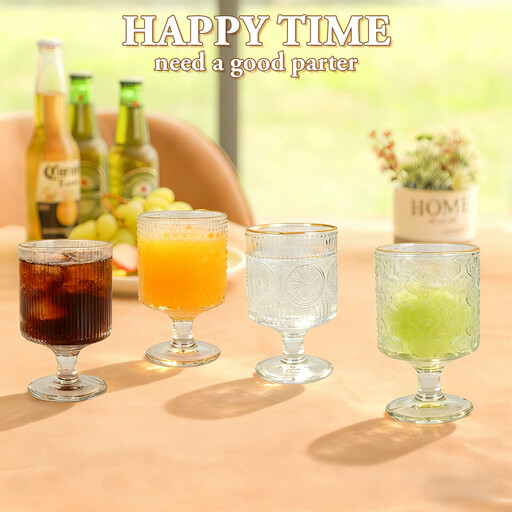
Why this product suits this profile: Four 250 ml glasses provide a manageable set size for everyday use, smaller households and occasional guests.
The clearly stated size helps prevent you from choosing a glassware set that is either too small or unnecessarily large.
Four identical glasses; transparent design and a capacity of 250 ml per glass.
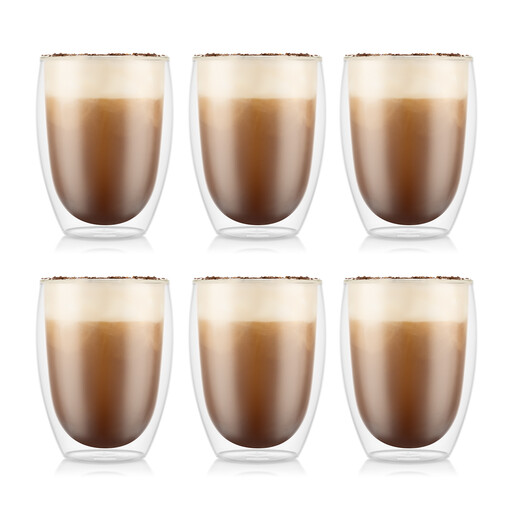
Why this product suits this profile: This set combines six 350 ml glasses with a double-walled construction for water, hot drinks or cold drinks in line with the manufacturer’s specifications.
The capacity and construction are clearly stated, so buyers do not have to rely solely on a decorative term such as ‘thermal glass’.
Pack of six; double-walled design; 350 ml per glass.
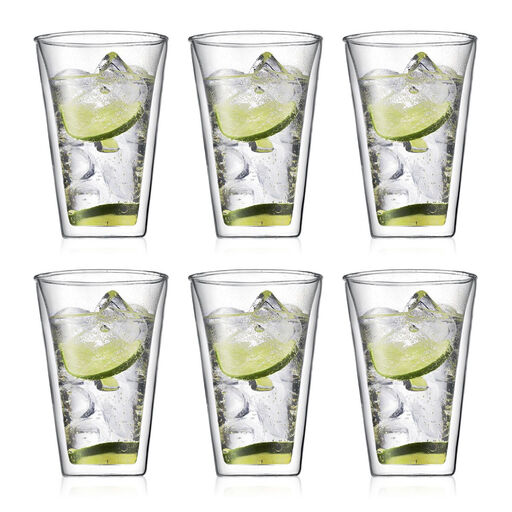
Why this product suits this profile: With 0.4 l per glass, there is room for larger portions, ice cubes and mixed drinks. The pack of six is designed for families, hosts and regular use.
The generous capacity reduces the risk of buying a glassware set that is too small for long drinks or soft drinks.
Six double-walled glasses; 0.4 l capacity per glass.
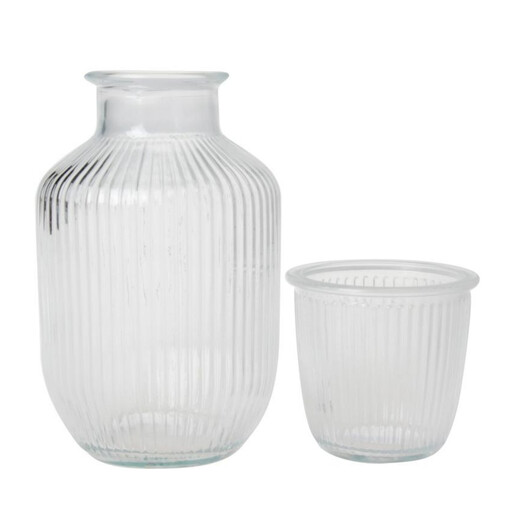
Why this product suits this profile: Two sets, each containing a 1,000 ml carafe and a 270 ml glass, are suitable for lemonade, iced tea, infused water and small gatherings.
The carafe and glass capacities are listed separately, making it easier to assess the actual serving quantity before buying.
Two carafes with a capacity of 1,000 ml each; matching 270 ml glasses; dishwasher-safe according to the product description.
For espresso, liqueurs or small desserts, small shot glasses or glasses with a capacity of 80 to 100 ml are worth considering. One example is the BODUM CANTEEN glasses with a capacity of 0.1 l. For larger households, a BODUM PAVINA Pack of 6 with a capacity of 250 ml may be a better choice.
If you want to serve drinks centrally, you can choose a glass carafe with glasses or a water jug set. For bottles and carafes, the closure, height and permitted temperature range are all important. According to the product description, the Secret de Gourmet models with a capacity of 1.0 l are intended for cold drinks. They should not be used for hot liquids.
For cocktails and soft drinks, tall 36 cl glasses such as the Secret de Gourmet Gaspard Set are a suitable option. According to the product description, these glasses are dishwasher-safe, but are not intended for hot liquids, microwave use or sudden temperature changes.
We have put together a complete, regularly updated list of products that fully meet these strict selection criteria and the safety regulations applicable in the EU.
For a two-person household, two to four glasses are often enough. Families, hosts and hospitality businesses are more likely to benefit from six or more identical glasses. If the set is used frequently, a second set can be useful as a spare.
That depends on the individual model. The product description must explicitly state that it is approved for dishwasher use. For the BODUM PAVINA and CANTEEN models, you should check the specific care instructions on the product page, as the information available here mainly confirms the size and double-walled construction.
Its lifespan depends on the glass thickness, how it is used and how well it is cared for. Knocks, incorrect loading and sudden temperature changes increase the risk of breakage. Damaged glasses with cracks, chips or sharp edges should no longer be used.