
Lieferung heute & morgen

Qualitätsgarantie

Willkommens-Angebote freischalten: KOSTENLOSE Lieferung | Bis zu 80 % RABATT | Kostenlose 30-Tage-JoyPlus-Testphase
App herunterladen
Choosing the right glassware set may seem straightforward at first. In practice, sets vary considerably in capacity, type of glass, cleaning requirements and intended use. A glass suitable for espresso won’t necessarily work as a drinking glass for larger portions. Likewise, double-walled glasses aren’t automatically designed to withstand every temperature change.
These are some common buying decisions that can lead to unnecessary spending:
The volume should suit the portion you usually serve. Small glasses holding 8 cl to 10 cl are suitable for espresso, liqueurs, spirits, aperitifs or sauces. A 250 ml glass tumbler is more versatile and can be used for coffee, tea, juice or water.
Larger glasses are useful for desserts. A capacity of 450 ml leaves room for yoghurt with fruit, pudding, ice cream, layered breakfasts or smoothies. If you want to cover a range of uses, you could pair a drinking glass set with a separate set for espresso or desserts.
Single-walled glasses transfer heat directly to your hand and the surrounding air. A handle can make hot drinks easier to handle. Double-walled glasses, also known as thermal glasses, have an insulating layer of air between the walls. When used as intended, this often helps keep the outside more comfortable to hold. It can also reduce condensation on the surface of glasses containing cold drinks.
Borosilicate glassware is often sold for heat-resistant applications. Even so, check the product description carefully. “Heat-resistant” doesn’t automatically mean a glass can withstand sudden temperature changes without damage. Moving it from the freezer to boiling water can cause thermal stress. Always follow the manufacturer’s guidance for your intended use.
A dishwasher-safe label makes glasses easier to use every day, especially in homes, cafés, bars and hotels. For delicate or double-walled glasses, also check the guidance on where to place them in the dishwasher. Abrasive sponges and metal scouring pads can damage the surface.
It’s also worth checking the following before you buy:
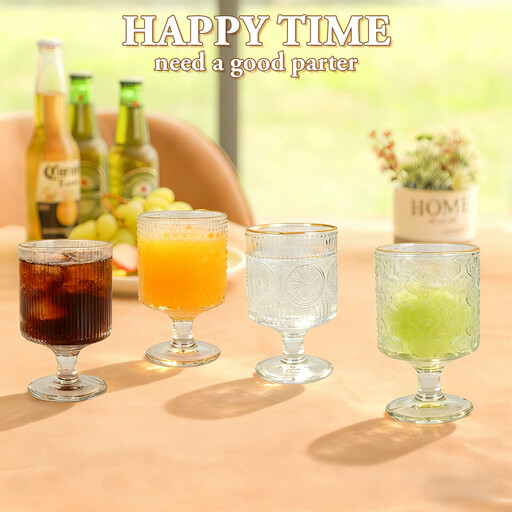
Why this product suits this profile: This set of 4 250 ml glasses is ideal for households looking for versatile drinking glasses for everyday portions.
The clearly stated capacity helps you avoid mistaking a small espresso glass for an everyday drinking glass.
4 glasses, each with a 250 ml capacity; clear design for everyday drinks.
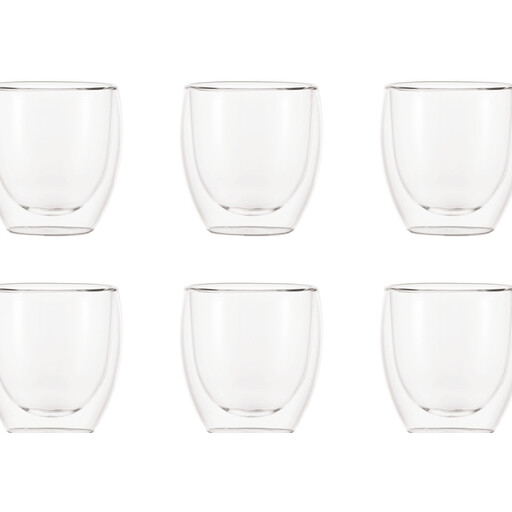
Why this product suits this profile: The double-walled design combines a 250 ml capacity with a construction intended for hot and cold drinks.
The product name clearly specifies the double wall and capacity, rather than making a vague claim about insulation.
Set of 6; 250 ml; double-walled thermal glasses for a range of drinks.
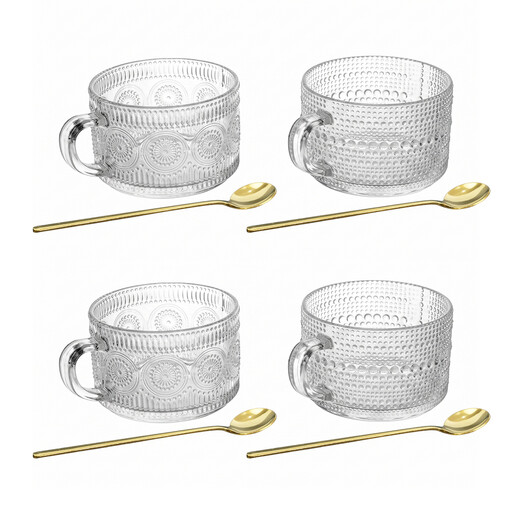
Why this product suits this profile: Designed for desserts, layered breakfasts and larger portions, this set is a good choice for families, hosts and cafés.
The stated capacity and integrated handle make its intended use clearer than that of small, all-purpose glasses.
4 glasses with a 450 ml capacity; soda-lime glass; dishwasher-safe according to the product information; integrated handle.
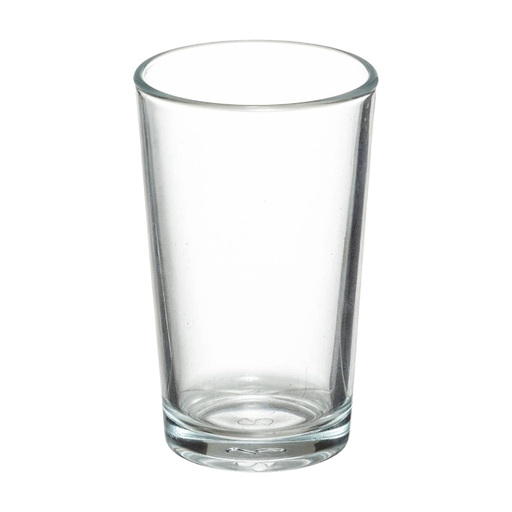
Why this product suits this profile: With a 10 cl capacity and compact dimensions, this glass is designed for espresso, aperitifs, spirits or small sides.
Its compact size helps you avoid choosing a small glass as a full-sized cup for water or juice.
10 cl capacity; compact dimensions of 8,40 × 5,10 × 5,10 cm; clear glass.
We’ve put together a complete, regularly updated list of products that meet these strict selection criteria and the safety requirements in force across the EU.
For everyday use, glass tumblers holding around 250 ml are a versatile choice. They’re suitable for water, juice, cold soft drinks and many types of coffee and tea. For larger portions or desserts, 450 ml glasses are a better fit. Also check that the dishwasher-safe information is clearly stated.
Double-walled glasses are often sold for coffee, tea and other hot drinks. Whether they’re suitable for your intended use depends on the product description and safety information. Borosilicate glass may be designed to withstand temperature changes, but that doesn’t automatically protect it from damage caused by sudden differences in temperature. Don’t place hot glasses directly on very cold surfaces, and follow the manufacturer’s guidance.
How long it lasts depends on the type of glass, how it’s used and cleaned, and how carefully it’s handled. Knocks, metal scouring pads and sudden temperature changes can damage glass. Load dishwasher-safe models so that they don’t knock against each other. Take particular care around the rim and base of double-walled glasses. Following this guidance helps reduce the risk of cracks and breakages during everyday use.