Guests with coeliac disease
An explicit gluten-free label and serving the bread without cross-contamination are essential. The German Coeliac Society draws particular attention to crumbs, flour dust and contaminated kitchen equipment.


If a guest with coeliac disease is joining you for afternoon tea, an explicit gluten-free label and preparation that avoids gluten cross-contamination come first. After that, consider how easy the bread is to eat: ready-sliced bread can be topped without any baking, while seeded bread needs to suit your guest’s preference for a grainier texture. A bread mix is an option if you have enough time and space to bake and prepare it separately from gluten-containing foods.
An explicit gluten-free label and serving the bread without cross-contamination are essential. The German Coeliac Society draws particular attention to crumbs, flour dust and contaminated kitchen equipment.
If you want to prepare sweet and savoury toppings without baking, look for ready-sliced bread and consider the texture you have in mind. Schär describes the slices in Meisterbäckers Classic as suitable for both types of topping.
Ingredients such as linseeds and sunflower seeds, as well as the fibre content per 100 g, may help you choose. Also consider whether the grainier texture will be enjoyable and what other ingredients the bread contains.
If a guest with coeliac disease is joining you for afternoon tea, choosing gluten-free bread is essential. You can then decide based on the slices, ingredients and preparation time.
| What matters | What to check when buying | Who it matters most to |
|---|---|---|
| Choosing and serving gluten-free bread | An explicit ‘gluten-free’ label on the current packaging; clean, separate utensils for serving. | If a guest has coeliac disease, I want to make sure no gluten-containing ingredients or crumbs get onto their bread. This is the top priority for around 36% of consumers. |
| Slices that are easy to top | Whether the bread is ready-sliced and whether the slices suit the toppings you have planned. | For afternoon tea without any baking, I want to serve slices that are easy to portion and top. This is a priority for around 29% of consumers. |
| Seeds and fibre | Seeds in the ingredients list, fibre per 100 g, and allergen and precautionary allergen labelling. | If I want to serve a grainy bread, its texture should be enjoyable for the person eating it. Seeds and fibre are the main selection criteria for around 21% of consumers. |
| Baking it yourself | The ingredients and equipment needed, as well as the proving and baking times for the mix. | I’m happy to spend more time preparing freshly baked bread, provided the kitchen allows me to prepare it separately from gluten-containing foods. Around 14% of consumers put this first. |
Wheat-free bread may still contain other gluten-containing cereals. This distinction is crucial for guests with coeliac disease.
Check for an explicit ‘gluten-free’ label and read the ingredients on the current packaging. The German Coeliac Society recommends choosing products explicitly labelled gluten-free when they contain certain ingredients, such as oats.
Even carefully chosen bread can come into contact with crumbs when it is served. The German Coeliac Society also identifies flour dust and contaminated kitchen equipment as risks.
Store and serve gluten-free bread separately from gluten-containing baked goods, and use clean knives, boards and serving utensils.
Seeded bread should also suit the person eating it in terms of its ingredients and texture. In the seeded breads described here, it is particularly important to check for soya and possible traces of sesame.
As well as comparing the fibre content per 100 g, check the current ingredients list, allergen information and how easy the bread is to eat.
A mix needs to be prepared and baked first. The RUF mix described by REWE takes around 55–60 minutes to bake alone.
If you are planning afternoon tea at short notice, opt for a ready-sliced product. Only choose a bread mix if you have enough time and a clean, separate work surface.
The RUF mix described also requires water, oil and a baking tin.
The Meisterbäckers range includes gluten-free sliced breads, including Classic and Vital.
Helles Brot is a ready-to-eat gluten-free sliced bread option.
This gluten-free seeded bread is a grainier alternative to white sliced bread.
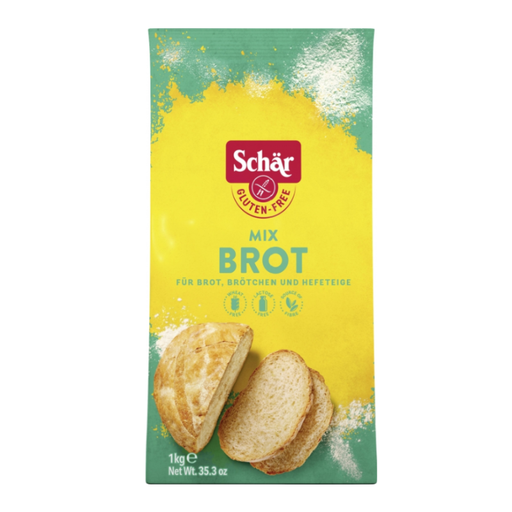
The gluten-free Helles Brot mix is designed for home baking, not for serving straight away.
This selection features a bread mix for afternoon tea when you have enough time to bake and can prepare the bread separately from gluten-containing foods.
 No image available
A good option if you want to bake the bread yourself before afternoon tea; the mix does not provide slices that are ready to serve.
Pack size according to the product name: 1 kg. Before serving, check the current gluten-free label, ingredients and precautionary allergen information, and use clean, separate equipment.
No. Choose bread that is explicitly labelled ‘gluten-free’ on the current packaging. Wheat-free bread may still contain other gluten-containing cereals.
Serve it separately and use clean knives, boards, plates and serving utensils. The German Coeliac Society notes that crumbs, flour dust and contaminated kitchen equipment can cause gluten cross-contamination.
No. Seeds and fibre content alone do not determine whether a bread is right for afternoon tea. Consider your guest’s preferred texture, as well as the ingredients and allergens. The German Nutrition Society does not recommend one particular type of bread for everyone based on the nutritional needs associated with ageing.
A bread mix is a good choice if you want to bake the bread yourself and have enough preparation time and a separate work surface for gluten-free cooking. Check the instructions for the mix you choose: the RUF mix described by REWE requires water, oil and a baking tin, and has a stated baking time of around 55–60 minutes.