If you have coeliac disease, start by checking the specific pack intended for sale in Germany: look for a ‘gluten-free’ label or product information from the German Coeliac Society that applies to that product. Once you’ve done that, you can choose between a butter biscuit, chocolate chip cookie or oat and seed biscuit based on flavour, portion size and other ingredients. Oats and additional allergies may raise further questions, even when a product is labelled gluten-free.
Who should take extra care when choosing?
People with coeliac disease
If you’re choosing biscuits for a TV night, the label on the specific German pack you’re buying matters more than a familiar product name. The German Coeliac Society warns against assuming that products with the same name are identical across different countries.
Chocolate chip cookie fans with other allergies
If you need to consider milk, eggs, soya, lupin or tree nuts as well as gluten, check the ingredients and may-contain information for each product separately. The information for the Schär and Hammermühle biscuits reviewed here differs.
Shoppers considering portions and pack size
Individually wrapped biscuits can be handy for a single film night, while the total quantity may matter more if you’re planning several evenings. Either way, the key thing is whether the specific product meets your needs.
What should you look for when buying?
If you have coeliac disease, first check that the German pack is suitable for a gluten-free diet. Then compare the type of biscuit, other ingredients and portion format: a butter biscuit offers something different from a chocolate chip cookie or an oat and seed biscuit.
| What matters to you | What to check when buying | Who it matters to |
|---|
| Gluten-free suitability |
The ‘gluten-free’ label and that the pack is intended for sale in Germany; if needed, check product information from the German Coeliac Society that applies to it. |
If you have coeliac disease, you don’t want to rely on the name of an overseas version that may have a different recipe. Around 42% of consumers put clearly verifiable gluten-free suitability first. |
| Flavour and format |
Butter biscuit or chocolate chip cookie, as well as pack and portion size. |
For a film night, I want either a classic biscuit or a cookie with chocolate chips that I can portion as I like. This choice of snack is the main consideration for around 25% of consumers. |
| Other ingredients and oats |
The ingredients and may-contain information for the product; if it contains oats, also consider your individual tolerance. |
Even if a biscuit is labelled gluten-free, I still need to look out for other ingredients that matter to me. Around 17% of consumers place the greatest importance on this additional check. |
| Pack and availability |
Total quantity, individual portions and information on how to buy the product you want. |
For regular TV nights, I want to choose a pack size that suits me and know how I can buy the product. This is the main practical consideration for around 16% of consumers. |
Which mistakes can you avoid?
-
Assuming an overseas product page applies to the German pack
Products with the same name can have different ingredients depending on the country in which they’re sold. The German Coeliac Society specifically warns about this.
Check the label and ingredients on the pack actually intended for sale in Germany, rather than relying on information for an overseas version.
-
Assuming ‘gluten-free’ means free from all allergens
The Schär butter biscuit reviewed here contains milk and eggs; soya ingredients are listed for the Schär Choco Chip Cookie reviewed here. May-contain information also varies by product.
Decide which other ingredients matter to you, then check the information on the specific pack before buying.
-
Assuming gluten-free oats are suitable for everyone
Hammermühle notes that people with coeliac disease may tolerate gluten-free oats differently in its oat and seed biscuit reviewed here. It also states that the product may contain traces of tree nuts.
When choosing an oat biscuit, take your individual medical advice and the labelling on the specific pack into account.
Brands to help you choose
Schär
Schär offers a range of biscuits described as gluten-free, including butter biscuits and Choco Chip Cookies. The recipe of each product matters more than the brand name alone.
- The Petit Beurre butter biscuit reviewed here is described as gluten-free and comes in four individual portions.
- This butter biscuit contains milk and eggs; soya ingredients are listed for the Choco Chip Cookie reviewed here. Other potential traces vary by product.
Hammermühle
According to Hammermühle, the Bio Simply Seeds Keks Schoko reviewed here is a gluten-free, vegan biscuit made with oats and linseeds.
- Hammermühle states that this product contains 7,8 g of fibre per 100 g.
- The product may contain traces of tree nuts. Hammermühle notes that people with coeliac disease may tolerate oats differently and recommends eating them under medical supervision.
Gullón
On its Spanish product page, Gullón describes a gluten-free cocoa cookie with chocolate chips, made with rice and maize ingredients.
- For the product described there, Gullón states that the recipe contains no eggs or tree nuts.
- This information doesn’t confirm the ingredients of a German pack with the same name. If you’re considering it for coeliac disease, check the German version actually on offer.
Joybuy products for a TV night
If you fancy a chocolatey TV snack, this selection features a gluten-free Schär cookie. If you have coeliac disease or other allergies, always check the label on the specific pack.
 No image available
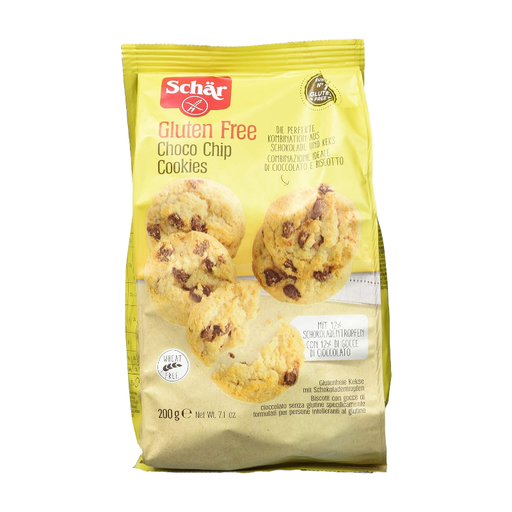
Schär Gluten-Free Chocolate Chip Cookies 200 g
A good option if you’re looking for a gluten-free chocolate chip cookie for a TV night.
The pack contains 200 g. The product information lists soya, but the information about eggs is inconsistent. If eggs or soya matter to you, check the ingredients and allergen information on the specific pack before buying.
View at Joybuy
Frequently asked questions
Is a list of ingredients with no wheat enough if you have coeliac disease?
No. ‘Wheat-free’ on its own doesn’t answer the question of whether processed biscuits contain gluten. European Commission Implementing Regulation (EU) No 828/2014 sets a maximum gluten content of 20 mg/kg for products labelled ‘gluten-free’. So check the specific German pack or product information from the German Coeliac Society that applies to it.
Are gluten-free biscuits automatically free from milk, eggs and soya?
No. A gluten-free label tells you nothing about these other ingredients. The Schär butter biscuit reviewed here contains milk and eggs, while soya ingredients are listed for the Schär Choco Chip Cookie reviewed here. Check the ingredients and may-contain information for each product.
Is a gluten-free oat biscuit always suitable if you have coeliac disease?
Not necessarily. For its oat and seed biscuit reviewed here, Hammermühle notes that people with coeliac disease may tolerate gluten-free oats differently. The manufacturer recommends eating them under medical supervision. Also check the specific pack for other ingredients and traces that matter to you.
Can I rely on information for an overseas version with the same name?
No. Products with the same name from different countries shouldn’t be assumed to be identical without checking. The German Coeliac Society notes that overseas or export versions may contain ingredients with gluten. The pack intended for sale in Germany is the one that matters.


