Pupils with coeliac disease
For them, it’s important to choose a clearly labelled gluten-free pack and store the biscuits separately. The German Coeliac Society specifically highlights the risk of cross-contamination at school.


For pupils with coeliac disease, only biscuits whose specific pack is labelled gluten-free are suitable for the school break. Check the ingredients and any other allergens too. When packing them, make sure the biscuits can be clearly identified and kept away from crumbs containing gluten.
For them, it’s important to choose a clearly labelled gluten-free pack and store the biscuits separately. The German Coeliac Society specifically highlights the risk of cross-contamination at school.
You’ll need a manageable portion that stays clearly identifiable and isn’t mixed with snacks containing gluten.
If ingredients or allergens other than gluten are a concern, check the information for the specific variety as well.
First, check that the specific pack is labelled gluten-free. For school, the next priorities are storing the biscuits separately and checking for other ingredients if necessary.
| Criteria | What to check | Who it matters to |
|---|---|---|
| Gluten-free labelling | Look for the words “gluten-free” on the specific pack, and check the ingredients and allergens. According to the Verbraucherzentrale, foods labelled this way may contain no more than 20 mg of gluten per kg. | If I have coeliac disease, I don’t want to rely on the brand or a similar-looking pack. Around 50% of consumers are likely to see clear gluten-free labelling as their main buying criterion. |
| Storage at school | Choose a portion that’s easy to keep separate, and store the biscuits and their packaging away from foods containing gluten. | I want my snack to stay identifiable in my school bag and not get mixed up with other biscuits. For around 30% of consumers, this practical aspect is likely to be the main consideration. |
| Other ingredients | Read the full ingredients and allergen information for the variety you choose. Check any additional claims, such as “lactose-free”, separately. | If I need to avoid soy as well as gluten, for example, a single claim on the front of the pack isn’t enough. Checking other ingredients is likely to be the most important selection criterion for around 20% of consumers. |
A gluten-free claim doesn’t tell you about other ingredients. For example, Gullón lists soya flour and soya lecithin in its Gluten Free María biscuits.
For every variety, check the full ingredients and allergen information as well as the gluten-free labelling.
Without identifiable original packaging, it can be harder to check which variety you have later. Shared containers and crumbs containing gluten are an additional risk for people with coeliac disease; the German Coeliac Society highlights this for schools.
Where possible, send the original pack with the biscuits. If you use a clean, separate container, keep the product and ingredients information clearly linked to it.
REWE notes that not all products in its “frei von” range are available in every store.
Check that the specific variety is in stock before you shop, and have an alternative you’ve already checked ready if needed.
Gluten-free labelling doesn’t tell you how much sugar, fat or fibre a product contains. The Verbraucherzentrale does not consider gluten-free specialist products to be universally beneficial for people without related symptoms.
If you’d like to compare varieties by their nutritional composition, read the ingredients list and nutrition information on each pack.
REWE lists Leibniz Minis gluten-free biscuits in a 100-g pack. Leibniz is part of the Bahlsen brand family.
REWE describes “frei von” as its own-brand range of gluten-free and lactose-free foods.
Gullón describes Gluten Free María as gluten-free and lactose-free biscuits in a 380-g pack.
These three Schär products are biscuit and sponge finger varieties described as gluten-free. If you’re buying them for a school break for someone with coeliac disease, check the labelling and ingredients on the pack you actually purchase. A 200-g or 165-g pack isn’t necessarily divided into individual portions for break time.
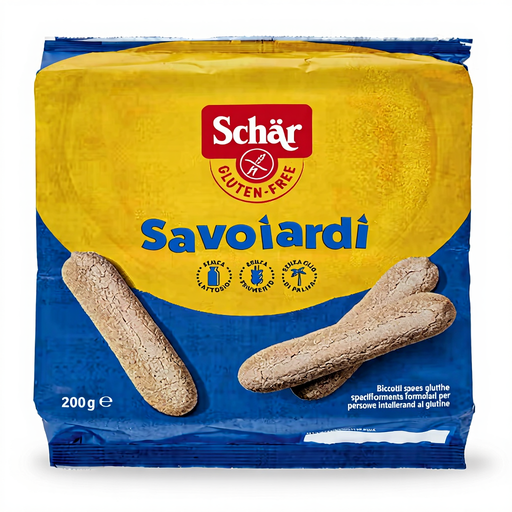 Image unavailable
If you’re looking for sponge fingers for a break-time snack, this variety is described as gluten-free. Check that the labelling on the specific pack meets your requirements.
Before packing them, consider how to portion the 200-g pack, and check the ingredients and allergen information.
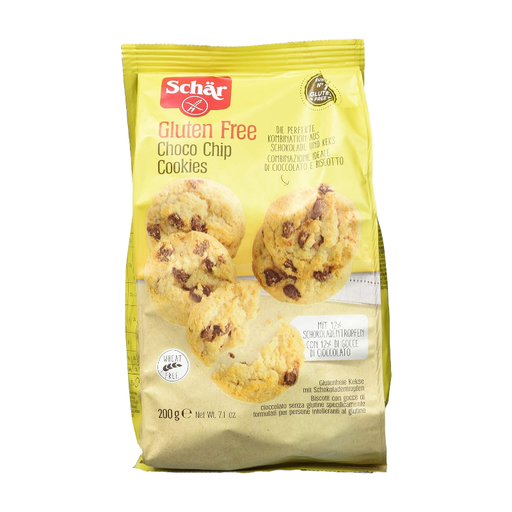 Image unavailable
If you’re looking for chocolate chip cookies for the school break, you can check the labelling on the pack of this variety, which is described as gluten-free.
The pack contains 200 g. Check how to portion the biscuits before packing them, and look at the ingredients and any other allergens.
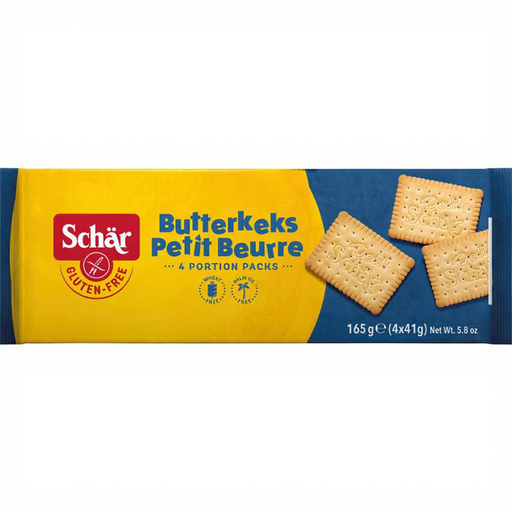 Image unavailable
If you’re looking for butter biscuits for a break-time portion, this variety is described as gluten-free. Make sure the specific pack is labelled accordingly.
The pack contains 165 g. Check the ingredients and allergen information, and consider how to portion the biscuits separately.
No. “Wheat-free” doesn’t mean “gluten-free”, as gluten can also be found in other grains. For packaged biscuits, look for gluten-free labelling on the specific pack. According to the Verbraucherzentrale, foods labelled this way may contain no more than 20 mg of gluten per kg.
The original packaging keeps the labelling with the product. If you transfer the biscuits to another container, use a clean, separate one and keep the product information clearly linked to it. For school, the German Coeliac Society recommends storing gluten-free foods separately and taking the risk of cross-contamination into account.
Yes. A gluten-free claim doesn’t replace checking for other ingredients and allergens. For example, according to the manufacturer’s ingredients list, Gullón Gluten Free María contains soya flour and soya lecithin, even though Gullón describes the variety as gluten-free and lactose-free.
No. Gluten-free labelling is not a general assessment of nutritional value. The Verbraucherzentrale does not consider gluten-free specialist products to be universally beneficial for people without related symptoms. To compare specific biscuits, check the ingredients list and nutrition information.
Compare the variety, batch number and best-before date given in the public notice with the details on your pack. In Germany, the federal states and the Federal Office of Consumer Protection and Food Safety publish public food alerts.