What should you look for when buying?
First, check the pack labelling to confirm which bread is suitable for the person with coeliac disease. Then choose a style and preparation method that work for the meal you’re planning.
| What to consider |
What to check when buying |
Who it matters most to |
| Gluten-free labelling |
The specific pack must be labelled gluten-free. Check the ingredients and allergen information separately. |
If someone with coeliac disease is joining us, I need a clearly labelled alternative rather than a dark loaf that merely looks like rye bread. For around 50% of consumers, this reassurance is likely to be their top buying priority. |
| Style and texture |
Choose between farmhouse-style sliced bread, seeded bread, crispbread and part-baked rolls to suit your toppings and sides. |
For an evening meal together, I want a hearty or seeded side, even if it isn’t rye bread. Around 30% of consumers are likely to put the right style of bread first. |
| Preparation and shopping |
Check whether the product is ready to serve or needs baking time. If buying from a store, check local availability in advance. |
If the meal needs to be on the table soon, I want to be able to plan the preparation reliably. Around 20% of consumers are likely to focus above all on this. |
Brands and product ranges to consider
These examples show different types of bread, as well as an important distinction: a product sold explicitly as rye bread is not a gluten-free alternative for someone with coeliac disease.
REWE frei von
This own-label range from REWE includes a farmhouse loaf and a seeded loaf, both labelled gluten-free.
- The 400-g farmhouse loaf comes sliced, while REWE says its Pures-Korn bread contains gluten-free oats and seeds.
- Neither is rye bread. The farmhouse loaf lists gluten-free wheat starch and sweet lupin flour; REWE says the seeded loaf may contain traces of soya, almonds and sesame.
EDEKA Herzstücke
The gluten-free, wheat-free baker’s rolls in this EDEKA range are designed to be baked before serving.
- According to EDEKA, you can serve warm individual portions after seven to nine minutes in the oven.
- Made with corn, rice and tapioca starch, these rolls aren’t rye bread. EDEKA lists possible traces of soya and sesame, and availability varies by store.
ENJOY FREE / ALDI Nord
ALDI Nord describes a gluten-free bread made with corn and rice, available in Dark and Seeded varieties.
- The two varieties offer a choice of different styles of bread.
- Neither is made with rye. When you shop, check the labelling on the pack you choose and confirm local availability.
NUR NUR NATUR / ALDI SÜD
ALDI SÜD’s organic wholemeal rye bread is included here to show how it differs from gluten-free bread alternatives.
- For anyone eating with you who doesn’t need to avoid gluten, it’s a product explicitly described as wholemeal rye bread.
- Rye contains gluten, so this bread isn’t a suitable gluten-free choice to share with someone who has coeliac disease.
Suitable products at Joybuy
For a family meal, these three gluten-free options offer different formats: Kaiser rolls to bake at home, crispbread that’s ready to serve and a bread mix for meals you can plan ahead. A mix isn’t a finished loaf, and crispbread isn’t a soft slice of rye bread.
 No image available
Schär gluten-free Kaiser rolls, 350 g
For warm individual portions at a family meal when you have access to an oven.
According to the product description, bake the rolls from frozen at 180 °C for six to seven minutes. The product information lists soya protein; if you also have a soya allergy, check the current pack labelling.
View at Joybuy
 No image available
Schär gluten-free dark crispbread, 125 g
A crisp side you can serve without baking, alongside cheese or spreads.
Crispbread is different from soft rye bread. The product description says it may contain traces of soya; if you also have a soya allergy, check the current pack labelling.
View at Joybuy
 No image available
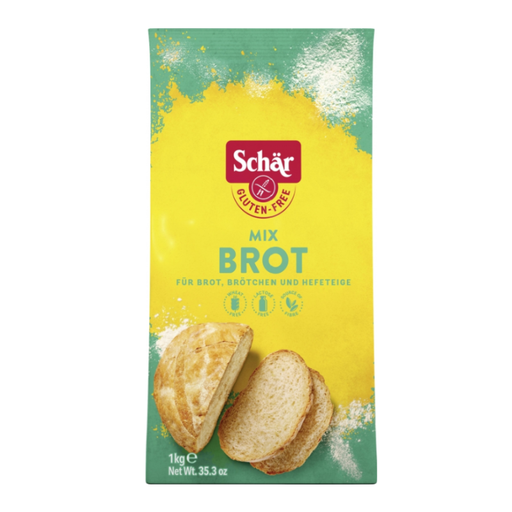
Schär gluten-free bread baking mix, 1 kg
For homemade bread or rolls when you can prepare them ahead of a family meal.
This mix isn’t ready-to-eat bread: according to the product description, you’ll need to add yeast, water and salt, then allow time for baking. Depending on the size of the loaf, baking takes 30 to 50 minutes. If you also have a soya allergy, check the pack for possible traces.
View at Joybuy
Frequently asked questions
Is rye bread a gluten-free choice for people with coeliac disease?
No. Traditional rye bread contains gluten because rye is a gluten-containing grain, as the German Coeliac Society explains. The person with coeliac disease will need an alternative explicitly labelled gluten-free; a dark colour or the description ‘farmhouse loaf’ isn’t a substitute for this labelling.
What does ‘gluten-free’ mean on food packaging?
Under EU Implementing Regulation No. 828/2014, food labelled ‘gluten-free’ must contain no more than 20 mg of gluten per kg. When you shop, check the labelling on the specific pack, and consider the ingredients and allergen information separately.
How can I serve gluten-free bread alongside ordinary bread?
Keep the gluten-free portion separate from bread containing gluten during preparation and serving. The German Coeliac Society highlights the risk of cross-contamination at home. Clean work surfaces and utensils, along with serving the gluten-free bread separately, can help prevent accidental contact.
Is gluten-free bread automatically wheat-free?
No. According to REWE, its farmhouse loaf from REWE frei von, which is labelled gluten-free, contains gluten-free wheat starch. If you also need to account for a wheat allergy or another allergy, check the ingredients and precautionary allergen information separately.
Should I buy gluten-free part-baked rolls before a family meal?
Yes. If warm rolls are part of your planned meal, it’s worth checking store stock and preparation time in advance. EDEKA notes that its gluten-free Herzstücke baker’s rolls may not be available at every store; according to the product page, they need seven to nine minutes in the oven.


