For a child with coeliac disease, the first things to check when choosing bread for a tea break are an explicit ‘gluten-free’ label on the specific product and handling that prevents cross-contamination – not the bread’s dark colour or the word ‘multigrain’. Ready-to-eat slices are quick to pack, while a bread mix needs more preparation. Check the ingredients, texture, other allergens and wholemeal claims separately to make sure each option is suitable for your child.
Who this choice matters to
Parents of a child with coeliac disease
For every tea break, you need bread that is explicitly labelled gluten-free, as well as agreed ways of preparing and sharing it. The German Coeliac Society stresses the importance of clear arrangements for providing food in care settings.
Families whose children are new to seeded bread
As well as the labelling, slice size and texture matter. Let your child try a small portion before the family tea break to see whether they enjoy the bread you have chosen.
Families who want to bake their own bread
A gluten-free bread mix is an option if you can plan the baking in advance. If your child has coeliac disease, you will also need to protect worktops and equipment from cross-contamination while preparing the bread.
What to look for when buying
First, check that the specific product is labelled gluten-free. Then decide whether ready-sliced bread or a bread mix better suits your tea-break routine. Check the wholemeal ingredients and any other allergens separately.
| What matters |
What to check when buying |
Who it matters most to |
| Gluten-free labelling and cross-contamination |
Does the specific product say ‘gluten-free’? How are the bread, toppings and utensils kept separate from foods containing gluten? |
When my child has coeliac disease, I want to prepare bread and toppings without the risk of crumbs from unclear sources. Around 36% of consumers would consider this their top priority. |
| Texture and portion size |
Are the slices and seeded pieces suitable for the child? Can they try a small portion before the family tea break? |
I want my child to be able to join in at tea time, even if they do not yet like seeded bread. Around 29% of consumers would put this acceptance first. |
| Wholemeal ingredients and allergens |
Which wholemeal ingredients are actually listed? Are the ingredients and precautionary allergen statements suitable for the child’s other allergies? |
I’m looking for a clear wholemeal profile, while also needing to take other allergens into account. This would be the main buying priority for around 21% of consumers. |
| Preparation and storage |
Is the bread ready to eat, or does it need to be baked? What are the instructions once the pack has been opened? |
If tea is coming up at short notice, I need a different option from when I have time to plan the baking. Around 14% of consumers would focus mainly on how well the preparation fits into everyday life. |
Common mistakes when choosing
-
Assuming ‘multigrain’ means wholemeal
The consumer advice centre points out that ‘multigrain’ usually does not mean wholemeal. Colour alone does not tell you which grains have been used either.
Read the ingredients list and look for wholemeal ingredients that are specifically named. Check the gluten-free labelling separately.
-
Assuming bread is gluten-free based on the ingredients alone
For bread intended for a child with coeliac disease, a presumed ingredient profile is no substitute for an explicit gluten-free label on the specific product.
Check that the packaging says ‘gluten-free’. For unpackaged bread, also ask about its labelling and how it is prepared.
-
Overlooking cross-contamination when preparing or sharing bread
Gluten-free-labelled bread can come into contact with crumbs from foods containing gluten during preparation. The German Coeliac Society recommends agreed procedures in care settings.
Use clean, separate knives and boards, along with suitable storage containers. Before sharing a tea break, agree how spreads and toasters will be handled too.
-
Assuming ‘gluten-free’ means suitable for every child
Gluten-free seeded bread may contain other ingredients or carry precautionary allergen statements that matter if your child has additional allergies. Not every child will enjoy its grainy texture either.
Compare the allergen information on the current packaging with your child’s individual needs, and let them try the texture before the family tea break.
Brands and product ranges to consider
The examples below cover different types of bread. Labelling, ingredients and guidance apply to the specific product named, not automatically to every product from that brand.
Schär
Schär offers sliced gluten-free wholemeal bread as well as a gluten-free wholemeal bread mix.
- For its ready-to-eat wholemeal bread, Schär lists ingredients including rice, millet and buckwheat grits, as well as sunflower seeds. Schär says its bread mix contains wholemeal rice and buckwheat flours.
- The ready-made bread and bread mix have different ingredients and preparation requirements. Check the information on the pack of the product you are buying.
REWE frei von
Pures Korn Bread is a ready-to-eat seeded loaf labelled gluten-free.
- REWE lists gluten-free oats, sunflower seeds and linseed in this bread.
- Its seed content alone does not make it a traditional wholemeal loaf. REWE says it may contain traces of soya, almonds and sesame, and should be eaten within 48 hours of opening.
Schnitzer
Schnitzer’s BIO Bread Less is a ready-to-eat gluten-free bread alternative made with wholegrain oat flakes and seeds.
- Schnitzer’s product information specifically lists gluten-free wholegrain oat flakes.
- Make sure your child likes its dense, grainy texture. Schnitzer says the product may contain traces of sesame, soya, lupin and egg.
Products at Joybuy
This selection features a gluten-free bread mix for families who want to bake bread themselves for their children’s tea breaks. Check the specific pack to see whether its ingredients suit your preferred wholemeal profile and any other allergies.
 No image available
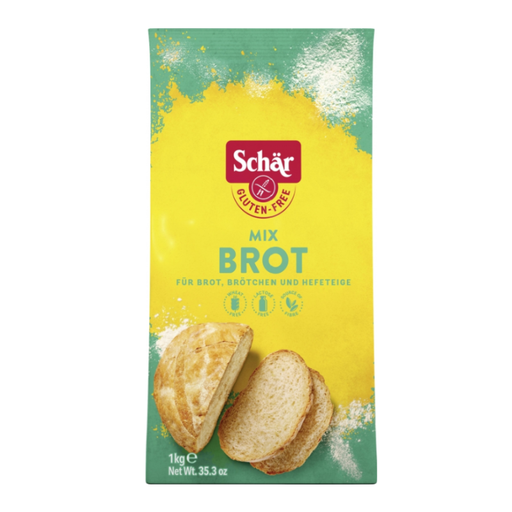
Schär Gluten-Free Bread Baking Mix, 1 kg
For families who want to bake bread in advance for their children’s tea breaks. The pack contains 1 kg; check the ingredients list to see whether it suits your preferred wholemeal profile, and check the precautionary allergen statements if your child has an additional soya allergy.
If your child has coeliac disease, prepare and serve the bread without cross-contamination from foods containing gluten.
View at Joybuy
Frequently asked questions
Is the crossed-grain symbol on a bread pack enough?
For a child with coeliac disease, also check that the specific pack explicitly says ‘gluten-free’. It is important to prevent cross-contamination when preparing and sharing the bread too.
What should I look for when buying unpackaged bread?
Look for an explicit gluten-free label on the specific bread and ask how it is prepared. If worktops or equipment are shared, agree the procedures before the tea break.
Is dark multigrain bread automatically wholemeal?
No. The consumer advice centre points out that ‘multigrain’ usually does not mean wholemeal. Check which wholemeal ingredients are actually listed. If your child has coeliac disease, the bread must also be explicitly labelled gluten-free.
Could gluten-free bread be unsuitable because of other allergens?
Yes. ‘Gluten-free’ does not tell you whether a product contains other allergens. REWE’s Pures Korn Bread carries a precautionary warning for traces of soya, almonds and sesame; Schnitzer says BIO Bread Less may contain traces of sesame, soya, lupin and egg. Choose based on the information on the specific pack and your child’s individual needs.


