People with coeliac disease who miss rye bread
You’re looking for a base for lunch that’s explicitly labelled gluten-free, but don’t want to miss out on a hearty choice of bread. A dark-sounding bread name alone won’t help you decide.


Traditional rye bread is not gluten-free, so it is not suitable for coeliac disease: according to the German Coeliac Society, rye contains gluten. For lunch, choose country loaves or sliced bread explicitly labelled gluten-free if you prefer soft slices; gluten-free seeded bread or crispbread offers a different texture. Check each option for other allergens and storage instructions.
You’re looking for a base for lunch that’s explicitly labelled gluten-free, but don’t want to miss out on a hearty choice of bread. A dark-sounding bread name alone won’t help you decide.
You want to include grains and seeds in your gluten-free bread, so you compare the ingredients, slice size and nutritional information for each product.
You need gluten-free bread, but also have to check the ingredients list and allergen information for anything relevant to you, such as soya, mustard, sesame, milk or lupin.
For a gluten-free lunch, check the labelling first. Then consider the type of bread you want, its ingredients and how to store the pack once opened.
| Criteria | What to check | Who it matters to |
|---|---|---|
| Gluten-free labelling | Look for an explicit “gluten-free” statement and make sure rye isn’t listed in the ingredients. Check separately for any other intolerances you have. | If you have coeliac disease, you need a clearly labelled gluten-free option rather than bread that only looks like rye. For around 50% of consumers, this clear-cut choice would be their main buying priority. |
| Bread style and nutritional values | Compare ingredients such as buckwheat, millet or seeds, along with the nutritional information per 100 g. Don’t assume that “multigrain” alone tells you anything about the nutritional values. | If hearty slices or seeds are especially important to you, compare the recipe and nutritional values side by side. Around 30% of consumers would put the style of bread and its nutritional profile first. |
| Pack size and storage | Check the number of slices or pack size, as well as the storage instructions and how soon the bread should be eaten after opening. | If you regularly prepare lunch, choose a pack size that suits how much you eat, so opened bread doesn’t go to waste. Practicality would be the main concern for around 20% of consumers. |
According to the German Coeliac Society, rye contains gluten. Neither a dark colour nor descriptions such as “country loaf” or “rustic” make bread suitable for coeliac disease.
For a gluten-free lunch, choose a product explicitly labelled “gluten-free” instead of traditional rye bread.
The nutritional values of bread with lots of seeds can vary considerably depending on the recipe. REWE lists 14.1 g of fibre, 28.5 g of fat and 360 kcal per 100 g for its frei von Pures Korn bread; these values apply to this product.
Compare the nutritional information per 100 g for the products you’re considering, and take your actual portion size into account.
“Gluten-free” doesn’t tell you whether a bread is suitable for another intolerance you have. For example, Schär lists soya protein in its Landbrot and warns that it may contain mustard.
Read the ingredients list and allergen information for each individual product.
Storage instructions vary by product. REWE says its frei von Pures Korn bread should be eaten within 48 hours of opening.
Choose a pack size that suits how much you eat, and follow the storage instructions on the packaging.
If bread is left open for longer than recommended, some of the pack may go unused.
Schär offers sliced breads labelled gluten-free for different lunches, including Landbrot, Landbrot Mehrkorn and Meisterbäckers Classic.
Poensgen offers gluten-free country bread, as well as bread varieties with different storage requirements.
The range includes Pures Korn bread, labelled gluten-free and packed with grains and seeds—a hearty option for lunch.
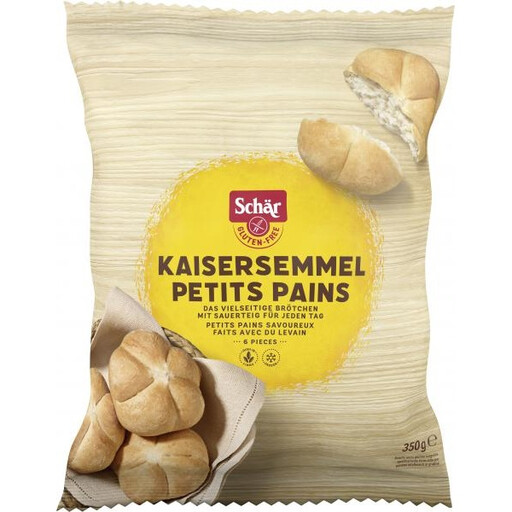
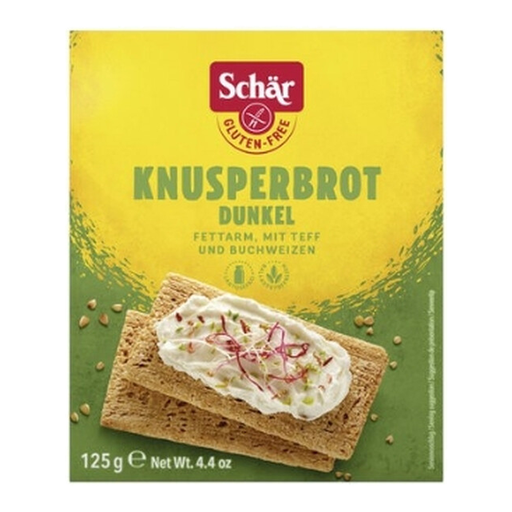
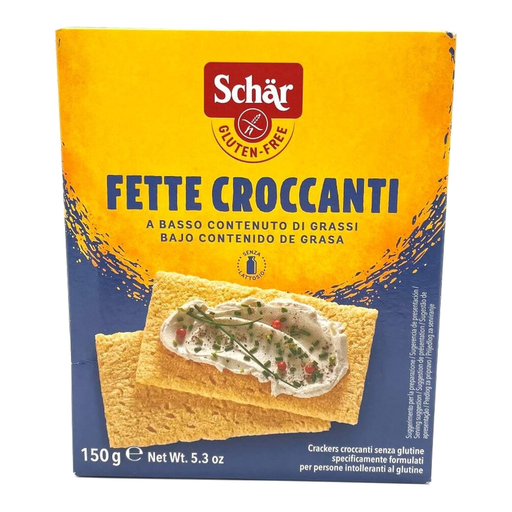
This selection includes gluten-free Kaiser rolls and two crispbreads as bases for lunch. The Kaiser rolls need to be baked before eating, while crispbread doesn’t have the soft texture of a country loaf or sliced bread.
 No image available
A roll option for a gluten-free lunch when you don’t need sliced bread. The rolls are frozen and must be baked thoroughly according to the instructions; don’t refreeze after thawing. If you have a soya intolerance, check the ingredients.
 No image available
A crunchy base for a gluten-free lunch instead of soft country loaf or sliced bread. Seal the opened pack airtight; if you have a soya intolerance, check the warning about possible traces.
 No image available
A crunchy base for lunch if you’d rather not have soft bread. Seal the pack after opening; if you have other intolerances, check the full ingredients and allergen information on the packaging before buying.
No. According to the German Coeliac Society, rye is one of the cereals that contain gluten. Traditional rye bread is therefore not a gluten-free option for lunch if you have coeliac disease.
Look for an explicit “gluten-free” statement, and also check the ingredients and allergen information for the specific bread. Under Commission Implementing Regulation (EU) No 828/2014, the “gluten-free” claim is subject to a maximum gluten content of 20 mg/kg in the finished product; a dark-sounding bread name is no substitute for the label.
No. Bread labelled gluten-free may still contain other ingredients that are relevant to you, or carry warnings about other allergens. Always read the information for the specific variety rather than assuming the gluten-free label means anything else.
Follow the storage and use-by instructions for the specific product. REWE says its frei von Pures Korn bread should be eaten within 48 hours of opening; other breads may have different instructions.