If you have coeliac disease, checking that the specific bread or baking mix is labelled ‘gluten-free’ is the first step. ‘Wholemeal’, ‘multigrain’ and ‘seeded’ are no substitute. For a lunch that doesn’t involve baking, choose ready-to-eat bread; a baking mix, on the other hand, needs time to prepare. Then compare the ingredients, allergens and nutritional values per 100 g, and check the storage instructions.
Who needs to think carefully about their choice?
People with coeliac disease who pack lunch regularly
If you pack sandwiches for work, school or days out, start by checking that the specific product is labelled gluten-free. If you have other allergies or are planning several lunches, the ingredients, allergen information and storage instructions after opening are also important.
Shoppers who want to compare nutritional values
If you’re choosing between multigrain, oat and seeded bread, you can compare fibre and protein alongside fat and salt per 100 g. A single nutritional value won’t tell you which bread best suits your preferences and portion size.
People who bake their own lunch bread
A gluten-free baking mix could work well if you’re preparing several meals and can allow time for proving and baking. Check that the mix is labelled gluten-free, look at its ingredients and see which additional ingredients you’ll need according to the instructions.
What should you look for when shopping?
If you have coeliac disease, check the gluten-free labelling first. Then decide whether ready-to-eat bread suits your routine or whether you have time to bake. Assess nutritional values and other allergens for each individual product.
| Criteria |
What to check when buying |
Who it matters most to |
| Gluten-free labelling |
Does the specific product say ‘gluten-free’? Check this for bread containing oats, too. |
If I have coeliac disease, I need clear labelling and won’t rely on the name of the grain or seeds alone. For around 36% of consumers, this clarity is their main consideration when buying. |
| Nutritional profile |
Compare fibre, protein, fat and salt per 100 g, and take your usual portion size into account. |
When I choose seeded bread for lunch, I want to assess its overall nutritional value rather than focus only on protein. This profile is a priority for around 29% of consumers. |
| Preparation and storage |
Is the bread ready to eat, and how should it be stored and used after opening? |
For my lunchbox, I need bread that fits into my routine without baking and that I can finish before it goes off. Around 21% of consumers prioritise this. |
| Home baking and keeping a supply |
What additional ingredients, soaking time, proving time and baking time does the recipe require? |
I like to prepare bread for lunches later in the week and can set aside time in the kitchen. Home baking is the main consideration for around 14% of consumers. |
Common bread-buying mistakes
-
Assuming ‘wholemeal’ or ‘seeded’ means ‘gluten-free’
These terms don’t tell you whether a product is labelled gluten-free. If you have coeliac disease, the specific product’s labelling is what matters when shopping for the bread covered here.
Look for ‘gluten-free’ on the pack rather than relying on terms such as ‘multigrain’ or ‘wheat-free’, or on the ingredients alone. ‘Very low gluten’ is a different claim.
-
Focusing on just one nutritional value
Seeded breads can vary in their protein, fibre, fat and salt content. For example, Schnitzer lists 14 g of fat and 1.1 g of salt per 100 g for Bio Bread Less; these figures apply to that specific product.
Compare nutritional information on the same per-100-g basis and consider how much bread you’ll have for lunch.
-
Overlooking other allergens because a product is labelled gluten-free
‘Gluten-free’ doesn’t mean a bread is free from soya, sesame, lupin, egg or nuts. Ingredients and warnings about possible traces vary from one product to another.
If you have other allergies, check the current ingredients list and allergen information on every pack.
-
Choosing a pack size without planning when you’ll use it
The best-before date before opening won’t tell you how long you can plan to use an opened loaf for lunches. According to its product page, Schnitzer recommends refrigerating Bio Bread Less after opening and using it within two days.
Choose a pack size that suits your lunch plans, following the instructions from the manufacturer of the product you buy. A baking mix, by contrast, can only be used as lunch bread after it has been prepared.
Useful brands to know
These examples cover different types of bread and baking mixes. Information about ingredients, nutritional values and storage applies to the specific product mentioned, not to every bread made by that brand.
Schär
Meisterbäckers Mehrkorn is a Schär range of sliced gluten-free bread for sandwiches and packed lunches.
- Schär says Meisterbäckers Mehrkorn contains millet, quinoa, linseed and sunflower seeds, among other ingredients. It lists 9.9 g of fibre per 100 g.
- The recipe contains soya. Schär also warns that it may contain traces of lupin, mustard and sesame.
Alnavit
Alnavit offers gluten-free oat and seeded products, including bread and wholemeal oat rolls.
- Alnavit describes its Seed & Oat Bread as gluten-free and vegan. The manufacturer says its gluten-free wholemeal oat rolls are ready to eat.
- Check with the retailer whether the product you want is available locally before you shop.
Schnitzer
Schnitzer’s range includes gluten-free fresh breads. Bio Bread Less is a seeded bread made without flour or yeast.
- For Bio Bread Less, Schnitzer lists 9.5 g of protein and 6.5 g of fibre per 100 g.
- Schnitzer also lists 14 g of fat and 1.1 g of salt per 100 g for this product. Possible traces of sesame, soya, lupin and egg, as well as the need to refrigerate it after opening, are all worth considering before you buy.
Poensgen
Poensgen offers a gluten-free wholemeal bread mix, among other products, for shoppers who want to make their own lunch bread.
- According to Poensgen, the mix contains sunflower seeds, linseed and buckwheat flour, among other ingredients.
- You’ll need yeast and water, as well as time for proving and baking. Poensgen notes that other allergens are also handled at its production facility.
Seitenbacher
For this guide, the gluten-free Seitenbacher bread mix listed by REWE is a useful example.
- The ingredients list on REWE’s website includes gluten-free oats, 40% seeds, cashew nuts and psyllium husks.
- The mix needs to be prepared and baked. Check the pack because it contains cashew nuts and may contain traces of other allergens.
Suitable bread options at Joybuy
This selection includes crispbread labelled gluten-free, a bread mix and Kaiser rolls. If you’re specifically looking for ready-to-eat sliced wholemeal bread, check the type of bread before you buy: crispbread, a baking mix and rolls that need baking suit different lunch plans.
 Image unavailable
Schär gluten-free dark crispbread, 125 g
A crispbread option for lunch without having to bake. If you’re after soft, classic sliced bread for sandwiches, bear in mind that this is a different type of bread. If you also have a soya allergy, check the latest allergen information on the pack.
View at Joybuy
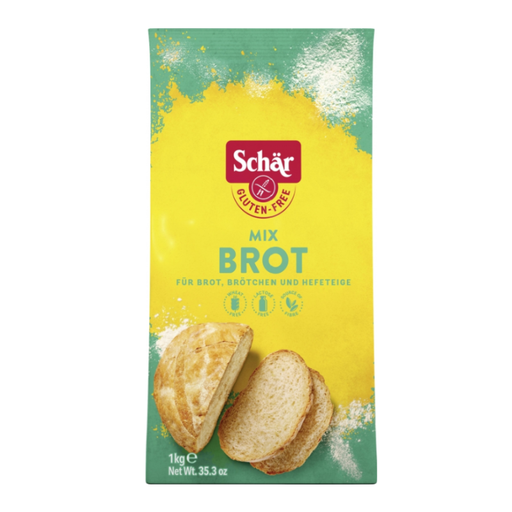 Image unavailable
Schär gluten-free bread mix, 1 kg
For homemade gluten-free bread that you can prepare ahead of a future lunch. This isn’t ready-to-eat bread, so allow time for adding water and yeast and baking. Check the instructions on the pack for your chosen preparation method.
View at Joybuy
 Image unavailable
Schär gluten-free Kaiser rolls, 350 g
A roll option for sandwiches and packed lunches if you can plan ahead and bake them before eating. Check the freezing and preparation instructions, and if you have a soya allergy, check the ingredients list on the pack.
View at Joybuy
Frequently asked questions
Is ‘wheat-free’ enough if you have coeliac disease?
No. For this purchase, ‘wheat-free’ is no substitute for the specific product being labelled ‘gluten-free’. Under EU Implementing Regulation (EU) No 828/2014, the term ‘gluten-free’ means that a food contains no more than 20 mg of gluten per kg; ‘wheat-free’ alone doesn’t guarantee this limit.
Can gluten-free bread contain oats?
Yes, oats can be an ingredient in bread labelled ‘gluten-free’. For oat bread and baking mixes, check the label on the specific product rather than assuming that the presence of oats alone makes it suitable for someone with coeliac disease.
Is gluten-free seeded bread automatically the better choice for lunch?
No. The fact that a bread is seeded doesn’t tell you whether it’s labelled gluten-free or whether its nutritional profile suits you. Compare the ingredients and nutritional values per 100 g, particularly fibre, protein, fat and salt, and take your portion size into account.
Should I check for other allergens even if a product is labelled gluten-free?
Yes. If you need to take other allergies into account, check the ingredients list and any warnings about possible traces on every pack. The European Commission explains that allergens in prepacked foods are highlighted in the ingredients list. The German Food Federation distinguishes these from voluntary warnings about the possible unintended presence of allergens.


