People with coeliac disease
If you have coeliac disease, start by looking for the ‘gluten-free’ label when choosing bread for supper. If you have other allergies, check the ingredients and allergen information on the current packaging too.


If you have coeliac disease, the ‘gluten-free’ label is the first thing to check. In the EU, this claim applies to foods containing no more than 20 mg of gluten per kg. For supper without any baking, ready-to-eat bread is an option, while bread mixes need time and an oven. Then check the ingredients, allergen information, nutritional values and storage instructions to find the right product for your household.
If you have coeliac disease, start by looking for the ‘gluten-free’ label when choosing bread for supper. If you have other allergies, check the ingredients and allergen information on the current packaging too.
You want bread you can eat without baking. For ready-to-eat products, compare the format and pack size, and check the storage instructions for after opening.
You’re happy to set aside time to prepare the bread and want to choose between wholegrain oat and seed mixes. Before buying, check what extra ingredients and equipment the mix requires.
First, check for the gluten-free label and any other allergens that matter to you. Then decide whether you want bread that’s ready to eat straight away. The ingredients and nutritional values can help you compare suitable products.
| Criteria | What to check | Who it matters to |
|---|---|---|
| Gluten-free status and allergens | Look for ‘gluten-free’. For oat products, check the label, ingredients and any other allergen information. | If I have coeliac disease, I need bread that’s explicitly labelled gluten-free and must also consider any other potential allergens. This is the main priority for around 36% of consumers. |
| Ready to eat | Choose ready-to-eat bread and compare the pack size and instructions for using it after opening. | If I’m shopping in the evening, I want bread I can eat without baking and to be able to use up an opened loaf in time. This is the top priority for around 29% of consumers. |
| Ingredients and nutritional values | Compare the ingredients list and nutritional values per 100 g, particularly fibre, fat and salt. | For a hearty supper, I want to know which grains and seeds are included and how the nutritional values compare. Around 21% of consumers consider this their top priority. |
| Baking your own | Check any extra ingredients, the baking tin and the steps involved, including proving, soaking and baking times. | I want to bake fresh bread and can plan the preparation before supper. This is the main preference for around 14% of consumers. |
Bread labelled gluten-free may still contain other allergenic ingredients. For example, Seitenbacher seed bread mix contains cashew nuts. ‘May contain’ warnings could also be relevant.
If you have other allergies, always check the ingredients list and allergen information on the current packaging.
A bread mix needs to be prepared and baked first. Depending on the recipe, you may also need to add water and yeast, and allow time for soaking or proving.
If you want bread ready for supper without any preparation, choose a ready-to-eat product. If you’re buying a mix, read the full preparation instructions first.
Remember to factor in oven time and, where needed, yeast or a suitable tin.
These terms alone don’t tell you which ingredients make up the largest proportion or what the nutritional values are. According to the respective REWE product information, Schär Vollkornbrot contains 9 g of fibre per 100 g, while REWE frei von Pures Korn Brot contains 14.1 g. The products also differ in format and ingredients.
Compare the ingredients list and nutritional values per 100 g instead of choosing by name alone.
The product information for REWE frei von Pures Korn Brot says it should be used within 48 hours of opening. Other breads may have different instructions.
Choose a pack size that suits how much you’ll use, and follow the storage instructions for that specific product.
The gluten-free wholegrain bread listed by REWE is a ready-to-eat option for supper without the need to bake.
The products considered include a ready-to-eat bread and a gluten-free dark rye bread mix.
The listed gluten-free wholegrain oat mix is for households who want to bake their own bread.
The gluten-free bread mix considered here is made with seeds and for baking your own bread.
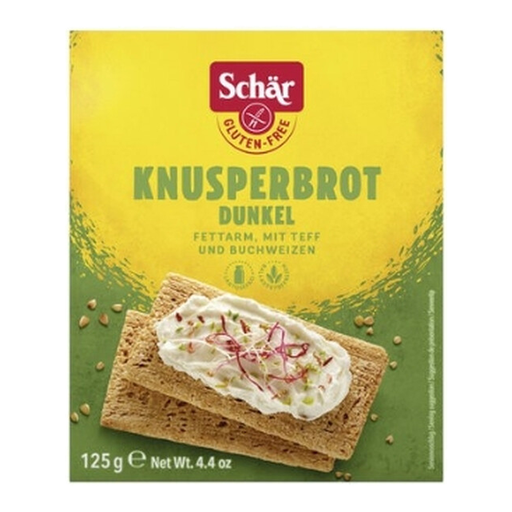
This crispbread is an option for supper without any baking. It’s a different format from soft wholegrain sliced bread. If you specifically want wholegrain flour, check the ingredients on the pack.
 No image available
This crispbread is labelled gluten-free and is a handy option if you don’t want to bake for supper.
It’s a crisp, crunchy crispbread and isn’t a substitute for soft wholegrain sliced bread. If you’re specifically looking for wholegrain, check the flour information; if you have a soya allergy, check the current allergen labelling.
In the EU, the ‘gluten-free’ claim applies to foods containing no more than 20 mg of gluten per kg, as the Verbraucherzentrale also points out. ‘Very low gluten’ is a different claim and shouldn’t be confused with ‘gluten-free’ when shopping for someone with coeliac disease.
Bread containing oats may be suitable if the product is explicitly labelled gluten-free. Check this on the specific pack, and also look out for any other ingredients and allergens that matter to you.
Compare the ingredients list and nutritional values per 100 g, rather than looking only at the name on the front of the pack. The Lebensmittelverband Deutschland explains that ingredients are listed in descending order by weight; stated percentages also show how much of particular ingredients the product contains.
Follow the storage and usage instructions for the specific product. REWE says that REWE frei von Pures Korn Brot should be used within 48 hours of opening; don’t assume the same timeframe applies to other breads.