What should you look for when buying?
When choosing butter biscuits for an organic and speciality food range, first establish whether the specific product meets your needs. You can then make a useful comparison of its organic status, recipe and practicality. Under Regulation (EU) No 828/2014, a food described as “gluten-free” must contain no more than 20 mg of gluten per kg in the finished product.
| Buying criterion |
What to check |
Who it matters most to |
| Gluten-free labelling |
Check for the “gluten-free” statement and read the ingredients list on the specific pack being sold in Germany, especially for imported products with the same name. |
If I’m choosing products for someone with coeliac disease, I shouldn’t assume that organic status or the product name means it’s gluten-free. For around 36 % of consumers, clear gluten-free labelling comes first. |
| Organic status and speciality food profile |
Compare the organic label, ingredients and product type: classic butter biscuit or sablé. |
For my speciality food range, I’m looking for an explicitly gluten-free option that also fits the organic selection I want to offer. Around 29 % of consumers put this requirement first. |
| Butter biscuit recipe |
Compare the butter or clarified butter, the stated quantity and other ingredients on the individual pack. |
I want to offer a classic butter biscuit, so I check the specific recipe rather than relying on the product name alone. Around 21 % of consumers consider this their top priority. |
| Allergens and practicality |
Check for milk, egg and possible traces of other allergens, as well as individual packs, best-before dates and storage guidance. |
If other allergens or storage requirements are important to my range, the individual product needs to work in practice. Around 14 % of consumers say this is their main consideration. |
Brands to consider
The information below relates to specific gluten-free butter biscuits or sablés from the brands mentioned, not their entire ranges.
Alnavit
Organic butter biscuits for a classic biscuit selection.
- Alnavit states that its gluten-free butter biscuits contain 15 % butter and no added flavourings.
- The biscuits contain butter. Alnavit warns that they may contain traces of egg, soya, almonds, nuts, sesame and lupin.
Hammermühle
Gluten-free organic butter biscuits in individually portioned freshness packs.
- According to Hammermühle, the recipe contains 12 % clarified butter, and every four biscuits are individually wrapped.
- Be aware of possible traces of egg and tree nuts. Hammermühle has also announced that the product is being discontinued, so check its availability before making long-term range plans.
Schär
Petit Beurre butter biscuits: a classic-shaped gluten-free alternative.
- The German product page from dm-drogerie markt lists Schär Petit Beurre as gluten-free and states that it contains 10 % butter.
- The product contains egg and milk; it may also contain soya. If you’re specifically looking for organic products, check the label on the individual pack.
Backbrüder
Gluten-free organic sablés with a butter biscuit feel, for a speciality food selection.
- Backbrüder describes its sablés as organic and gluten-free; the ingredients include butter.
- The recipe also contains whole egg powder. For its fresh baked goods, the supplier gives a short freshness period after delivery and recommends freezing them for longer storage.
Butter biscuits at Joybuy
Schär Petit Beurre is an option for a range of classic-shaped gluten-free butter biscuits if organic certification isn’t a firm requirement. When choosing products for people with coeliac disease or other allergies, the label on the specific pack remains the key consideration.
 No image available
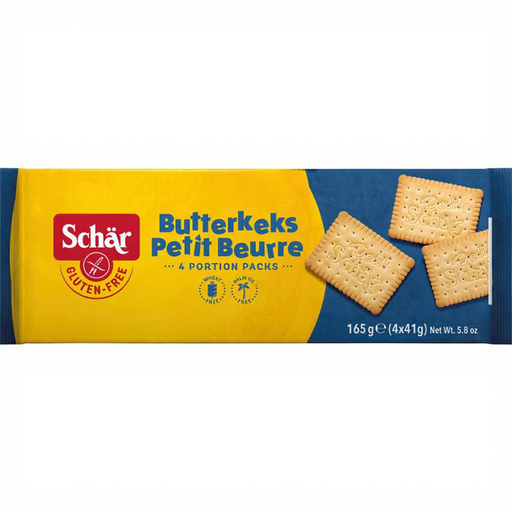
Schär Petit Beurre gluten-free butter biscuits, 165 g
For shoppers looking for Petit Beurre-style butter biscuits who don’t require organic certification.
The German product information from dm-drogerie markt states that Schär Petit Beurre contains 10 % butter, as well as egg and milk; it may also contain soya. If you have coeliac disease or other allergies, check the details on the specific pack.
View at Joybuy
Frequently asked questions
What does “gluten-free” mean for butter biscuits?
Under Regulation (EU) No 828/2014, a food described this way must contain no more than 20 mg of gluten per kg in the finished product. When choosing products for someone with coeliac disease, check the label and ingredients list on the specific pack sold in Germany.
Are spelt butter biscuits a gluten-free alternative?
Spelt alone doesn’t make a butter biscuit gluten-free: it’s a type of wheat and therefore one of the gluten-containing cereals named in Regulation (EU) No 828/2014. What matters is whether the specific product is eligible to carry the gluten-free label, not whether it’s described as “spelt”.
Is the ingredients list on an overseas product page enough for someone with coeliac disease?
No. It shouldn’t replace the information for the product sold in Germany. The German Coeliac Society points out that foods with the same name from other countries or export versions may contain different ingredients, including ingredients that contain gluten.
Which allergens should you look out for besides gluten?
It depends on the butter biscuit. The German product information for Schär Petit Beurre lists egg and milk, and says that it may contain soya; Hammermühle warns of possible traces of egg and tree nuts. For other options too, check the ingredients and traces warnings on the specific pack.
What should you consider when storing products for a speciality food range?
The best-before date and storage guidance for each product are what matter. Hammermühle recommends storing its butter biscuits in a dry place, away from heat; Backbrüder recommends freezing its fresh baked goods for longer storage.


