If a child with coeliac disease is joining a birthday party, an explicit ‘gluten-free’ label on the biscuit pack you buy matters more than the brand or shape. Then consider any other allergies among the guests and how you plan to serve them: chocolate biscuits, cookies and oat-based options have different ingredients, and the suitable choice should be served separately from biscuits containing wheat.
Who is this choice important for?
Hosting a child with coeliac disease
You need a chocolate biscuit that is explicitly labelled gluten-free for the party, and you should check the actual pack before serving. Under EU Implementing Regulation (EU) No 828/2014, the term ‘gluten-free’ may be used only when a food contains no more than 20 mg of gluten per kg.
Parents dealing with several allergen requirements
As well as gluten, your buffet may need to account for milk, eggs, soya, lupin, sesame or nuts. A chocolate biscuit labelled gluten-free may still contain other allergens, so check the ingredients and ‘may contain’ information for the specific variety against the children’s requirements.
Hosts who want to keep serving simple
If you have different biscuits on the table, serve the gluten-free variety separately and clearly. Compare the biscuit shape and pack size; not every gluten-free product is available in an individual portion format.
What should you look for when buying?
First, check the gluten-free label and any other allergens in the specific variety. Only then consider the format and ingredients when choosing biscuits for the party buffet.
| What to consider |
What to check when buying |
Who this matters most to |
| Gluten-free labelling |
Check that the current pack explicitly says ‘gluten-free’, and make sure online information matches the product delivered. |
If a child has coeliac disease, I don’t want to rely on the biscuit shape or brand name. Around 36% of consumers prioritise an explicit gluten-free label. |
| Other allergens |
Check the ingredients list and ‘may contain’ information against guests’ known allergies, particularly to milk, eggs, soya, lupin and nuts. |
If several children have allergies, I need a variety with ingredients suitable for each of them. For around 29% of consumers, other allergens take priority when choosing. |
| Format and separate serving |
Compare the pack size and biscuit shape; use separate plates or tongs for serving, and keep the packaging. |
If biscuits containing wheat are also available, I want to make sure the gluten-free variety is easy to identify. Around 21% of consumers prioritise serving them separately and simply. |
| Ingredients and oats |
For biscuits containing oats, check whether the child can tolerate gluten-free oats, as well as checking the gluten-free label. |
If I’m considering a biscuit with oats and seeds, I want those ingredients to suit the child’s known requirements. For around 14% of consumers, the ingredients are the main factor when choosing. |
Which mistakes can you avoid?
-
Assuming a chocolate coating means a biscuit is gluten-free
Biscuits that look similar can have different ingredients. The Joybuy descriptions for Leibniz Choco Edelherb and Leibniz Minis Choco list wheat flour or wheat as an allergen.
Choose a variety that is explicitly labelled gluten-free on the current pack for a child with coeliac disease, and serve regular biscuits separately.
-
Assuming ‘gluten-free’ means free from all allergens
Gluten-free chocolate biscuits may still contain milk, soya or lupin, for example. For Schär Choco Keks, the manufacturer lists milk and says it may contain eggs and nuts.
Before buying, check the ingredients and ‘may contain’ information for the exact variety against the invited children’s known allergies.
-
Serving oat biscuits for the first time at the party
For its gluten-free Hammer Mühle Simply Seeds biscuit, REWE notes that people with coeliac disease may tolerate gluten-free oats differently.
Check an oat-based variety with the child’s parents in advance rather than assuming that the child can tolerate it because it is labelled gluten-free.
-
Relying on nutrition or organic claims to show a biscuit is suitable
Information about fibre or an organic label won’t tell you whether a biscuit meets the guests’ gluten and other allergen requirements.
Start by checking the relevant labelling, ingredients and known tolerances. Only compare nutrition information such as sugar, fat and fibre for products that are still suitable after those checks.
Brands and product ranges to help you choose
The specific variety matters, not the brand name: the product ranges below differ in biscuit shape, ingredients and allergen information.
Schär
The range includes several types of gluten-free biscuits, including chocolate-coated biscuits, cookies and Notes wafers.
- Schär describes its Choco Keks as gluten- and wheat-free; the manufacturer says this variety has a 30% chocolate coating.
- According to Schär, Choco Keks contains milk and may contain eggs and nuts. This information does not automatically apply to other Schär products.
Poensgen
Poensgen offers chocolate biscuits labelled gluten-free in a 150 g pack.
- The product information lists milk chocolate couverture and explicitly labels the chocolate biscuits gluten-free.
- The recipe includes milk, soya and lupin, among other ingredients. Poensgen also says that eggs, nuts and sesame are handled at its production site.
Hammer Mühle
The gluten-free Simply Seeds chocolate biscuits are an oat- and seed-based option with chocolate chips.
- For this variety, REWE lists gluten-free oats, linseeds and 7.8 g of fibre per 100 g.
- REWE notes that people with coeliac disease may tolerate gluten-free oats differently and that the biscuits may contain traces of nuts.
REWE frei von
The Bio Chocolate Cookies 150 g variety is listed in REWE’s gluten-free chocolate biscuit category.
- The category listing can help you find a specific gluten-free chocolate cookie variety to compare with other packs.
- For other allergies, check the ingredients and ‘may contain’ information on the specific pack; the gluten-free filter is no substitute for this check.
Leibniz / Bahlsen
Classic Leibniz chocolate biscuits can be part of a general party buffet, but the brand or chocolate coating alone doesn’t make them a gluten-free alternative.
- You can distinguish the Leibniz Choco Edelherb and Leibniz Minis Choco varieties by checking their individual product information.
- The information for these varieties lists wheat flour or wheat. Choose a variety explicitly labelled gluten-free instead for a child with coeliac disease.
Chocolate cookies and a wafer alternative on Joybuy
The selection includes Schär Chocolate Chip Cookies as chocolate biscuits and Schär Melto as a wafer bar alternative. Before serving either, check the gluten-free label and allergens on the pack you receive.
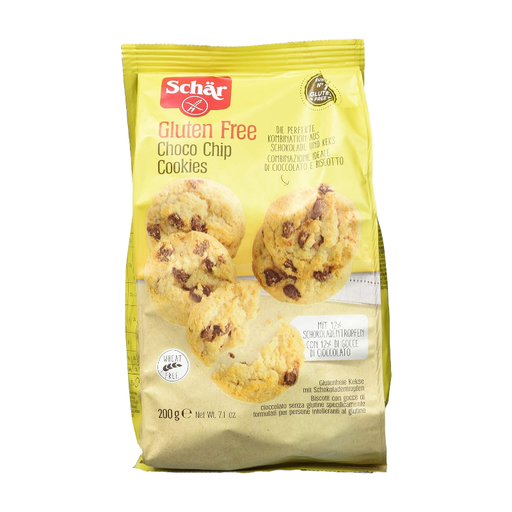 Image unavailable
Schär Chocolate Chip Cookies gluten-free, 200 g
A chocolate biscuit option if you’d prefer cookies with chocolate chips rather than chocolate-coated biscuits. Check the gluten-free label on the pack before serving. If anyone has an egg allergy, check the current allergen information particularly carefully, as the product information gives conflicting details about eggs.
View on Joybuy
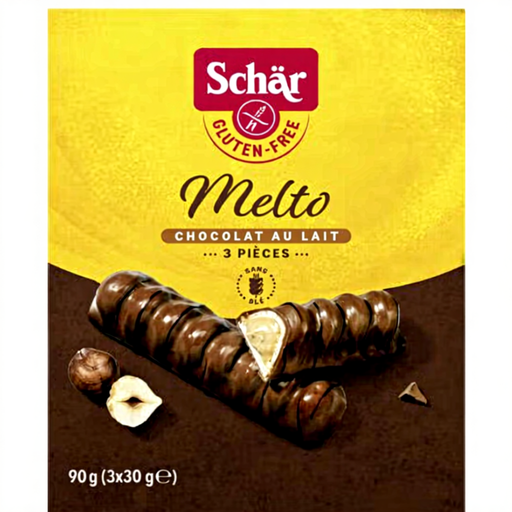 Image unavailable
Schär Melto gluten-free hazelnut wafer bars, 3 × 30 g
An alternative for the party if wafer bars are a better fit than chocolate biscuits. The product information lists hazelnuts, milk and soya, and says the bars may contain traces of peanuts and other nuts. Check these details and the gluten-free label against the pack you receive.
View on Joybuy
Frequently asked questions
Is a chocolate biscuit with no obvious wheat suitable for someone with coeliac disease?
No. Choose a product that is explicitly labelled ‘gluten-free’ on the specific pack you buy. Under EU Implementing Regulation (EU) No 828/2014, this label is permitted only when a food contains no more than 20 mg of gluten per kg.
Are gluten-free chocolate biscuits suitable for people with other allergies too?
Not necessarily: ‘gluten-free’ doesn’t tell you whether a specific variety contains milk, eggs, soya, lupin or nuts, for example. Check the ingredients and ‘may contain’ information on the pack you buy for each child with an allergy.
Can I serve regular Leibniz chocolate biscuits as a gluten-free alternative?
Leibniz Choco Edelherb and Leibniz Minis Choco are not suitable alternatives: their product information lists wheat flour or wheat. For any other variety, the current pack must explicitly state that it is gluten-free.
Can I serve a gluten-free oat biscuit for the first time at the party?
Check with the child’s parents in advance to make sure the child can tolerate oats. For its gluten-free Hammer Mühle Simply Seeds biscuit, REWE notes that people with coeliac disease may tolerate gluten-free oats differently.


