People with coeliac disease
For your coffee table, you’ll need a biscuit option that is explicitly labelled gluten-free. Check the current packaging before buying, and take any other ingredients and allergen advice into account.


If you’re shopping for someone with coeliac disease, choose only chocolate biscuits explicitly labelled gluten-free on the current packaging or product page. Then decide whether a chocolate-coated biscuit, a cream-filled sandwich biscuit or an oat biscuit would go best with coffee. Ingredients and allergen advice may narrow down the options if there are additional allergies or questions about oat tolerance.
For your coffee table, you’ll need a biscuit option that is explicitly labelled gluten-free. Check the current packaging before buying, and take any other ingredients and allergen advice into account.
If several guests are joining you, the type of biscuit matters as well as its gluten-free labelling: chocolate coating, cream filling and an oat base are not the same thing.
If you also need to avoid certain ingredients, check the specific variety for milk, soya or lupin, as well as any warnings about possible traces of egg or tree nuts. With oat biscuits, it’s also important to consider how well the person tolerates gluten-free oats.
When choosing biscuits for a coffee table shared with someone who has coeliac disease, start by checking for explicit gluten-free labelling. You can then weigh up the type of biscuit, other allergens and ingredient preferences.
| Criterion | What to check when buying | Who it matters most to |
|---|---|---|
| Gluten-free labelling | The current packaging or product page must explicitly state that the biscuit is gluten-free. | If a guest has coeliac disease, I don’t want to rely on assumptions based on the ingredients alone. For around 36% of consumers, clear gluten-free labelling comes first. |
| Type of biscuit | Choose between a chocolate-coated biscuit, a cream-filled sandwich biscuit and an oat biscuit. | If I want a particular texture to go with my coffee, the type of biscuit matters more to me than another flavour option. Around 22% of consumers put the right type of biscuit first. |
| Other allergens | Check the ingredients and allergen advice for the specific variety to see if there are any other reasons to avoid it. | If I need to avoid ingredients as well as gluten, I need clear information about that particular biscuit. Around 21% of consumers prioritise checking for additional allergens. |
| Ingredient preferences | Compare organic labelling, oat and seed bases, or fibre content per 100 g. | Once I’ve confirmed it’s suitable for a gluten-free diet, I might specifically look for an oat biscuit rather than a classic biscuit. For around 21% of consumers, this kind of ingredient preference comes first. |
Biscuits labelled gluten-free may contain milk, soya or lupin, for example, and allergen advice about traces varies from product to product.
Check the ingredients list and allergen advice on the specific pack for each guest, rather than assuming that gluten-free labelling means the product is free from other allergens.
The German Coeliac Society says that oats not contaminated with gluten-containing cereals may be included in a gluten-free diet, provided they don’t cause symptoms. Individual tolerance is therefore important.
Before serving biscuits containing oats, check whether they’re suitable for the guest in question. If you’re unsure, you can offer another type of biscuit that is explicitly labelled gluten-free.
A photo doesn’t reliably show the ingredients and warnings on the pack you’ll actually receive.
Before buying or serving, read the current labelling for the specific variety.
Schär offers a range of chocolate biscuits labelled gluten-free, including Digestive Choc, Chocolate O's and Choco Keks.
REWE lists Poensgen chocolate biscuits as a product labelled gluten-free.
Hammermühle Simply Seeds is an organic oat biscuit with chocolate and linseeds listed as gluten-free.
This selection includes a chocolate chip biscuit labelled gluten-free and a hazelnut wafer bar labelled gluten-free. The bar is a different type of baked treat, not a classic chocolate biscuit.
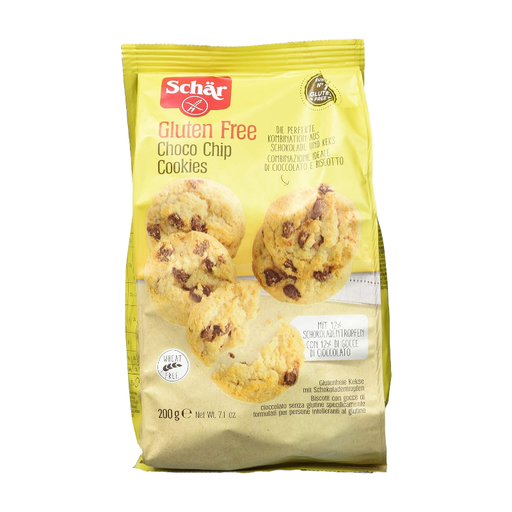 No image available
A chocolate chip biscuit explicitly labelled gluten-free, ideal for your coffee table.
Pack size: 200 g. If egg or soya needs to be avoided, check the current ingredients list and allergen advice particularly carefully. For egg, check whether it’s listed as an ingredient or as a possible trace.
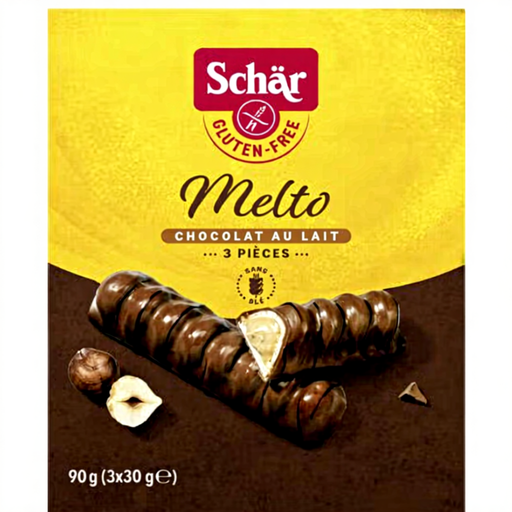 No image available
A hazelnut wafer bar explicitly labelled gluten-free, for guests who would prefer a bar to a chocolate biscuit.
Pack of 3x30g. If you have an allergy to hazelnuts, milk or soya, or any other nut allergy, check the current ingredients and allergen advice before buying.
No. When choosing biscuits for someone with coeliac disease, look for explicit gluten-free labelling on the current pack or product page. The absence of obvious wheat ingredients alone isn’t enough to confirm that a product is labelled gluten-free.
Not automatically. For example, the product information for Schär Digestive Choc lists milk and soya, as well as possible traces of egg and lupin. Schär Chocolate O's lists milk, lactose and soya, as well as possible traces of egg. Always check the labelling for the variety you want.
According to the German Coeliac Society, gluten-free oats may be suitable if they haven’t been contaminated with gluten-containing cereals and are tolerated by the individual. Check the gluten-free labelling and the oat information for the specific product before choosing it for a guest.