For cycling trips with coeliac disease, chocolate biscuits are only an option if the specific product is explicitly labelled gluten-free. After that, check the ingredients, other allergens and nutritional values for the amount you’ll actually take with you. Carbohydrate values per 100 g and biscuit sizes can help you compare products, but they don’t prove any particular effect on cycling or show whether you’ll tolerate a product during a ride.
Who is this selection relevant to?
Cyclists with coeliac disease
If you want to take chocolate biscuits on a ride, the explicit gluten-free labelling on the specific product matters more than the brand or a comparison of nutritional values. The German Nutrition Society stresses that people with coeliac disease must avoid gluten permanently.
Touring cyclists packing a sweet snack
Along with the ingredients, pack and biscuit size matter when you’re choosing what to take with you. A value per 100 g doesn’t tell you how much you’ll actually want to eat on the go.
Shoppers comparing oats and allergens
If you want to compare oats, seeds or particular nutritional values, check the ingredients and allergen information separately from the gluten-free labelling. Individual tolerance of gluten-free oats may also be a factor for people with coeliac disease.
What should you look for when buying?
If you have coeliac disease, first check the labelling on the specific chocolate biscuit. Then compare the ingredients, the portion you plan to take with you and the nutritional information, using the same basis for each comparison.
| Criteria |
What to check when buying |
Who it matters to |
| Gluten-free labelling |
Check that the current pack explicitly says “gluten-free”; read the ingredients and other allergen information separately. |
If I have coeliac disease, I don’t want to rely on a brand name or an older pack. Around 50% of shoppers would put clear gluten-free labelling first. |
| Portion and transport |
Match the pack size and, where available, the weight per biscuit to the amount you plan to take; follow the storage instructions. |
For a ride, I only want to pack as many biscuits as I’ve planned to have as a snack. For around 30% of shoppers, being able to plan the portion would be the main consideration. |
| Nutritional profile |
Compare carbohydrates, sugars, fibre and protein per 100 g, then relate the values to the amount you plan to eat. |
When choosing between products labelled gluten-free, I want to know the nutritional values for my actual portion. Around 20% of shoppers would prioritise comparing nutritional values. |
Common comparison pitfalls
-
Assuming “no wheat” or a familiar brand means gluten-free
You can’t tell whether a specific chocolate biscuit is gluten-free from the name of a biscuit range or a single ingredient. Bahlsen lists wheat flour for its biscuit range; that doesn’t tell you about every individual product.
If you have coeliac disease, only consider products explicitly labelled gluten-free, and check the current pack again.
-
Reading values per 100 g as values per biscuit
Schär lists 13 g per Digestive Choc and 20 g per sandwich biscuit. So, even when the nutritional values use the same reference amount, one biscuit doesn’t necessarily provide the same quantity.
Before your ride, decide how many biscuits you want and work out the nutritional values for that amount.
-
Assuming gluten-free means free from other allergens
Depending on the product, other ingredients and allergen information may also matter. REWE also notes that people with coeliac disease may tolerate gluten-free oats differently in Hammermühle Simply Seeds.
Check the gluten-free labelling, ingredients list and allergen information separately. Ask a healthcare professional about individual tolerance of oats.
Brands to help guide your choice
Schär
Schär makes chocolate biscuits explicitly labelled gluten-free, including Digestive Choc and sandwich biscuits.
- According to Schär, Digestive Choc contains 64 g of carbohydrates and 6.7 g of fibre per 100 g; one biscuit weighs 13 g. For its sandwich biscuit, Schär lists 70 g of carbohydrates per 100 g and 20 g per biscuit.
- Gluten-free labelling doesn’t replace checking the ingredients and allergen information for the specific variety you choose.
Poensgen
REWE lists Poensgen chocolate biscuits in a 150 g pack labelled gluten-free.
- REWE lists 64.9 g of carbohydrates per 100 g.
- The ingredients list shown there includes gluten-free wheat starch, milk ingredients, soya lecithin and sweet lupin flour, among other things. If you have any additional intolerances, the current labelling is key.
Hammermühle
Hammermühle Simply Seeds is a chocolate biscuit variety listed as gluten-free by REWE, made with oats and linseeds.
- REWE lists 54 g of carbohydrates, 7.8 g of fibre and 9.2 g of protein per 100 g for this product.
- REWE’s product information notes that people with coeliac disease may tolerate gluten-free oats differently.
Bahlsen / LEIBNIZ
Well-known biscuit brands are no substitute for checking whether an individual product is explicitly labelled gluten-free.
- Bahlsen says it uses wheat flour in its biscuit range. This doesn’t mean the whole range is suitable for a gluten-free diet, nor does it tell you about every individual pack.
Chocolate biscuits at Joybuy
This selection at Joybuy features a chocolate biscuit labelled gluten-free, with a pack size you can check when planning a snack for a cycling trip. If you have coeliac disease, the current labelling on the specific product remains the deciding factor.
 No image available
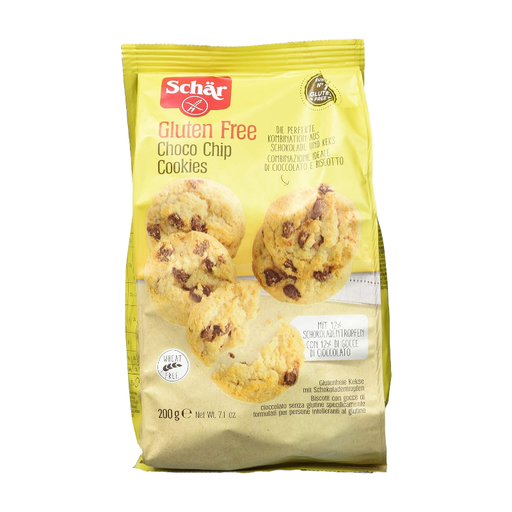
Schär gluten-free Chocolate Chip Cookies, 200 g
A chocolate biscuit labelled gluten-free to consider when choosing a sweet snack before a cycling trip. The pack contains 200 g.
Before deciding how much to take with you, check the current labelling and information about other allergens, particularly soya and egg.
View at Joybuy
Frequently asked questions
What does “gluten-free” mean on chocolate biscuits?
The German Nutrition Society says that products labelled “gluten-free” can contain no more than 20 mg of gluten per kg of food. If you have coeliac disease, check that the specific product is explicitly labelled rather than relying on its brand name or individual ingredients.
Are Bahlsen or LEIBNIZ chocolate biscuits always suitable for people with coeliac disease?
No, you can’t assume that they are. Bahlsen lists wheat flour for its biscuit range; when choosing a gluten-free product, check that the specific pack is explicitly labelled as such.
How do the carbohydrate values differ between individual gluten-free chocolate biscuits?
Per 100 g, Schär lists 70 g of carbohydrates for its sandwich biscuit and 64 g for Digestive Choc; REWE lists 64.9 g for Poensgen chocolate biscuits. These nutritional values don’t describe the amount in a biscuit portion or any effect on cycling.
Are gluten-free oats always tolerated by people with coeliac disease?
No, you can’t assume everyone will tolerate them. REWE’s product information for Hammermühle Simply Seeds notes that people with coeliac disease may tolerate gluten-free oats differently. Ask a healthcare professional about any questions specific to you.
What should I bear in mind when carrying chocolate biscuits?
Follow the storage instructions on the relevant pack and plan how much you want to take with you. The product information for Hammermühle Simply Seeds recommends storing it in a dry place, away from heat.


