For a guest with coeliac disease, chocolate biscuits clearly labelled gluten-free are an option for Sunday coffee. The information on the pack actually being served matters more than the style of biscuit. Next, choose between a chocolate coating, a filling or chocolate chips, while checking the ingredients and ‘may contain’ information separately for any other allergies. For oat-based options, you’ll also need to check whether the guest can tolerate oats.
Who is this choice important for?
Hosts welcoming a guest with coeliac disease
If a guest needs to follow a strict gluten-free diet, check that the current pack is clearly labelled before serving. You’ll also need to handle the biscuits separately from any gluten-containing bakes when setting up the coffee table.
Guests who want a classic biscuit with their coffee
A crisp shortbread or butter biscuit with a chocolate coating is a different choice from a filled biscuit or a cookie with chocolate chips. Schär describes both a chocolate-coated shortbread biscuit and a Choco Butter Biscuit.
Guests with other dietary requirements
If milk, egg, soya, nuts or a vegan recipe matter as well as gluten, a gluten-free label on its own isn’t enough. Check the ingredients and ‘may contain’ information for each product.
What should you look for when buying?
Start by checking the gluten-free labelling and any other ingredient requirements. Then choose between a chocolate coating, a filling or a cookie, and work out how many packs you’ll need for the coffee table.
| What matters | What to check | Who it matters to |
|---|
| Gluten-free labelling |
Check that the current pack explicitly says ‘gluten-free’; ‘wheat-free’ alone isn’t enough. If it contains oats, also consider whether the guest can tolerate them. |
When I’m shopping for a guest with coeliac disease, I don’t want to rely on the product name alone. For around 36% of consumers, clear gluten-free labelling is the main priority. |
| Type of chocolate and biscuit |
Check whether it has a coating, a filling or chocolate chips; compare the nutritional information per 100 g if needed. |
With my coffee, I might want a crisp chocolate-coated biscuit or deliberately choose a filled option. Around 29% of consumers put their preferred type of biscuit first. |
| Other ingredient requirements |
Check the ingredients and ‘may contain’ information for milk, egg, soya and nuts; don’t assume a vegan label applies to other products from the same brand. |
If several guests are sharing the same plate of biscuits, their other dietary requirements matter too. This is the main priority for around 21% of consumers. |
| Pack size and where to buy |
Check that the pack size and delivery options suit the number of guests and the date you need them. |
If I’m catering for several guests, I want to have enough suitable biscuits ready in time. For around 14% of consumers, this is the main consideration. |
For context, the Verbraucherzentrale says that the ‘gluten-free’ claim means no more than 20 mg of gluten per kg of food. It doesn’t mean a product is free from other allergens.
What mistakes can you avoid?
-
Assuming ‘wheat-free’ means ‘gluten-free’
A product being wheat-free doesn’t answer the question of whether it contains gluten. Other ingredients may also matter when choosing food for someone with coeliac disease. The ‘gluten-free’ claim has its own labelling requirements.
Before serving, check the pack you actually bought for a clear gluten-free claim and read the current ingredients list.
-
Overlooking other allergens
Depending on the recipe, gluten-free chocolate biscuits may contain milk, egg, soya or nuts; ‘may contain’ information can also be important. When everyone is sharing one plate of biscuits, it’s especially important to consider each guest’s requirements.
Compare the ingredients and ‘may contain’ information for every biscuit you plan to serve against your guests’ requirements. Don’t assume the front of the pack tells you everything about the recipe.
-
Offering oat cookies as the only option without checking first
Hammermühle notes that people with coeliac disease may tolerate gluten-free oats differently. A gluten-free label doesn’t answer this individual question.
Check in advance whether your guest eats oats. If you’re not sure, also provide a clearly labelled gluten-free option that doesn’t contain oats.
-
Assuming an older product image shows the current pack
What matters is the information on the pack that actually ends up on the coffee table. This is especially important for other allergies, as older product information can’t replace checking the current ingredients.
Before serving, check the labelling, ingredients and ‘may contain’ information directly on the pack.
Brands to help you choose
The product ranges mentioned here include different types of biscuit. The brand alone won’t tell you whether a particular pack meets all your guests’ requirements.
Schär
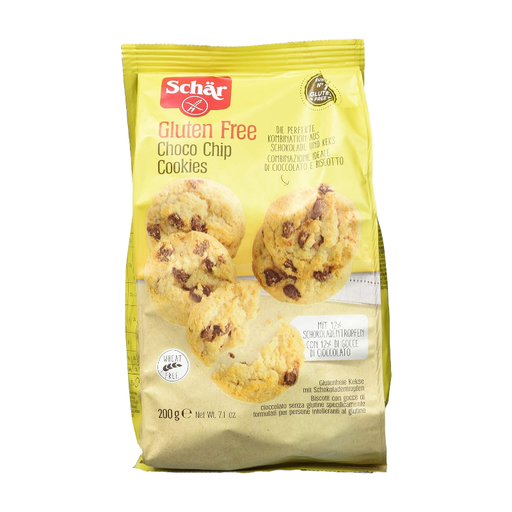
Schär offers chocolate biscuits explicitly labelled gluten-free in several styles, including chocolate-coated biscuits and Choco Chip Cookies.
- The Choco Keks is described as having a 30% chocolate coating; the Choco Chip Cookie has chocolate chips rather than a full coating.
- Ingredients and ‘may contain’ information vary between products. Check each one for milk and other allergens.
Hammermühle
Hammermühle offers a filled biscuit, Schoko Cremolino, and an oat cookie described as vegan, Bio Simply Seeds Kekse Schoko.
- According to Hammermühle, Schoko Cremolino has a 40% chocolate filling; Simply Seeds has a different recipe made with gluten-free oats.
- Schoko Cremolino contains egg, milk protein, soya and hazelnut, among other ingredients. For Simply Seeds, Hammermühle notes that people with coeliac disease may tolerate oats differently.
Leibniz
Leibniz Minis Glutenfrei, described by REWE, is a gluten-free butter biscuit labelled lactose-free and sold in a 100-g pack.
- As a butter biscuit, this option can add variety to a mixed plate of biscuits for coffee.
- The product mentioned isn’t a chocolate biscuit, so it won’t replace a chocolate option.
Chocolate biscuits at Joybuy
This Joybuy selection features a Schär cookie with chocolate chips that’s labelled gluten-free, for serving with coffee. If you’d rather have a chocolate-coated butter biscuit or a filled biscuit, choose those types separately, checking the labelling and ingredients for each.
 No image available
Schär Gluten-Free Chocolate Chip Cookies, 200 g
A good choice for a coffee table where you’d like a cookie with chocolate chips that’s explicitly labelled gluten-free. The pack contains 200 g; the product description lists 12% chocolate drops and soya as an allergen.
The product information contains conflicting statements about egg. If you have an egg allergy, check the labelling on the current pack before choosing this product. Also check that the pack delivered is labelled gluten-free before serving.
View at Joybuy
Frequently asked questions
Is ‘wheat-free’ enough for chocolate biscuits if you have coeliac disease?
No. Choose chocolate biscuits explicitly labelled ‘gluten-free’. Being wheat-free alone doesn’t rule out other ingredients that contain gluten. According to the Verbraucherzentrale, the ‘gluten-free’ claim allows a maximum of 20 mg of gluten per kg of food.
Are chocolate biscuits made with gluten-free oats always suitable?
Not for everyone with coeliac disease. For Bio Simply Seeds Kekse Schoko, Hammermühle notes that people tolerate gluten-free oats differently. Check whether your guest eats oats before buying.
How should I serve gluten-free biscuits alongside other bakes?
Serve gluten-free biscuits separately from anything containing gluten, and use clean, separate serving utensils. The German Coeliac Society highlights the risk of contamination in everyday kitchen settings. Also check the labelling on every newly bought pack.
Are gluten-free chocolate biscuits also dairy-free, nut-free or vegan?
No. Check these claims separately for each product. Schär’s chocolate-coated options contain milk, while Hammermühle Schoko Cremolino contains egg, milk protein, soya and hazelnut, among other ingredients. The Simply Seeds Schoko, described as vegan, may contain traces of nuts.


