People with coeliac disease
You’re looking for a chocolate snack for later in the evening and check for a ‘gluten-free’ label on the current pack. ‘Wheat-free’ or a familiar brand name alone won’t answer that question.


For anyone with coeliac disease, choosing a chocolate biscuit for a late-night snack starts with checking for a ‘gluten-free’ label on the current pack intended for the German market. Then check the ingredients and allergens for the specific variety. Filled sandwich biscuits and chocolate chip cookies can differ in their milk, egg and soya content, among other things. If you’d prefer to open a smaller portion, you could also consider individually wrapped chocolate madeleines – but bear in mind that these are soft mini cakes, not biscuits.
You’re looking for a chocolate snack for later in the evening and check for a ‘gluten-free’ label on the current pack. ‘Wheat-free’ or a familiar brand name alone won’t answer that question.
As well as gluten, you may need to avoid milk, eggs, soya or tree nuts, for example, or you may be looking for a vegan option. The varieties described by REWE and Hammermühle differ in their ingredients and allergen information.
You’d like to open just a small portion at night. A stated serving size or individually wrapped product can help you choose, although a chocolate madeleine has a different texture from a biscuit.
If you have coeliac disease, first check that the specific pack is labelled gluten-free. Then consider any other allergens, the portion format and the type of baked treat you’re after.
| Criterion | What to check when buying | Who it matters to |
|---|---|---|
| Gluten-free labelling | Does the current pack intended for the German market say ‘gluten-free’? Check the corresponding ingredients list too. | If I have coeliac disease, the label needs to match the pack I’m actually buying. For around 42% of consumers, this assurance is their top reason for choosing a product. |
| Other allergens and dietary preferences | Compare the ingredients, highlighted allergens and precautionary ‘may contain’ statements for the specific variety; ‘gluten-free’ alone doesn’t tell you this. | If you also need to avoid soya or milk, for example, choose a variety whose information fits your requirements. This is the top selection criterion for around 25% of consumers. |
| Portion format | Check the stated serving size or whether the product is individually wrapped, and whether it’s a biscuit or a soft baked treat. | For a small late-night snack, I want to open only as much as I plan to eat. Around 17% of consumers focus mainly on portion format when choosing. |
| Type of baked treat and ingredients profile | Choose between a cookie, a filled or coated biscuit, and a soft mini cake. Compare nutritional information only on a like-for-like basis, such as per 100 g. | If I’m after a crunchy texture or a cream filling, the type of baked treat only comes into play once the labelling is right. For around 16% of consumers, it’s their most important additional reason for buying. |
These two labels don’t mean the same thing. When choosing a product for coeliac disease, the gluten-free label on the specific product is what matters.
Look for ‘gluten-free’ on the current pack intended for the German market, rather than relying on ‘wheat-free’ or a product image alone.
A gluten-free biscuit can still contain other ingredients you need to avoid. The Schär sandwich biscuit described by REWE contains milk ingredients, egg and soya; soya is listed for the Schär Choco Chip Cookies, and you should also check whether they may contain egg.
Compare the ingredients and allergen information on the current pack with the substances you need to avoid.
Hammermühle notes that people with coeliac disease can differ in how well they tolerate gluten-free oats in its Simply Seeds Schoko biscuits.
If you’re unsure about oats, check whether they’re suitable for your diet before choosing an oat-based biscuit.
Hammermühle’s individually wrapped chocolate madeleines can be a handy single portion to open, but they don’t have the texture of a crunchy biscuit.
First decide which type of baked treat you’d like, then check the information on gluten, ingredients and allergens.
REWE describes both gluten-free cocoa cream sandwich biscuits and gluten-free Choco Chip Cookies from Schär. The two varieties suit different preferences for filling and biscuit type.
Hammermühle describes a range of gluten-free chocolate treats in different formats, including biscuits, filled baked goods and individually wrapped madeleines.
REWE lists its own-brand ‘REWE frei von’ Bio Chocolate Cookies in its gluten-free chocolate biscuit category.
REWE stocks Poensgen chocolate biscuits in a 150 g pack and labels this specific product as gluten-free.
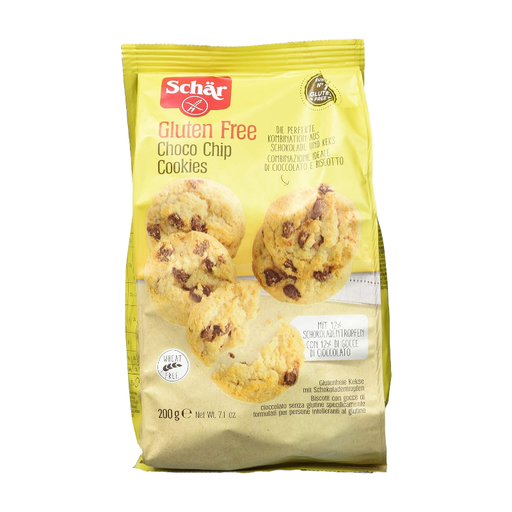
For a late-night chocolate biscuit snack, this selection features a cookie labelled gluten-free with chocolate chips rather than a cream filling. If you have coeliac disease, check the current pack’s labelling; if you have other dietary restrictions, check the allergen information.
 No image available
A good choice if you’re looking for a cookie labelled gluten-free rather than a filled biscuit for a late-night snack.
The product information lists chocolate chips at 12%. Soya is listed; if you avoid egg, check the allergen information on the current pack.
No. ‘Wheat-free’ isn’t a substitute for ‘gluten-free’. Check for a gluten-free label on the current pack intended for the German market and read the ingredients list.
Yes, check the labelling for the country where the product is sold. The German Coeliac Society advises that the ingredients list applies to the country stated on the pack; a product with the same name may have a different recipe.
No, these properties need to be stated separately for each variety. REWE describes the Schär sandwich biscuit as containing milk ingredients and egg, while the Schär Choco Chip Cookies are labelled vegan and lactose-free. Their information on soya and possible egg content still matters.
A gluten-free label alone doesn’t tell you whether you personally tolerate oats. For its Simply Seeds Schoko biscuits, Hammermühle notes that people with coeliac disease can differ in how well they tolerate gluten-free oats; follow any relevant medical advice you’ve been given.