If someone with coeliac disease will be eating with you, first choose a pack that is explicitly labelled “gluten-free”; the pack size comes second. For sharing, compare the quantity you need with the packaging, and if there are other allergies, check the ingredients and allergen advice for the exact variety you’re buying.
Who needs to take care when choosing?
Buying for a get-together with someone who has coeliac disease
If someone with coeliac disease will be eating with you, the explicit gluten-free label on the specific pack takes priority over the variety and size. The German Coeliac Society stresses the importance of following a strict gluten-free diet when you have coeliac disease.
Hosting guests with different snacking needs
If you’re providing cookies for several people, consider the pack size in relation to the number of guests and the other snacks on offer. A resealable bag or separate packs can make it easier to serve them.
Groups with other allergy requirements
If milk, egg, soya or tree nuts are also a concern, “gluten-free” alone isn’t enough to help you choose. Check the ingredients and any may-contain information for each individual variety.
What should you look for when buying?
First, check the gluten-free label on the pack you’ll be putting on the table. Then compare the quantity, packaging and other allergens with what your group needs.
| Criteria |
What to check when buying |
Who should take particular care |
| Gluten-free labelling |
Does the exact variety and pack size you’re buying say “gluten-free”? Under EU Implementing Regulation (EU) No 828/2014, this claim is subject to the food containing no more than 20 mg/kg of gluten. |
If someone with coeliac disease will be eating with me, I want to choose a clearly labelled pack. For around 42% of consumers, this is the most important consideration when buying. |
| Quantity and serving |
Compare the pack size with the number of guests and the other snacks on offer; check whether the pack can be resealed and the cookies served separately. |
For a larger group, I want to provide enough cookies and serve gluten-free snacks separately. This is the main buying consideration for around 33% of consumers. |
| Other allergens |
Check the ingredients and any may-contain information for the specific variety against the requirements of everyone who’ll be eating. |
If anyone in the group has other allergies, I need information that goes beyond “gluten-free”. For around 25% of consumers, this additional check is the deciding factor. |
Common mistakes when buying and serving
-
Choosing the biggest bag of biscuits without checking the label
A large pack isn’t automatically gluten-free. For example, Bahlsen lists wheat flour in its biscuit range; it’s the label on the individual product that determines whether it’s suitable.
First, check that the specific pack is labelled “gluten-free” for the person with coeliac disease. Then compare the pack sizes.
-
Assuming “gluten-free” means free from all allergens
Other ingredients or may-contain information relating to egg, milk, soya or tree nuts may still be relevant for gluten-free varieties.
Check the ingredients and may-contain information for each variety you’re planning to serve against your guests’ requirements.
-
Relying on an online filter instead of checking the pack
A retailer’s filter can help you narrow down your options. But when it comes to sharing food, the information on the version you actually buy or receive is what matters.
Check the label on that pack before serving. If you’re not sure whether it’s suitable, don’t offer it to the person with coeliac disease.
-
Serving gluten-free and gluten-containing cookies together
When snacks are left out for everyone, packs and serving utensils can easily get mixed up.
Set the gluten-free cookies apart, leave their packaging where it can be seen and use separate serving utensils.
Brands and retailers to consider
Schär
Schär offers a range of gluten-free biscuit formats, including Choco Chip Cookies in a 200-g bag.
- Schär describes the Choco Chip Cookies bag as resealable.
- If there are other allergies, check the information on the specific pack; the Choco Chip Cookies may contain traces of egg.
Coppenrath Feingebäck
The range labelled gluten-free includes several types of biscuits and cookies, including Kakao Cookies.
- The gluten-free products in the range are labelled accordingly.
- Coppenrath states that Kakao Cookies may contain traces of soya and tree nuts.
Gullón
Gullón describes its cocoa cookies with chocolate chips as a gluten-free option.
- According to Gullón, this specific variety is made without nuts or egg.
- When choosing this variety for a group, bear in mind that it may contain traces of milk.
REWE
The retailer has an online filter for gluten-free biscuits and cookies from various brands.
- The filter includes packs of 200 g, as well as a gluten-free Coooky vanilla sandwich biscuit weighing 300 g.
- A product appearing in the filter doesn’t replace checking the variety, ingredients and allergens on the pack you buy.
EDEKA
EDEKA provides information about gluten-free foods and their labelling.
- This information can help you recognise the explicit “gluten-free” label as a key selection criterion.
- When buying cookies to share, check the size and labelling of the specific product you’ve chosen separately.
Joybuy cookies to share
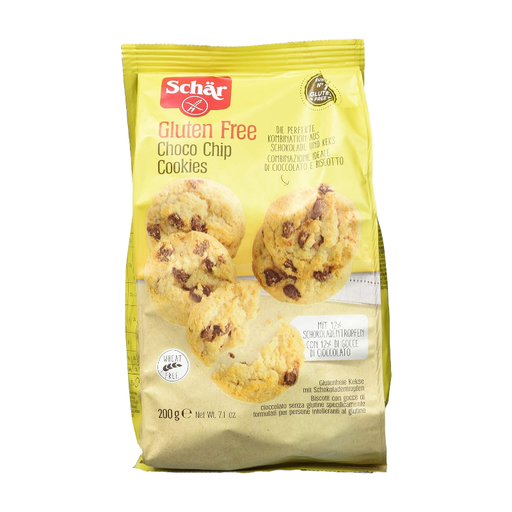
The 200-g pack of gluten-free Chocolate Chip Cookies from Schär shown here is an option if you want to work out how much you need for your group and check the label on the pack you buy.
 No image available
Schär Gluten-Free Chocolate Chip Cookies, 200 g
This 200-g pack, described as gluten-free, may be suitable for a get-together with someone who has coeliac disease, provided the pack you actually buy is labelled accordingly.
Plan the quantity around the number of guests and the other snacks on offer. If anyone has other allergies, check the ingredients and may-contain information on the pack, especially for soya and egg.
View at Joybuy
Frequently asked questions
Is a list of ingredients with no wheat enough for someone with coeliac disease?
No. A list of ingredients with no wheat doesn’t replace an explicit “gluten-free” label on the pack you plan to serve. Under EU Implementing Regulation (EU) No 828/2014, this claim is subject to the food containing no more than 20 mg/kg of gluten; the German Coeliac Society stresses the importance of following a strict gluten-free diet when you have coeliac disease.
What pack size is best for sharing?
The right quantity depends on the number of guests and the other snacks you’re serving. For comparison, REWE lists gluten-free options in 200-g packs and Coppenrath’s gluten-free Coooky vanilla sandwich biscuit at 300 g. A bigger pack doesn’t mean you can skip checking its label.
Are gluten-free cookies also free from other allergens?
No. “Gluten-free” doesn’t tell you anything about other allergens. Coppenrath says its Kakao Cookies may contain traces of soya and tree nuts; check the pack for each variety against your group’s requirements.
How can you keep gluten-free cookies separate when serving?
Set them apart from gluten-containing snacks and use separate serving utensils. Keep the packaging visible so it’s clear which cookies are which, even after the pack has been opened.


