If you have coeliac disease, first check that the specific pack is labelled ‘gluten-free’ before choosing a snack for your coffee break. Then check the ingredients list and allergen information that apply in Germany. Classic crackers make a handy salty snack, while gluten-free crispbread offers a different base for toppings. Seed-based and oat-based recipes vary in their ingredients and nutritional values, and may contain other allergens or gluten-free oats.
Who might find this selection useful?
People with coeliac disease
If you’re looking for a snack for your coffee break, check for a ‘gluten-free’ label and read the ingredients list on the specific pack. The German Coeliac Society points out that the information for the country where a product is sold is the one that applies.
Shoppers with additional dietary requirements
If you’re looking for food that’s not only gluten-free but also vegan or lactose-free, check each claim for the variety you choose. The products described by Alnavit and Wasa also differ in their ingredients and possible ‘may contain’ warnings.
People looking for a hearty option or something to top
If seeds, pulses-based flours or a base for spreads matter to you, compare crackers and crispbread by ingredients, product format and nutritional information. It’s also worth checking the allergen information, particularly for seed- and oat-based recipes.
What should you look for when buying?
If you have coeliac disease, start by checking that the specific pack is labelled gluten-free. Then decide whether other ingredient requirements or the snack format matter most for your coffee break.
| Criteria |
What to check when buying |
Who it matters to |
| Gluten-free labelling |
Look for ‘gluten-free’ on the specific pack, and check the ingredients list and allergen information that apply in Germany. |
If I have coeliac disease, I don’t want to rely solely on a product name or an old image. Around 50% of shoppers put this check first. |
| Other dietary requirements |
Check for vegan or lactose-free labelling, as well as ingredients and information about relevant allergens. |
If I’m also shopping for vegan or lactose-free food, the specific variety needs to meet that requirement too. This is the top priority for around 30% of shoppers. |
| Recipe and snack format |
Check the ingredients, fibre per 100 g and whether it’s a small cracker or crispbread. |
For my coffee break, I’d prefer a hearty recipe or a base for toppings rather than a classic salted cracker. Around 20% of shoppers prioritise the snack format and recipe. |
Which common mistakes can you avoid?
-
Assuming ‘wheat-free’ or ‘vegan’ means ‘gluten-free’
These labels describe different things: a gluten-free cracker may, for example, contain soya or sesame. ‘Vegan’ on its own tells you nothing about whether a product is gluten-free.
If you have coeliac disease, check for the ‘gluten-free’ label first, then review the ingredients and allergens that matter for your other requirements.
-
Relying on information for a product with the same name sold in another country
According to the German Coeliac Society, the ingredients list for the relevant country is the one that matters. A product with the same name sold in another market is therefore not a reliable guide when choosing a pack sold in Germany.
Check the current labelling on the specific product you’re buying and eating.
-
Using fibre content as a substitute for checking the ingredients
Hammermühle’s Simply Seeds Cracker Cheese & Onion contains gluten-free oats and Emmental cheese. The manufacturer also notes that it may contain traces of other allergens and that people with coeliac disease may tolerate gluten-free oats differently.
Compare fibre using the nutritional information per 100 g, but also check the full ingredients list and allergen information for seed-, oat- and cheese-based recipes.
Brands and product ranges to consider
Schär
Schär describes its classic gluten-free crackers as a handy salty snack.
- The cracker variety described by the manufacturer is labelled gluten-free, wheat-free and lactose-free.
- This variety contains soya flour; Schär lists its salt content as 1.6 g per 100 g.
Alnavit
Alnavit describes its gluten-free mini crackers and sesame crackers as two different snack options.
- Alnavit describes its mini crackers as gluten-free and vegan; the manufacturer lists buckwheat and chickpea flour among the ingredients.
- The sesame crackers, also described as vegan and lactose-free, contain sesame. If you have allergies, check the information for the specific variety.
Hammermühle
Hammermühle’s Simply Seeds Cheese & Onion crackers are made with gluten-free oats and linseeds.
- Hammermühle lists 16 g of fibre per 100 g for this variety.
- It contains Emmental cheese and may contain traces of soya, nuts and sesame. The manufacturer notes that people with coeliac disease may tolerate gluten-free oats differently.
Wasa
Wasa’s gluten-free Crispbread Classic and Sesame & Sea Salt are alternatives if you’d prefer a slice to top rather than small crackers.
- Wasa describes both varieties as gluten-free, lactose-free and vegan; their stated fibre contents are 7.0 and 9.0 g per 100 g respectively.
- Sesame & Sea Salt contains sesame and may contain traces of milk. Wasa notes that Classic may contain traces of sesame and milk.
Gluten-free crackers and crispbreads at Joybuy
This selection includes a salty cracker for snacking straight from the pack and two crispbreads for a coffee break with toppings. If you have coeliac disease or other ingredient requirements, check the information on the specific pack.
 No image available
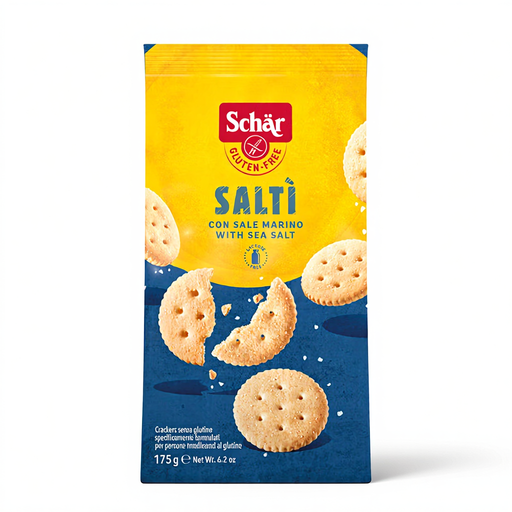
Schär Gluten-Free Saltí salted crackers 175 g
A salty cracker option for a coffee break, with no toppings needed.
The product description labels these crackers gluten-free and lactose-free; it lists soya as an ingredient and warns that they may contain traces of lupin. Check the information on the specific pack, particularly if you have coeliac disease or relevant allergies.
View at Joybuy
 No image available
Schär Gluten-Free Dark Crispbread 125 g
Crispbread instead of small crackers, if you’re looking for a base for sweet or savoury toppings at your coffee break.
The product description lists 20% teff flour, 10% buckwheat flour and 6.0 g of fibre per 100 g. It’s labelled gluten-free, vegan and lactose-free, and may contain traces of soya. If you have coeliac disease or a soya allergy, check the specific pack.
View at Joybuy
 No image available
Schär Gluten-Free Crispbread 150 g
Another crispbread option if you’d like to add sweet or savoury toppings to your coffee break.
The product description labels it gluten-free, wheat-free, lactose-free and egg-free, and lists rice and maize flour among the ingredients. Don’t assume that ‘egg-free’ means vegan; if you have coeliac disease or other requirements, check the full information on the pack.
View at Joybuy
Frequently asked questions
What should I look for in gluten-free crackers in Germany?
Check that the specific pack is labelled ‘gluten-free’, then check the ingredients and allergens too. The German Coeliac Society points out that the ingredients list for the relevant country is the one that applies.
Is it enough for people with coeliac disease to check that a product contains no wheat, rye or barley?
No, that isn’t enough as the only rule when buying. The German Coeliac Society distinguishes between products explicitly labelled gluten-free and foods with no gluten-containing ingredients, where the manufacturing process also needs to be taken into account.
Are vegan crackers automatically gluten-free?
No. ‘Vegan’ means a product contains no animal-derived ingredients; it doesn’t mean it’s gluten-free. Check both claims separately. Conversely, gluten-free products may contain ingredients such as soya or sesame.
How should I store crackers for several coffee breaks?
Follow the storage instructions on the relevant pack. For its Simply Seeds Cheese & Onion crackers, Hammermühle recommends storing them in their packaging in a dry place away from heat, up to the best-before date.


