Runners with coeliac disease
For you, the gluten-free label on the specific pack is the priority. Also check the ingredients and any warnings about other allergens that may be relevant to you.


If you have coeliac disease, the gluten-free label on the specific pack is what matters when choosing a cookie. Take extra care with oats and look for a variety explicitly labelled gluten-free. A cookie can be a snack you’ve tried before or after training, but it won’t automatically replace a source of carbohydrates you’ve tested during long runs. Compare the nutritional information for the portion you’ll actually eat, and check the ingredients and allergen information.
For you, the gluten-free label on the specific pack is the priority. Also check the ingredients and any warnings about other allergens that may be relevant to you.
If you want to eat solid snacks before long runs, portion size, carbohydrates, fat and fibre are useful points of comparison. You’ll only know whether a particular cookie suits you by trying it during training.
You’re looking for a gluten-free cookie for everyday snacking, travelling or after a run, without necessarily planning to use it as fuel during exercise.
First, make sure the specific pack meets your requirements for gluten-free labelling and other allergens. Then compare the nutritional information for when you plan to eat it and the amount you’ll actually have.
| Criteria | What to check when buying | Who it matters most to |
|---|---|---|
| Gluten-free labelling | The current pack must be explicitly labelled “gluten-free”; with oats, check the label on the specific variety. You’ll still need to check the ingredients and any other allergens separately. | If I have coeliac disease, my choice needs to be based on the pack I’m actually buying, not a brand name I recognise. Around 42 % of consumers put this labelling check first. |
| Snacks for long runs | Compare carbohydrates, fat and fibre per 100 g with your planned portion, and try the product, amount and timing during training. | Before a long run, I want to know how much I’ll get from my portion and whether the cookie agrees with me. Around 33 % of consumers put this question about fuelling around exercise first. |
| Everyday use and portions | Choose a pack size, portion guidance and explicitly stated features such as “vegan” or “organic” that suit your needs. | For travelling or a training day, I’m looking for a snack whose ingredients and portion size fit my routine, without planning to use it as race-day fuel. Around 25 % of consumers put this everyday need first. |
“Wheat-free” isn’t the same as being labelled gluten-free. The German Coeliac Society also points out that products with the same name can have different ingredients in other countries.
Each time you buy, check the current pack for “gluten-free” labelling, ingredients and relevant allergens. With oats, the specific product variety must be explicitly labelled gluten-free.
As well as carbohydrates, a cookie contains fat and fibre. The Australian Institute of Sport describes sports bars designed for intense endurance exercise that are lower in fibre; this doesn’t mean you can make a blanket assumption about how well any particular cookie will suit you.
Try the cookie with the portion, timing and drink you intend to use during training before planning to have it on a long run.
Nutritional information per 100 g doesn’t tell you directly how much you’ll get from eating a few cookies.
Decide on your planned portion and work out the carbohydrates, fat and fibre for that amount using the figures shown.
REWE stocks a range of Schär products labelled gluten-free, including sandwich biscuits, Choco Chip Cookies and Landtaler.
The organic oat biscuits featured by REWE are labelled gluten-free and vegan.
Galletas Gullón describes a gluten-free chocolate cookie variety.
This selection includes Schär Chocolate Chip Cookies, butter biscuits and ladyfingers labelled gluten-free. Ladyfingers are a different type of biscuit from cookies; whichever of the three products you choose, check the pack and consider individually whether it’s suitable for your planned use around running.
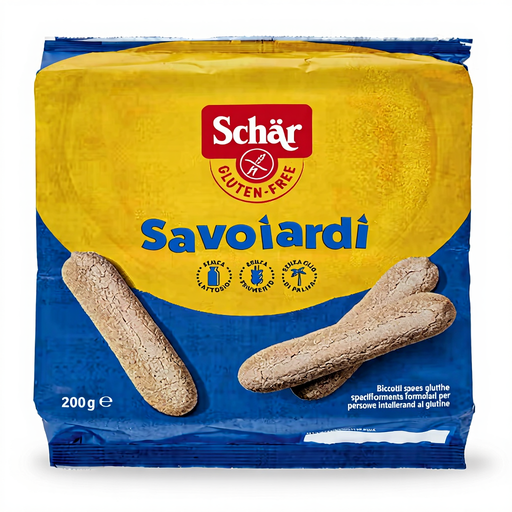 No image available
Ladyfingers for a snack during your training routine or as a portion you’ve tried before a run. Check the nutritional information on the pack for the amount you plan to eat. If you have an egg allergy, pay particular attention to the latest allergen information.
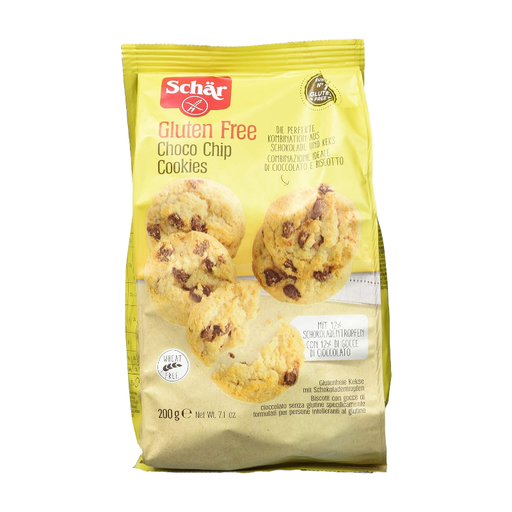 No image available
Chocolate Chip Cookies for a snack during your training routine or as a portion you’ve tried before a run. For the 200 g variety with the same name, REWE lists 62 g of carbohydrates, 28 g of fat and 2,8 g of fibre per 100 g; for your portion, always go by the information on the pack you buy. Also check the warnings about soya and egg.
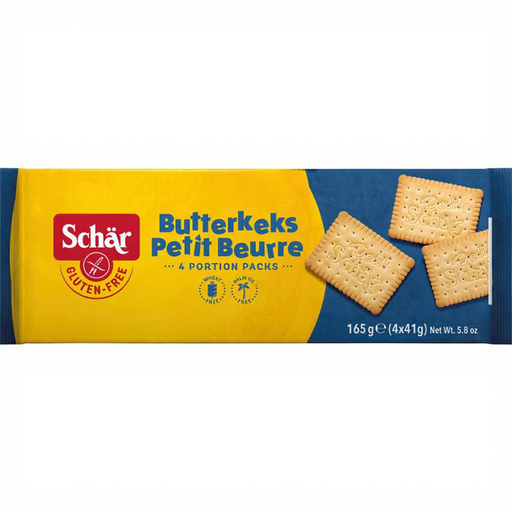 No image available
Butter biscuits for an everyday snack. If you’re planning to include them in your fuelling around a run, check the carbohydrates and fibre on the pack and calculate them for the portion you’ll actually eat. Also check the allergen information for milk and egg.
No, “wheat-free” doesn’t replace a “gluten-free” label. Check the gluten-free labelling and ingredients on the specific pack. The German Coeliac Society also warns that products with the same name may have different recipes in other countries.
If you have coeliac disease, choose only an oat cookie variety explicitly labelled gluten-free, and consider whether you personally tolerate oats. Also check the ingredients and any other allergen information on the pack.
Not necessarily: the amount of carbohydrate, portion size and how well you tolerate them all need to suit your plans. The Australian Institute of Sport describes lower-fibre sports bars developed for intense endurance exercise; don’t try an ordinary cookie for the first time during a race.
As well as checking that it’s labelled “gluten-free”, check the ingredients and allergen information on each specific pack. The Schär varieties featured by REWE differ: the sandwich biscuits contain milk, egg and soya; the Landtaler biscuits list soya flour and may contain traces of lupin and egg.
Use the website details to narrow down your options, then check the gluten-free label, ingredients and allergen information on the actual pack when it arrives. This is particularly important if a product with the same name is also sold in other countries.