If you have coeliac disease, traditional rye pumpernickel isn’t a gluten-free choice for a bread-based snack. Choose a product specifically labelled gluten-free: seeded bread is closer to a dense slice, rustic bread works well for a softer sandwich, and crispbread gives you a crunchy base. Ingredients, other allergens and the texture you’re after all matter.
Who needs to take care when choosing?
People with coeliac disease
For a bread-based snack, check that the specific product is labelled gluten-free. A dark colour or the name pumpernickel tells you nothing about this: the traditional pumpernickel products described by REWE and EDEKA contain wholemeal rye pieces.
Fans of hearty slices of bread
If you’re looking for a dense base for savoury toppings, consider seeded bread labelled gluten-free. However, a seeded recipe doesn’t have the same rye crumb as pumpernickel.
Fans of crunchy snacks
Crispbread labelled gluten-free is a good choice if you want a dry, crunchy base for spreads or toppings – but it won’t have the soft, dense texture of a slice of pumpernickel.
What should you look for when buying?
If you have coeliac disease, first make sure that any alternative you choose is labelled gluten-free. Then decide whether you’d prefer a dense slice of bread or a crunchy base. Check the specific product for other allergens and nutritional information too.
| Criteria |
What to check |
Who it matters most to |
| Gluten-free labelling |
Look for “gluten-free” on the pack and check the ingredients and allergen information. Under Commission Implementing Regulation (EU) No 828/2014, a product may only be labelled gluten-free when sold to end consumers if it contains no more than 20 mg/kg of gluten. |
When choosing bread for a snack because I have coeliac disease, I mustn’t mistake a dark colour for gluten-free. For around 50% of consumers, clear labelling is the top priority when making this choice. |
| Dense slice of bread |
Compare the ingredients and nutritional information per 100 g. For seeded bread, also check the fat content and any instructions for storing it after opening. |
For savoury toppings, I’m mainly looking for a dense, hearty slice rather than rye crumb. Around 30% of consumers prioritise this texture after checking that the product is gluten-free. |
| Crunchy base |
Choose crispbread specifically labelled gluten-free. Check the ingredients, other allergens and salt content to make sure it suits your needs. |
For spreads or small open sandwiches, I prefer a crunchy base, even though it feels different from pumpernickel. This is the main consideration for around 20% of consumers. |
Common selection mistakes
-
Assuming dark bread is gluten-free
The traditional pumpernickel products described by REWE and EDEKA contain wholemeal rye pieces; the EDEKA product also contains barley malt extract. Their colour doesn’t make them suitable alternatives if you have coeliac disease.
Choose a product specifically labelled gluten-free and read the ingredients list on the pack.
-
Confusing gluten-free with free from all allergens
A gluten-free label doesn’t tell you whether the product contains, for example, sesame, or whether traces of other allergens may be present. The Wasa Sesame & Sea Salt described by REWE contains sesame.
Also check the highlighted ingredients and precautionary allergen information for each variety.
-
Choosing by its hearty appearance alone
Seeded bread, rustic bread and crispbread differ in their ingredients and texture. A hearty appearance alone tells you nothing about their nutritional value or whether they’ll suit the toppings you have in mind.
Compare nutritional information on the same per-100 g basis and bear in mind how much you actually eat at a time.
Useful brands to know
REWE frei von
The Pures Korn bread, described as gluten-free, is a seed-rich alternative to rye pumpernickel.
- According to REWE, the bread contains gluten-free oats, sunflower seeds and linseeds.
- Its ingredients don’t give it the rye crumb typical of pumpernickel; check the pack for information about other allergens.
Poensgen
The gluten-free rustic bread described by REWE is an alternative for making sandwiches.
- The listed recipe contains gluten-free wheat starch.
- It isn’t rye pumpernickel, so check the ingredients and allergen information for the specific loaf.
Wasa
The Sesame & Sea Salt variety, labelled gluten-free, offers a crunchy crispbread alternative.
- Crispbread is a good fit for a snack when you’re after a crunch.
- The product described by REWE contains sesame and isn’t a substitute for a soft slice of pumpernickel.
Schär
Schär makes gluten-free bread and bakery products, as well as a wholemeal bread mix for baking at home.
- Schär lists wholegrain rice and buckwheat flours among the ingredients in its baking mix.
- A baking mix isn’t ready-to-eat bread; follow the preparation instructions and check the allergen information for the specific product.
Products for different bread-based snacks
These Joybuy products offer bases labelled gluten-free for a crunchy snack, as well as rolls to bake at home and a bread mix. Crispbread, rolls and baking mix each offer a different alternative to the dense crumb of pumpernickel.
 No image available
Schär Dark Crispbread, gluten-free, 125 g
For a crunchy snack when you don’t need a slice of pumpernickel.
Crispbread labelled gluten-free; pack size: 125 g.
May contain traces of soya; check the allergen information on the pack.
View at Joybuy
 No image available
Schär Crispbread, gluten-free, 150 g
A crunchy base for toppings instead of a dense slice of pumpernickel.
Crispbread labelled gluten-free; pack size: 150 g.
Check the ingredients and allergen information on the pack for any other dietary requirements.
View at Joybuy
 No image available
Schär Kaisersemmel, gluten-free, 350 g
For a gluten-free snack with rolls, when you have the option to bake them at home.
Pack size: 350 g. Contains soya.
Keep frozen and bake thoroughly before eating; follow the preparation instructions on the pack.
View at Joybuy
 No image available
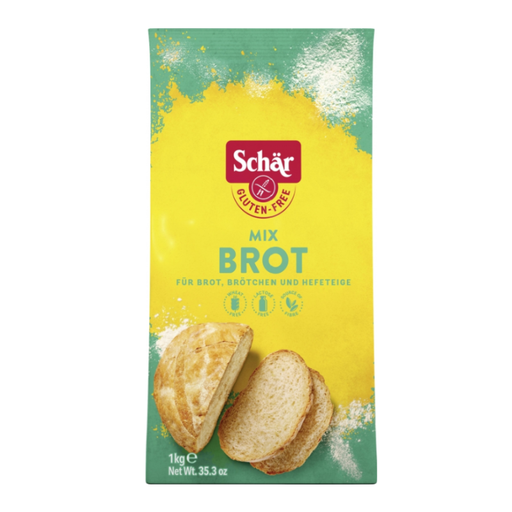
Schär Bread Baking Mix, gluten-free, 1 kg
For homemade bread to enjoy with a snack, if you have the time and facilities to bake.
Baking mix labelled gluten-free; pack size: 1 kg.
Requires mixing and baking, as well as additional ingredients according to the preparation instructions. May contain traces of soya.
View at Joybuy
Frequently asked questions
Is traditional pumpernickel suitable for people with coeliac disease?
No, traditional rye pumpernickel isn’t a gluten-free alternative. The examples described by REWE and EDEKA contain wholemeal rye pieces, so choose a product specifically labelled gluten-free instead.
What does “gluten-free” mean on a pack?
Under Commission Implementing Regulation (EU) No 828/2014, a food may only be labelled “gluten-free” when sold to end consumers if it contains no more than 20 mg/kg of gluten. The claim applies to that specific food, not to all dark or hearty breads.
Are gluten-free breads also free from other allergens?
No, a gluten-free label doesn’t rule out other allergens. For example, the Wasa Sesame & Sea Salt described by REWE contains sesame; check the ingredients and precautionary allergen information on the pack for every product.
Which alternative works well for a sandwich?
For a dense slice, consider seeded bread labelled gluten-free; for a softer slice, try rustic bread labelled gluten-free. If you’d rather have a crunch than the dense texture of pumpernickel, crispbread labelled gluten-free could be a good choice. Check the ingredients and other allergens separately for each product.


