Households with coeliac disease
What matters is the labelling on the pack you’re actually buying. If other allergies are a concern, check the ingredients and any ‘may contain’ information too.


If you’re stocking up on shortbread or an alternative biscuit because of coeliac disease, first check that the specific pack is labelled ‘gluten-free’. Under EU rules, this means the finished food contains no more than 20 mg/kg of gluten. Then decide whether you want shortbread specifically or whether butter biscuits and other gluten-free biscuits will do. Before buying several packs, check the ingredients, best-before date and pack size.
What matters is the labelling on the pack you’re actually buying. If other allergies are a concern, check the ingredients and any ‘may contain’ information too.
If you’re planning to store several packs, compare pack sizes and best-before dates, and consider how much you’re likely to get through.
Being gluten-free isn’t your only criterion: butter, milk, eggs, oats or a vegan label may also influence your choice.
If you’re stocking up for someone with coeliac disease, first check the gluten-free labelling on each product. Then compare the type of biscuit, the ingredients and the quantity you expect to use before the best-before date.
| Criteria | What to check when buying | Who it matters most to |
|---|---|---|
| Gluten-free labelling | Look for ‘gluten-free’ on the specific pack. If other allergies are a concern, check the ingredients and any ‘may contain’ information too. Under EU rules, ‘gluten-free’ means no more than 20 mg/kg of gluten in the finished food. | When I’m shopping because of coeliac disease, ‘wheat-free’ isn’t enough to guide my choice. Around 42% of consumers put clear gluten-free labelling first. |
| Quantity to stock up on | Pack weight, best-before date, condition of the packaging and how much you actually need. | I don’t want to buy more packs than I can use in time over the next few weeks. Stock planning is the main priority for around 33% of consumers. |
| Type of biscuit and ingredients | Check whether it’s shortbread, butter biscuits, oat biscuits or sandwich biscuits, along with the ingredients and any vegan labelling. | I might want the taste of shortbread or have other specific ingredient requirements, so I don’t want to treat all biscuit types as the same. This is the main priority for around 25% of consumers. |
According to Schär, its gluten-free Butterkeks – Petit Beurre contains butter, eggs and whole milk powder; it may also contain traces of soya and lupin.
Check the ingredients and allergen information on every product you choose, especially if several people with different allergies will be eating them.
EU labelling refers to different limits: no more than 100 mg/kg for ‘very low gluten’ and no more than 20 mg/kg for ‘gluten-free’.
If you’re choosing products to stock up on because of coeliac disease, look for ‘gluten-free’ on the packs you plan to buy.
Walkers sells gluten-free shortbread, while Schär and Alnavit’s gluten-free butter, oat and sandwich biscuits are different types of bake, with different ingredients.
Before stocking up, decide whether you specifically want shortbread or whether another type of biscuit will suit your needs.
Buying a larger quantity only makes sense if the best-before date, condition of the packs and your planned rate of use all work together.
Check these details on the specific packs and follow their storage instructions.
Schär sells a range of gluten-free biscuits. Its Butterkeks – Petit Beurre is an option if you’d prefer a butter biscuit to shortbread.
Alnavit offers gluten-free butter biscuits as well as other types of gluten-free biscuits. Its products may suit different ingredient preferences, but they aren’t the same as shortbread.
Walkers lists gluten-free shortbread on its UK website. It’s worth considering if the type of bake itself matters to you, rather than just finding a gluten-free biscuit alternative.
This selection includes gluten-free butter biscuits and gluten-free chocolate chip biscuits. Both are options to consider when stocking up, but neither is described as shortbread.
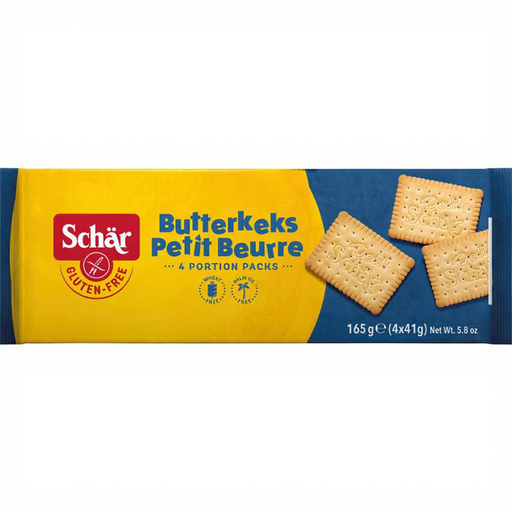 No image available
A butter biscuit alternative if you don’t specifically need shortbread. The pack contains 165 g; according to Schär, the recipe includes butter, eggs and milk ingredients. Check the best-before date on the specific pack before stocking up.
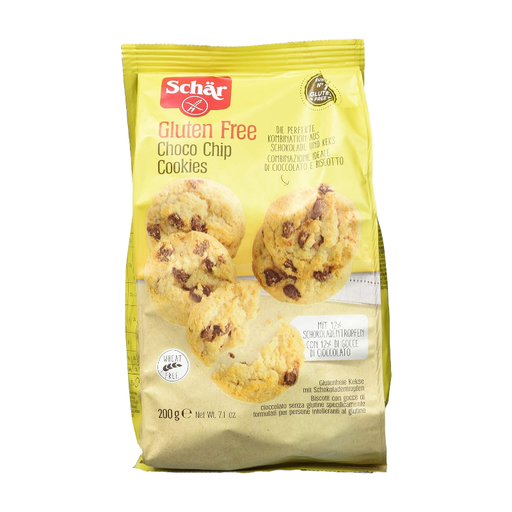 No image available
A gluten-free biscuit alternative with chocolate chips if the taste of shortbread isn’t a priority. The pack contains 200 g. If you have an egg allergy, check the allergen information on the specific pack; also check the best-before date if you’re stocking up.
No. ‘Wheat-free’ isn’t a substitute for ‘gluten-free’. Look for this label on the specific pack. Under EU rules, it can be used when the finished food contains no more than 20 mg/kg of gluten.
No. EU labelling has different limits: no more than 100 mg/kg and 20 mg/kg of gluten in the finished food, respectively. If you’re choosing products to stock up on because of coeliac disease, look for the ‘gluten-free’ label.
Yes, if you’re happy to choose a different type of bake. Schär labels its Butterkeks – Petit Beurre gluten-free. As it contains butter, eggs and milk ingredients, check separately if you have other dietary requirements.
Check the best-before date and condition of each pack, and buy an amount that suits how much you’ll use. Also follow the storage instructions for the biscuits you choose.
No, gluten-free doesn’t mean vegan. According to Schär, its gluten-free Butterkeks – Petit Beurre contains butter, eggs and whole milk powder, while Alnavit labels some of its gluten-free oat and sandwich biscuits vegan. Always check the information for the specific product.