People with coeliac disease
For them, the gluten-free information for the specific version sold in Germany is what counts. The German Coeliac Society warns against assuming that a product with the same name from another country has the same recipe.


If you have coeliac disease, the current gluten-free labelling on the version sold in Germany matters more than whether a biscuit is called shortbread or something similar. The recipe is the next thing to check: vegan oat biscuits and buttery biscuits differ in their ingredients and other allergens. So even with gluten-free products, check the ingredients list and precautionary allergen information on the specific pack.
For them, the gluten-free information for the specific version sold in Germany is what counts. The German Coeliac Society warns against assuming that a product with the same name from another country has the same recipe.
If you also need to avoid milk, eggs, soya, nuts or other allergens, you need to check the ingredients list and any precautionary allergen information relevant to your situation, as well as the gluten-free claim.
If you’re looking for a buttery shortbread style, you’ll choose different ingredients from someone who prefers vegan oat biscuits. However, the recipe you prefer is no substitute for checking allergens.
If you have coeliac disease, first check the gluten-free claim for the German version of the product, then look for other allergens, and only then consider the recipe style and where to buy it.
| What matters to you | What to check when buying | Who it matters most to |
|---|---|---|
| Gluten assurance for coeliac disease | Current gluten-free labelling for the German version; if it’s an imported product, don’t rely on the product name alone. | If I have coeliac disease, I don’t want to assume a biscuit is suitable just because of its name. Around 36% of consumers would put gluten assurance first. |
| Other allergens | The ingredients list and any precautionary allergen information relevant to you, including for milk, eggs, soya or nuts. | If I need to avoid other allergens as well as gluten, the words ‘gluten-free’ aren’t enough. For around 29% of consumers, checking for other allergens would be their main concern. |
| Buttery biscuits or a vegan recipe | The flour base, butter and other animal-derived ingredients, as well as the vegan claim for the specific version. | I want to choose either a buttery biscuit or a vegan oat alternative. Around 21% of consumers would put the recipe style ahead of other considerations. |
| Where to shop and which version to choose | Local availability, pack size and the labelling on the product actually being sold. | The version I need must be available locally, and I need to be able to check its packaging. This would be the most important consideration for around 14% of consumers. |
Gluten-free biscuits can still contain milk, eggs or soya. Even with vegan biscuits, precautionary allergen information for other allergens may be relevant.
Check the ingredients list and precautionary allergen information on the specific pack against the allergens you need to avoid.
REWE describes Coppenrath Butter Cookies as lactose-free, but they contain butter and eggs. That’s an important difference if you have a milk protein or egg allergy.
If you have a milk allergy, check for milk ingredients; if you have an egg allergy, look out for ingredients such as whole egg or egg white powder too.
The German Coeliac Society points out that foods with the same name can have different ingredients in other countries.
When buying in Germany, check the labelling on the pack sold there rather than relying only on information from an overseas retailer.
The Landtaler Digestive biscuits listed by REWE are a gluten-free, vegan alternative; they shouldn’t be assumed to have the same ingredients as every other Schär product.
These gluten-free organic oat biscuits are a vegan alternative for anyone who isn’t looking for butter shortbread.
These gluten-free Butter Cookies are an option if you’re looking for buttery biscuits and don’t need a dairy-free or egg-free recipe.
The Gluten Free Shortbread Rounds have a buttery shortbread-style recipe, but information about the British version doesn’t necessarily apply to a pack sold in Germany.
These Petit Beurre butter biscuits are a gluten-free alternative to shortbread. If you need to avoid other allergens, check the labelling for this version separately.
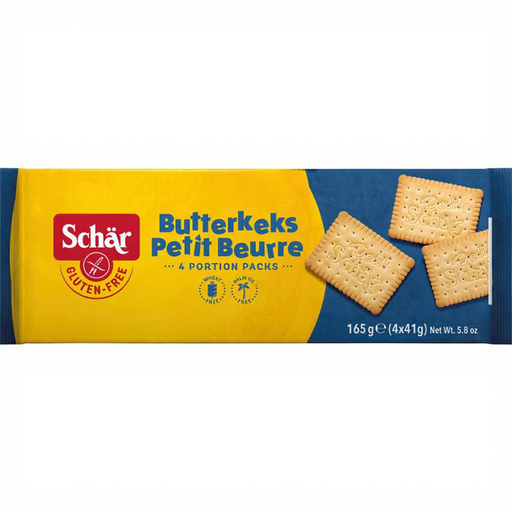 Image unavailable
A gluten-free option if you’re looking for a biscuit with a crumbly texture. According to the product description, this version isn’t suitable if you have a milk or egg allergy. Check the specific pack for other allergens and precautionary allergen information.
As EDEKA explains, ‘gluten-free’ means a product contains no more than 20 mg of gluten per kg of food. If you have coeliac disease, check the current labelling on the pack sold in Germany.
No, ‘wheat-free’ on its own doesn’t answer the question. As well as the ingredients, cross-contamination during production may be relevant. Choose a version labelled gluten-free or check its suitability using specific information from the manufacturer.
No, gluten-free labelling doesn’t tell you anything about these other allergens. For example, the Coppenrath Butter Cookies listed by REWE contain butter and eggs; precautionary allergen information may also be relevant for other versions. Check the specific pack for the allergens you need to avoid.
No, not without checking the version sold in Germany. The German Coeliac Society points out that products with the same name can have different ingredients in other countries. The product information for the country where it’s sold is what matters.