People with coeliac disease
For them, the specific loaf must be explicitly labelled gluten-free. At breakfast, crumbs and shared kitchen utensils also need to be taken into account, as the German Coeliac Society explains.


If you have coeliac disease and are looking for wholegrain bread to enjoy with sweet toppings, the first thing to check is that the product is explicitly labelled ‘gluten-free’. ‘Wholegrain’ or a dark colour alone is not enough. Next, consider the flavour and type of bread: a baking mix described as having a neutral flavour may go well with sweet spreads, but it needs to be baked and is not a ready-to-eat wholegrain loaf. For ready-made bread, it’s also important to check the ingredients, other allergens and storage instructions.
For them, the specific loaf must be explicitly labelled gluten-free. At breakfast, crumbs and shared kitchen utensils also need to be taken into account, as the German Coeliac Society explains.
If you like jam or nut butter on your bread, you can choose between options described as having a neutral flavour and savoury, spicy wholegrain loaves. Seitenbacher describes its light-coloured baking mix as neutral, while Hammermühle describes its wholegrain breads as savoury and spicy.
It makes a difference whether you buy fresh bread, keep a long-life sliced loaf in the cupboard or bake bread from a mix. Pack size and storage instructions can help you decide.
First, check that the current packaging clearly states that the product is gluten-free. Then compare the flavour, ingredients and product type with how you plan to enjoy and store the bread.
| Criteria | What to check when buying | Who it matters most to |
|---|---|---|
| Gluten-free status | Look for the words ‘gluten-free’ on the current packaging. For oats, also check the label on the specific product. | If I’m shopping because of coeliac disease, the word ‘wholegrain’ must not be mistaken for confirmation that a product is gluten-free. Around 36% of consumers make this their top priority. |
| Flavour with sweet toppings | Check the product description and ingredients for a neutral or explicitly savoury, spicy flavour. | If I’m having jam or nut butter, I want to know whether the bread will taste good with it. This is the main consideration for around 29% of consumers. |
| Wholegrains and ingredients | Compare the wholegrain claim, ingredients list and nutritional information per 100 g. Don’t assume a light-coloured baking mix is the same as wholegrain bread. | I’m specifically looking for wholegrain bread and want to know what each option is made from. Around 21% of consumers give the greatest weight to the ingredients profile. |
| Storage and preparation | Check the pack size, storage instructions and any preparation required. | If I only eat bread occasionally, I want a quantity that suits my routine; if I’m baking it myself, I’ll need to set aside time. This practical consideration is decisive for around 14% of consumers. |
Bread made with gluten-containing grains can still be wholegrain. So the name tells you nothing about whether it carries the gluten-free label that matters for coeliac disease.
Check the current packaging specifically for the words ‘gluten-free’, rather than relying on the bread’s name or colour.
Oat products can be contaminated through contact with gluten-containing grains. The German Coeliac Society advises people with coeliac disease to use oats, oat flour and oat groats only when they are explicitly labelled gluten-free.
Check the label on the specific oat bread or rolls, not just the type of grain listed in the ingredients.
Hammermühle describes its wholegrain breads as savoury and spicy, while Seitenbacher describes its light-coloured baking mix as neutral and suitable for sweet toppings. They are also different types of product.
Check the flavour description and, if you’re unsure, try a smaller amount of the type of bread you’re interested in first.
A larger fresh loaf and a long-life bread need to be stored differently. Hammermühle’s fresh option keeps for only a few days, while its long-life option is sold for storing in the cupboard.
Choose a quantity that matches how much you eat and follow the storage instructions on the pack you buy.
Schär offers a sliced wholegrain loaf labelled gluten-free as a ready-to-eat option.
Hammermühle offers gluten-free wholegrain breads in both fresh and long-life versions.
Seitenbacher offers a gluten-free maize and rice bread mix, which the manufacturer describes as having a neutral flavour.
Alnavit offers oat wholegrain rolls for breakfast that are labelled gluten-free.
The REWE frei von range includes bread described as gluten-free, made with oats and oilseeds.
This selection includes crispbread, rolls and a bread mix. These can be alternatives to sliced bread for a sweet breakfast, but this is not a selection of ready-to-eat sliced wholegrain loaves.
 Image unavailable
This crispbread is worth considering if you’re looking for a gluten-free base for sweet spreads instead of soft sliced bread. The pack contains 125 g. Check the current packaging to see whether it also meets your wholegrain requirements.
 Image unavailable
These gluten-free rolls are an alternative if you don’t want a sliced loaf for breakfast. The pack contains 350 g. Follow the preparation instructions and check the ingredients and allergens on the current packaging.
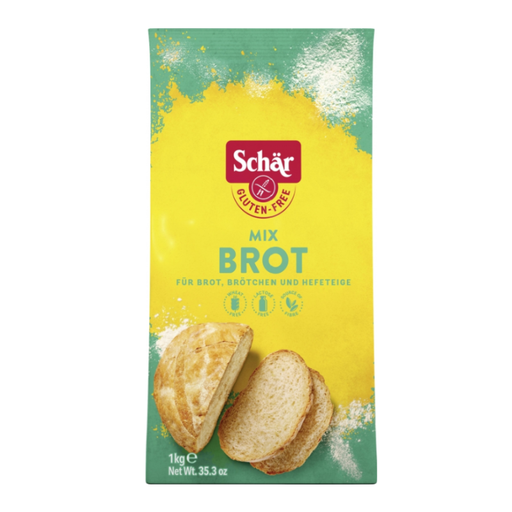 Image unavailable
This gluten-free bread mix is a good choice if you’d like to bake your own bread for breakfast. The pack contains 1 kg of mix, not ready-to-eat bread. If you’re looking for wholegrain bread to go with sweet toppings, check the information on the current packaging.
No. ‘Wholegrain’ tells you nothing about the gluten content. Look for the specific product to be explicitly labelled ‘gluten-free’: under Commission Implementing Regulation (EU) No 828/2014, this claim may be used for foods containing no more than 20 mg of gluten per kilogram.
If you have coeliac disease, the specific oat product should be explicitly labelled gluten-free. The German Coeliac Society highlights this labelling for oats, oat flour and oat groats because contamination with gluten-containing grains needs to be taken into account.
Keep gluten-free bread away from crumbs and flour dust, and use clean utensils and work surfaces. The German Coeliac Society specifically identifies contaminated kitchen equipment as a risk for people with coeliac disease.
No. A gluten-free claim doesn’t tell you whether a product contains other allergens. The Schär wholegrain bread described contains lupin ingredients; the Hammermühle options mentioned may contain traces of soya, sesame, mustard and lupin. If you have another allergy, always check the label on the pack you buy.