For day trips and accommodation without a usable oven, ready-to-eat bread clearly labelled as gluten-free is the more practical choice. A gluten-free bread mix is a good option if you have an oven, enough time and a work surface protected from gluten contact. Whichever you choose, check the ingredients, other allergens and storage instructions.
Which option is right for you?
Travellers with coeliac disease
When choosing food on the go, look first for an explicit ‘gluten-free’ label. The German Coeliac Society stresses the need to follow a strict gluten-free diet if you have coeliac disease, so it’s important to check the ingredients and information on the specific pack.
Holidaymakers without baking facilities
Ready-to-eat bread is a handy option for breakfast and day trips. Sliced bread can be eaten without baking, but make sure the pack size and storage instructions suit your stay.
Self-catering holidaymakers with an oven
If you’d like to bake at your holiday accommodation, you can choose a bread mix explicitly labelled gluten-free, such as a wholemeal or seeded bread mix. You’ll need enough time to prepare it, the right equipment and a work surface protected from gluten contact.
What should you look for when buying?
Ready-to-eat bread
Suitable if: You want bread for the journey, day trips or somewhere without an oven.
Things to consider: Once opened, the bread may need to be eaten within a set time, which can affect your plans. Ingredients and other allergens vary from one bread to another.
Gluten-free bread mix
Suitable if: Your holiday accommodation has an oven and you have time to prepare the bread.
Things to consider: You’ll also need the ingredients and baking equipment listed on the pack, as well as a work surface protected from gluten contact.
| Criterion |
What to check when buying |
Who it matters to |
| Gluten-free labelling |
Check that the specific product is labelled ‘gluten-free’, and review the ingredients and other allergen information. |
If I’m choosing bread to take with me because I have coeliac disease, I need a clearly labelled option. Around 40% of consumers put this labelling check first. |
| No baking required |
Check whether the bread is ready to eat and sliced, and how it should be stored after opening. |
Without an oven, I don’t want to have to prepare a meal for the journey or day trips. For around 30% of consumers, being able to eat it straight away comes first. |
| Wholemeal and seed content |
Compare the wholemeal ingredients or seeds actually listed, as well as the nutritional information per 100 g. |
If you’re specifically looking for wholemeal or seeded bread, you’ll want to assess the ingredients rather than rely on the product name alone. This is the main priority for around 20% of consumers. |
| Home baking |
Check the ingredients and equipment needed, the baking time and the preparation instructions. |
In a well-equipped holiday kitchen, I want to be able to bake the bread myself and plan how to prepare it. Around 10% of consumers make this their top priority. |
Which mistakes can you avoid?
-
Assuming ‘wholemeal’ means ‘gluten-free’
Wholemeal bread made from wheat, rye or spelt still contains gluten. So the type of bread alone won’t tell you whether it’s suitable for someone with coeliac disease.
First, check that the specific bread or bread mix is explicitly labelled ‘gluten-free’, then check its ingredients.
-
Overlooking other allergens
A product labelled gluten-free may contain other allergenic ingredients or carry a precautionary allergen warning. For example, Seitenbacher’s seeded bread mix contains cashew nuts.
If anyone travelling with you has other allergies, read the current ingredients list and allergen information for each product.
-
Planning to use a bread mix without a usable oven
A bread mix isn’t ready to eat straight away. If your accommodation doesn’t have an oven or suitable equipment, you may not be able to make the bread you planned.
Check the facilities and preparation instructions before you buy. Otherwise, ready-to-eat bread may be a better choice for your stay.
-
Forgetting how soon bread needs to be eaten after opening
REWE says that REWE frei von Pures Korn Brot should be eaten within 48 hours of opening. If you’re travelling with only a few people, this may affect how much bread you need to buy.
Compare the instructions on the pack you’ve chosen with the length of your stay and the number of meals you have planned.
Brands and retailers to consider
REWE frei von
The products featured here offer two different options: ready-to-eat gluten-free Pures Korn Brot and a gluten-free organic Schwarzbrot mix for oat wholemeal bread.
- Pures Korn Brot doesn’t need baking, while the organic Schwarzbrot mix is designed to be made in an oven.
- According to REWE, the bread should be eaten within 48 hours of opening. Check other allergens and precautionary allergen warnings for the specific product.
Seitenbacher
Seitenbacher offers a seeded bread mix described as gluten-free, for baking at home.
- According to Seitenbacher, the mix contains gluten-free oats and 40% seeds.
- It contains cashew nuts and isn’t ready to eat. Check you have somewhere to bake it and review the allergen information before buying.
EDEKA
EDEKA provides information about gluten-free foods and lists rice, maize, millet and quinoa among the alternatives to gluten-containing grains.
- These grain alternatives can help you understand the ingredients in bread and bread mixes.
- When deciding what to buy, check the labelling on the specific product; general information about the range is no substitute.
Suitable products at Joybuy
This bread mix is a home-baking option for holiday accommodation with baking facilities. If you’re specifically looking for a wholemeal bread mix, check the labelling on the specific product too.
 No image available
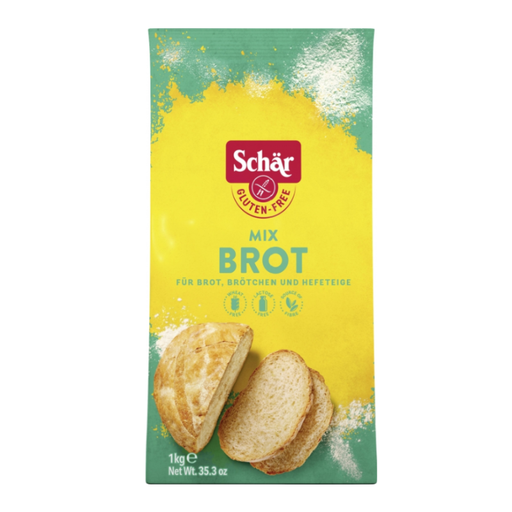
Schär Gluten-Free Bread Baking Mix 1kg
For baking bread in holiday accommodation with a suitable kitchen; not for eating straight away. The product name describes a 1 kg gluten-free bread mix. Before buying, check which additional ingredients you’ll need, the latest information about soya and, if wholemeal is important to you, whether the pack confirms that it’s wholemeal.
View at Joybuy
Frequently asked questions
Is a ‘gluten-free’ label on the pack enough if you have coeliac disease?
An explicit ‘gluten-free’ label is the first thing to check, but it doesn’t replace checking for other allergens. If you have additional allergies, read the ingredients list and precautionary allergen warnings for the specific product too.
What should I look for when it comes to oats in gluten-free bread?
If you have coeliac disease, choose a specific bread or bread mix that’s explicitly labelled gluten-free. You can’t assume a product is gluten-free just because oats appear in its ingredients list.
When is a bread mix a good option for holiday accommodation?
A bread mix is suitable if you have an oven, the necessary equipment, enough time and a work surface protected from gluten contact. Check the preparation instructions for your chosen mix before planning to serve it with a particular meal.
How should I plan for ready-to-eat bread on a short stay?
Choose a pack size and check how long the bread will keep after opening against the meals you have planned. REWE says that REWE frei von Pures Korn Brot should be eaten within 48 hours of opening; for other breads, follow the instructions on their respective packs.


