For a dinner with a guest who has coeliac disease, only bread explicitly labelled gluten-free is suitable. If gluten-containing foods are being served too, preparation and serving must be kept separate. Ready-to-serve bread saves you the work of baking; a bread mix needs time and carefully separated equipment. Whichever option you choose, check for other allergens and make sure the product is actually labelled as wholemeal.
Which type of bread suits you?
For hosts with a guest who has coeliac disease
You’ll need bread explicitly labelled gluten-free and a crumb-free area for preparing and serving it. The German Coeliac Society stresses the importance of careful preparation when making gluten-free food.
For hosts short on time to bake
Packaged sliced bread or ready-to-serve seeded bread can be offered without any baking. Before you buy, check the ingredients, other allergens and pack size against your dinner plans.
For hosts who want to bake their own
A gluten-free bread mix is an option if you have time to prepare it and can use separate equipment. The additional ingredients, proving time and baking time required will depend on the specific mix.
What to look for when buying
First, check that the bread is labelled gluten-free and plan to serve it separately. The time you have will then help you choose between ready-made bread and a bread mix. Check the ingredients and any other allergens for the option you choose.
| What matters |
What to check when buying |
Who it matters to |
| Gluten-free and served separately |
Explicit gluten-free labelling; use a separate plate and cutlery if gluten-containing bread is being served at the same time. |
If a guest has coeliac disease, I don’t want to rely on the ingredients list alone, and I want to avoid crumbs coming into contact with the bread at the table. This is the top priority for around 50% of consumers. |
| Ready to serve on time |
Distinguish ready-to-serve bread from bread mixes; allow time for any additional ingredients and preparation required for a mix. |
If dinner is coming up soon, I want to serve bread without any extra baking. Around 30% of consumers prioritise being able to serve it straight away. |
| Wholemeal, ingredients and allergens |
Read the wholemeal labelling and ingredients list; check the declared allergens and ‘may contain’ information for the specific product. |
If guests have other allergies or specifically want wholemeal bread, the recipe needs to meet those requirements. For around 20% of consumers, this ingredient profile is their top priority. |
Common mistakes when buying and serving
-
Confusing ‘gluten-free’ with completely free from gluten
The term ‘gluten-free’ does not mean that laboratory testing will find absolutely no gluten. Under EU Implementing Regulation (EU) No 828/2014, the term may be used for food containing no more than 20 mg of gluten per kg.
Choose a product explicitly labelled as gluten-free for a guest with coeliac disease. ‘Wheat-free’ or an ingredients list with no obvious wheat flour is not a substitute for this labelling.
-
Serving gluten-free bread with shared cutlery
Even suitably labelled bread can come into contact with crumbs from gluten-containing foods at dinner. The German Coeliac Society highlights the importance of careful preparation.
Prepare and serve the gluten-free bread separately, before the gluten-containing bread. Use a separate plate, knife or serving tongs, and keep spreads separate too.
-
Assuming seeded bread is suitable for every other allergy
Gluten-free labelling does not tell you whether a recipe contains, for example, lupin, soya, sesame or nuts. Ingredients and possible traces vary from product to product.
Ask guests about any other allergens you need to consider, and read the ingredients and allergen information on the pack you actually buy.
-
Planning to serve a bread mix as if it were ready-made bread
A mix requires preparation and can’t be served straight from the pack as a side. When baking, you’ll also need to protect your work surface and equipment from contact with gluten-containing ingredients.
Read the instructions before buying and decide when you’ll prepare the bread and which separate equipment you’ll use.
You may need additional ingredients, as well as time for proving and baking. Follow the instructions for the mix you choose.
Brands to consider
Schär
Schär offers gluten-free sliced breads. Meisterbäckers is a Schär product range, not a separate brand.
- Schär Wholemeal Bread, listed by REWE, is described there as gluten-free, lactose-free, wheat-free and vegan; buckwheat is one of its listed ingredients.
- Recipes vary: Schär’s Meisterbäckers Classic, for example, lists soya protein and possible traces of lupin and mustard. Check the information on the pack you choose.
REWE frei von
REWE’s own-label range includes Pures Korn, a ready-to-serve bread with oats and seeds that is labelled gluten-free.
- For Pures Korn, REWE lists gluten-free oats, sunflower seeds, linseeds, millet and pumpkin seeds, among other ingredients.
- REWE states that it may contain traces of soya, almonds and sesame. The product name alone also doesn’t confirm that it is wholemeal.
Bauck Mühle
Bauck Mühle offers a gluten-free wholemeal oat bread mix for hosts who want to bake their own bread.
- The mix is described as wholemeal oat bread and, according to the product information, contains gluten-free oats and oat flour.
- Allow time for yeast, water, proving and baking. Also check the stated information about possible traces of other allergens.
Seitenbacher
Seitenbacher offers a range of gluten-free bread mixes, including a seeded bread mix and a light mix based on maize and rice.
- For its seeded bread mix, Seitenbacher lists gluten-free oats, 40% seeds and a recipe without yeast.
- The seeded bread contains cashews. The light mix shouldn’t be classed as wholemeal just because of its grain base.
Suitable types of bread at Joybuy
This selection includes gluten-free crispbread to serve as a side, rolls to bake at home and a bread mix. If you specifically want wholemeal bread, check the wholemeal labelling on each pack: none of the three product names explicitly describes the product as wholemeal bread.
 No image available
Schär dark gluten-free crispbread, 125 g
A crispbread option if you don’t want to bake bread for dinner. Crispbread isn’t the same as soft wholemeal sliced bread; check the wholemeal labelling and other allergens on the pack.
View at Joybuy
 No image available
Schär gluten-free Kaiser rolls, 350 g
A roll option for dinner if you have time to bake them. Follow the preparation instructions and, before buying, check that the labelling suits the wholemeal profile you want and any other allergies your guests have.
View at Joybuy
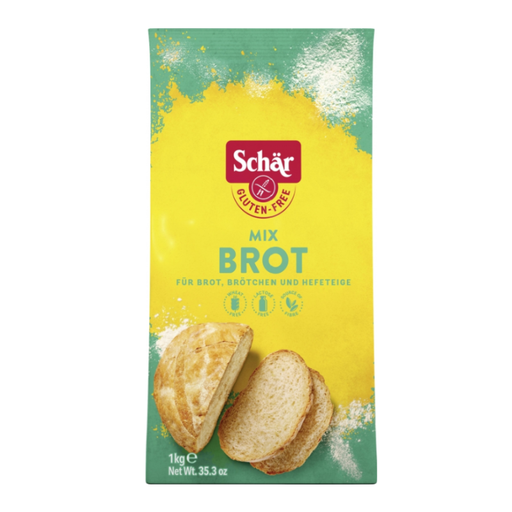 No image available
Schär gluten-free bread mix, 1 kg
For hosts who want to bake their own bread before dinner. Plan the preparation according to the pack instructions and use separate equipment; check the ingredients, other allergens and whether the product is explicitly labelled as wholemeal.
View at Joybuy
Frequently asked questions
Is an ingredients list with no wheat enough for a guest with coeliac disease?
No. Choose bread explicitly labelled ‘gluten-free’. Under EU Implementing Regulation (EU) No 828/2014, food carrying this claim may contain no more than 20 mg of gluten per kg; the absence of wheat from the ingredients list doesn’t mean the product qualifies for this labelling.
Can gluten-free bread contain oats?
Yes, bread containing oats can also be labelled gluten-free. If you’re buying for a guest with coeliac disease, what matters is that the specific product is explicitly labelled as gluten-free, not simply that oats appear in the ingredients list.
How should I serve gluten-free bread alongside other bread?
Prepare it separately and serve it on its own plate with its own knife or serving tongs. Also protect spreads from shared cutlery and crumbs; the gluten-free labelling on the pack doesn’t cover how the bread is handled at the table.
Is gluten-free seeded bread automatically wholemeal?
No. Lots of seeds or a dark colour don’t replace wholemeal labelling. Check the product description and ingredients list: the Bauck Mühle mix is described as wholemeal oat bread, while Seitenbacher’s seeded bread is described as a seeded bread mix.


