If you have coeliac disease, an explicit ‘gluten-free’ label matters more than terms such as wholemeal, multigrain or seeded. For a supper that’s ready without baking, choose bread that’s ready to eat; a gluten-free bread mix takes time and a suitable kitchen. With both options, check the ingredients, other allergens and storage instructions for the specific product.
Who is this guide for?
Students diagnosed with coeliac disease
For a quick supper, you need bread that’s explicitly labelled gluten-free. The German Coeliac Society stresses the importance of a strictly gluten-free diet for people with coeliac disease; ‘wholemeal’ alone says nothing about whether a product is gluten-free.
Budget-conscious people in shared accommodation
If you want bread to last for several suppers, the pack size and storage instructions can help you plan. With a bread mix, you’ll also need to factor in the extra ingredients, baking time and kitchen equipment.
People looking for a hearty, seeded loaf
If you prefer seeds or buckwheat, it’s worth checking the specific ingredients list. Recipes for gluten-free bread and baking mixes vary, and other allergens are a separate consideration when choosing.
What should you look for when buying?
If the bread is for someone with coeliac disease, check the gluten-free label first. Then decide whether you need supper ready without baking or whether a bread mix fits your routine.
| Criteria |
What to check before buying |
Who it matters most to |
| Gluten-free label |
An explicit ‘gluten-free’ statement on the product; for oat products, check the label on the specific loaf. |
If I have coeliac disease, ‘wholemeal’ isn’t enough to help me choose. For around 33% of consumers, a clear gluten-free label may be the main priority. |
| Quantity you can plan around |
Pack size and any extra ingredients needed for a bread mix. |
I want to use the bread for my planned suppers without having to factor extra ingredients into a bread mix. For around 27% of consumers, this kind of shopping plan may be the main consideration. |
| Time and storage |
Ready to eat or for home baking; storage instructions before and after opening. |
After a long day, I need a bread-based meal that doesn’t require baking, or I want to portion out a stock sensibly. This could be the most important requirement for around 20% of consumers. |
| Ingredients and other allergens |
Grains, seeds and declared allergens in the ingredients list; compare nutritional values per 100 g if needed. |
I’m looking for a particular recipe or need to avoid ingredients other than gluten as well. For around 20% of consumers, this ingredient profile may be the main factor when choosing. |
Common selection mistakes
-
Assuming wholemeal means gluten-free
Wholemeal rye bread also contains gluten. Commission Implementing Regulation (EU) No 828/2014 lists rye among the cereals containing gluten, so ‘hearty’ or ‘multigrain’ is no substitute for a gluten-free label.
If you have coeliac disease, check for the words ‘gluten-free’ first, then compare the types of grain and seeds.
-
Overlooking other allergens
Gluten-free doesn’t mean free from other allergens. According to the manufacturer, Seitenbacher’s seeded bread mix contains cashews; Schär Wholemeal Bread lists sweet lupin ingredients.
If you have other allergies, read the ingredients and allergen information for each individual product.
-
Treating loose bakery products like packaged goods
For unpackaged bread, information about how it’s made and possible contact with gluten-containing flour is particularly important. Biobäckerei Schubert distinguishes between its separately produced, packaged gluten-free range and its unpackaged, non-certified products.
When buying loose bread, ask about its gluten-free labelling, as well as how the specific loaf is made and handled.
Brands to help you choose
Schär
Schär sells sliced gluten-free wholemeal bread and a wholemeal bread mix.
- According to Schär, the wholemeal bread contains ingredients including rice, millet, buckwheat and sunflower seeds.
- The bread and bread mix are different products; check the ingredients, allergens and preparation instructions on the specific pack.
Seitenbacher
Seitenbacher offers a seeded bread mix labelled gluten-free for home baking.
- According to Seitenbacher, the 500-g mix contains gluten-free oats, 40% seeds and psyllium husks.
- The mix contains cashews and requires time and access to an oven.
Poensgen
Poensgen sells gluten-free long-life breads, including a sunflower seed loaf.
- Poensgen states that its long-life bread keeps for around four months when stored correctly; always follow the information for the specific product.
- Check the ingredients and allergen information for your chosen variety, particularly if you need to avoid ingredients other than gluten too.
Biobäckerei Schubert
Biobäckerei Schubert describes its gluten-free range as being made in a dedicated, separate production area.
- For people with coeliac disease, the bakery’s information about separate production and packaging is relevant when choosing.
- The bakery says it cannot guarantee that unpackaged, non-certified products are completely gluten-free.
Bäckerei Leo Glutenfrei
The specialist bakery sells a range of gluten-free breads, including a multiseed loaf.
- The bakery describes its production and supply chain as certified gluten-free.
- Check the ingredients, other allergens and storage instructions for each type of bread.
Products for baking and quick suppers
This selection features a gluten-free bread mix and ready-to-eat gluten-free crispbread. Crispbread isn’t a like-for-like alternative to soft wholemeal bread.
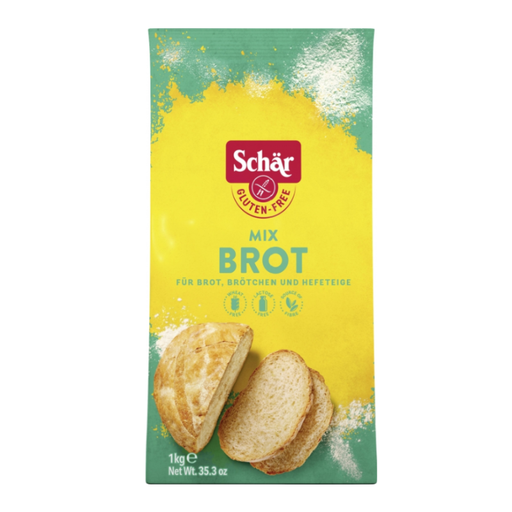 Image unavailable
Schär gluten-free bread mix, 1 kg
An option if you have time and a kitchen where you can bake bread. The pack contains 1 kg of bread mix; check the ingredients to see whether the finished loaf meets your expectations for wholemeal bread.
View on Joybuy
 Image unavailable
Schär Dark Crispbread, gluten-free, 125 g
This gluten-free crispbread is an option for supper without baking. The pack contains 125 g; if you’re looking for soft slices of bread, crispbread is a different type of product.
View on Joybuy
Frequently asked questions
Is ‘wholemeal bread’ enough of a label if you have coeliac disease?
No. Wholemeal describes the type of bread, not whether it’s gluten-free: wheat, including spelt, as well as rye and barley contain gluten. If you have coeliac disease, look for an explicit ‘gluten-free’ statement on the specific product.
What does ‘gluten-free’ mean in Germany?
Under Commission Implementing Regulation (EU) No 828/2014, a food sold to consumers and labelled ‘gluten-free’ may contain no more than 20 mg of gluten per kg. So the label doesn’t mean that no gluten can be detected by testing.
Can you eat bread containing oats if you have coeliac disease?
The key is the gluten-free label on the specific product. Under Commission Implementing Regulation (EU) No 828/2014, oats in foods labelled gluten-free must meet requirements designed to prevent contamination with wheat, rye and barley; the oats must contain no more than 20 mg of gluten per kg.
How should I store gluten-free bread for several suppers?
Follow the storage instructions on the specific pack, especially after opening. Poensgen says its long-life bread keeps for around four months when stored correctly; this manufacturer’s guidance doesn’t apply to other breads or opened packs.


