People with coeliac disease
For you, the explicit gluten-free labelling on the specific pack takes priority over flavour or a familiar brand. A list of ingredients that doesn’t include wheat is no substitute for checking.


If you have coeliac disease, first choose a biscuit whose current packaging is explicitly labelled ‘gluten-free’. Then consider the type of biscuit and pack format. If you need to account for other allergies, also check the information for the specific variety.
For you, the explicit gluten-free labelling on the specific pack takes priority over flavour or a familiar brand. A list of ingredients that doesn’t include wheat is no substitute for checking.
For work, school or a day out, individually wrapped biscuits may be more convenient than an opened pack. You should still check the labelling and any other allergen information for that specific variety.
If you’re choosing between butter biscuits, chocolate cookies and other options, compare the ingredients and any other allergens only after checking for gluten-free labelling.
If you have coeliac disease, first check that the current pack is labelled gluten-free. Only then compare pack formats, types of biscuit and other ingredients.
| What to look for | What to check | Who it matters to |
|---|---|---|
| Gluten-free labelling | Does the current pack explicitly say ‘gluten-free’? Then check the ingredients and any other allergen information. | With coeliac disease, I need a clearly labelled pack before choosing a flavour. This is the top priority for around 50% of consumers. |
| Pack format | Check whether your chosen variety comes in individual packs and what size portion you actually want to take with you. | When I’m having a snack out and about, I don’t want to carry an opened pack in my bag. That’s why around 30% of consumers prioritise a convenient format. |
| Type of biscuit and other ingredients | Compare the specific variety by checking its ingredients, allergen information and nutritional values per 100 g. | With my afternoon coffee, I’m looking for a particular type of biscuit and may also need to avoid other allergens. This is the top priority for around 20% of consumers. |
A list of ingredients with no obvious wheat is not the same as explicit gluten-free labelling. According to the European Union, the term ‘gluten-free’ is restricted to products containing no more than 20 mg of gluten per kg of finished product.
If you’re choosing biscuits for someone with coeliac disease, look for this information on the current pack, even if the product name includes rice, maize or oats.
Gluten-free labelling doesn’t tell you whether a product contains milk, egg, soya or nuts. For example, Gullón says its gluten-free cocoa cookies may contain traces of milk.
If you need to account for other allergies, read the ingredients and allergen information for the exact variety.
A stated portion may not match the amount you eat in the afternoon. The German Food Association explains that nutritional information per 100 g provides a consistent basis for comparison.
First compare sugar, fat and energy per 100 g. Then use any additional portion information to work out how it relates to the amount you actually eat.
A listed biscuit may not be in stock at every store. REWE notes that availability can depend on factors including demand and store size.
Before making a special trip, check your store’s stock, and check the information on the pack when you buy it.
Brand names can help you search for a particular type of biscuit, but they’re no substitute for checking each individual pack.
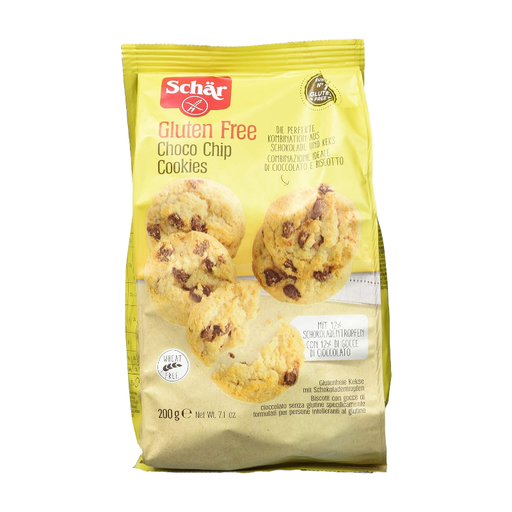
REWE lists Schär Choco Chip Cookies as a gluten-free cookie option. If you’re looking for a chocolate cookie, this is a specific product to start with when comparing options.
The caramel biscuits with vanilla cream are a filled alternative if you fancy something other than a plain butter biscuit.
Organic and oat biscuits may appeal if you’re looking beyond the type of biscuit to these other characteristics.
Bahlsen features LEIBNIZ Minis Gluten Free in a mini biscuit format on its own product page.
Gullón describes gluten-free cocoa cookies as well as ChocoBom Cacao Sin Gluten in three individual packs.
This selection includes a chocolate cookie, a butter biscuit and ladyfingers for an afternoon snack. Ladyfingers are a different type of baked treat from cookies, so choose according to the type of biscuit you want. If you have coeliac disease, always check the current gluten-free labelling.
 No image available
An option if you fancy a cookie with chocolate chips in the afternoon rather than a butter biscuit.
The pack contains 200 g. Before buying, check the gluten-free labelling on the current pack. If you also have an egg allergy, pay particular attention to the allergen information there.
 No image available
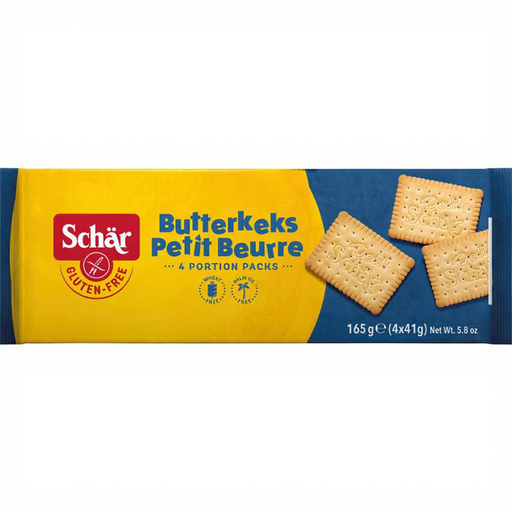
For an afternoon coffee or tea, if you prefer a butter biscuit to a chocolate cookie.
The pack contains 165 g. Check the gluten-free labelling and, if you have any other allergies, the milk and egg information on the current pack.
 No image available
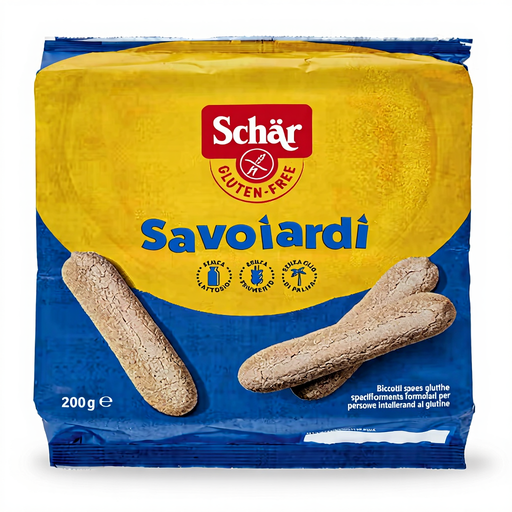
A biscuit to enjoy with coffee or tea if you’re not looking for a classic cookie.
The pack contains 200 g. Check the gluten-free labelling and, if you have an egg allergy, the information on the current pack.
No. For processed biscuits, it doesn’t replace an explicit ‘gluten-free’ label. According to the European Union, this claim is limited to products containing no more than 20 mg of gluten per kg of finished product, so check the current pack.
No. If you’re choosing oat biscuits because you have coeliac disease, look for explicit gluten-free labelling on the specific pack rather than relying on the ingredient name alone.
Not automatically. Gluten-free status and other allergen requirements need to be checked separately. If you have additional allergies, read the ingredients and information on the pack for the variety you’ve chosen, rather than relying on the brand name alone.
First compare sugar, fat and energy using the nutritional information per 100 g. Any additional information per portion is only useful for assessing your snack if the stated portion matches the amount you actually eat.
A product listing doesn’t guarantee availability at every location. REWE notes that availability can vary with demand and store size; check your local store’s stock if you want to buy a particular variety.