
Lieferung heute & morgen

Qualitätsgarantie

Willkommens-Angebote freischalten: KOSTENLOSE Lieferung | Bis zu 80 % RABATT | Kostenlose 30-Tage-JoyPlus-Testphase
App herunterladen
Choosing the right smart lighting can transform a room, but the market is flooded with products whose marketing promises often outshine the LEDs themselves. Many users invest in a smart LED light strip only to find that the colours look patchy, the app control is unreliable, or the strip starts peeling off the wall. These problems are not just annoying; they are a waste of money and time.
Before you make a decision, it's crucial to understand the most common pitfalls that lead to buyer's remorse:
To avoid these issues, you should focus on a few core technical features that define the quality and functionality of an LED strip.
The technology behind the colours is the most important criterion.
An LED strip with app control is standard today, but the quality of implementation varies widely. Pay attention to two aspects:
For a truly immersive experience, features like music synchronisation are crucial. Models with a built-in microphone can react to ambient sounds or music and adjust the light effects in real-time to the rhythm. This is a significant added value, especially for gaming setups, home cinemas, or party rooms.
Based on these objective criteria, we have identified several products suitable for different user profiles and use cases.
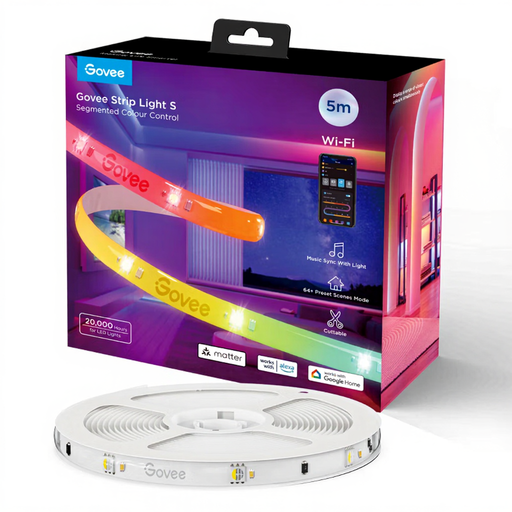
Why This Fits Their Persona: Ideal for users seeking a future-proof, high-performance, and seamlessly integrated solution for their smart home. The combination of RGBIC, Matter, and a protective coating meets all the demands of modern ambient lighting.
RGBIC technology enables true colour gradients. Matter certification solves the compatibility problem. The protective coating increases durability and protects against dust.
Segmented colour control for dynamic effects; universal compatibility via Matter; high light density (24 LEDs/m) for uniform illumination.
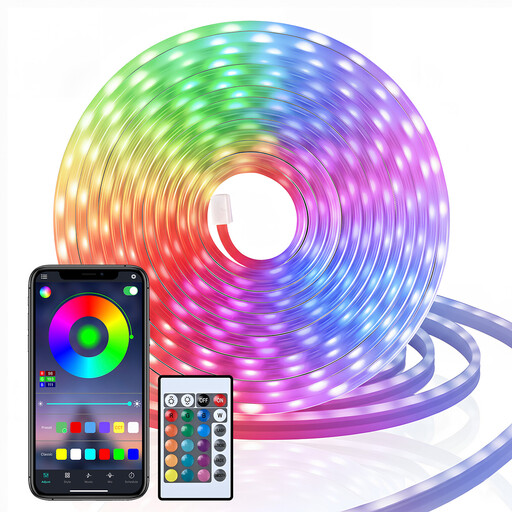
Why This Fits Their Persona: A great choice for users who want to experiment with dynamic lighting effects on a limited budget. Ideal for a single room, a teenager's room, or a smaller gaming setup.
Despite its lower price, it offers music sync via a built-in microphone and is controlled by an app and remote, setting it apart from simple, non-smart strips.
Integrated microphone for light effects that sync with music; flexible FPC material allows for creative shapes and DIY projects; control via remote and mobile app.
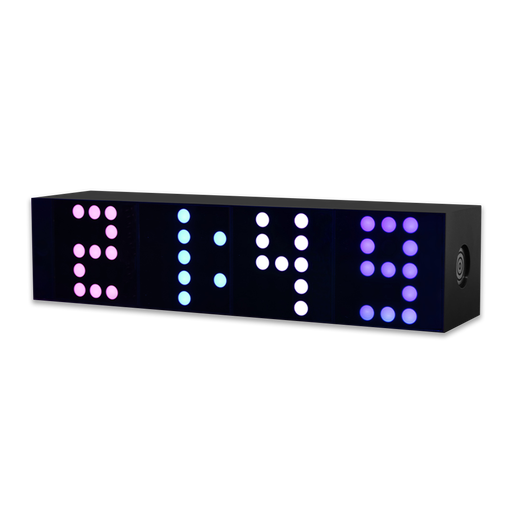
Why This Fits Their Persona: Perfect for users looking for more than just a light strip. The modular system allows for the creation of custom pixel art and dynamic patterns on a desk or wall.
This product bypasses the typical problems of LED strips with its completely different form factor. It's a specialised system for creative lighting design, not for simple, indirect room illumination.
Modular, magnetic design for flexible arrangements; compatibility with gaming platforms like Razer Chroma RGB and Overwolf; customisable effects and pixel art via the app.
We've compiled a complete, up-to-date list of products that fully meet these strict selection criteria and local safety regulations.
No, most RGBIC LED strips, including models from Govee, should not be cut. Each section of the strip contains an IC chip necessary for independent colour control. Cutting the strip at a non-designated point would interrupt the circuitry and cause subsequent segments to stop working. Therefore, check the required length before purchasing and choose a model that fits.
The main advantage of Matter is the simplification and unification of the smart home. A Matter-enabled LED strip can be connected directly to any Matter-compatible hub, regardless of the manufacturer. This means you can control the strip with the Apple Home app on your iPhone, Google Assistant, or Amazon Alexa without relying on a manufacturer-specific app or complex workarounds. It ensures a stable, local, and fast connection.
Power consumption depends on the brightness, the colours displayed, and the LED density. As a reference, the Govee RGBIC LED Strip (5m) has a rated power consumption of 24 watts at maximum brightness. In standby mode or when dimmed, consumption is significantly lower. With average daily use of a few hours, the operating costs are typically very low.