
Lieferung heute & morgen

Qualitätsgarantie

Willkommens-Angebote freischalten: KOSTENLOSE Lieferung | Bis zu 80 % RABATT | Kostenlose 30-Tage-JoyPlus-Testphase
App herunterladen
An immersive TV backlight can fundamentally transform your viewing and gaming experience by making the wall behind the television glow with the colours on the screen. However, the market is saturated with products whose promises often don't match reality. Before you make a decision, it's crucial to understand the most common pitfalls that lead to disappointment and unnecessary expense.
Many buyers report three central problems:
To avoid these issues, you should pay attention to a few core technical features that define a high-quality TV backlight.
Choosing the right system comes down to a few, but crucial, technical parameters. These determine whether you get a truly immersive experience or just simple, static lighting.
The technology behind the LEDs is fundamental to the quality of the colour synchronisation.
There are two common methods for capturing the screen's colours and relaying them to the LEDs:
Modern app-controlled TV lighting should offer more than just a simple remote. A well-programmed app allows for detailed settings such as camera calibration, brightness and saturation adjustments, and the selection of various scene modes (e.g., for movies, games, or music). Compatibility with voice assistants like Alexa or Google Assistant further enhances convenience, allowing the lighting to be turned on, off, or adjusted with a voice command.
Based on the criteria mentioned, we have identified products that offer a suitable solution for different user groups and their specific requirements.
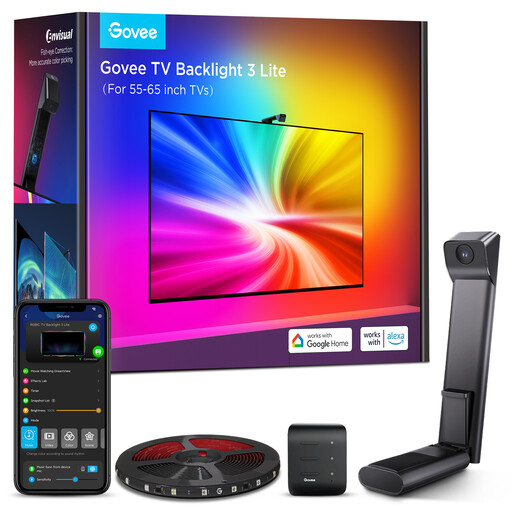
Why This Fits Their Persona: Ideal for users seeking immersive and precise colour synchronisation for their home cinema. The camera technology ensures all content is supported, including from internal TV apps, offering maximum flexibility.
The RGBICW technology enables segmented and therefore accurate colour reproduction, bypassing the problem of imprecise synchronisation. The camera-based solution is universally compatible.
Comprehensive app control and compatibility with Alexa/Google Assistant. The "W" in RGBICW stands for a dedicated white light, which provides more natural illumination.
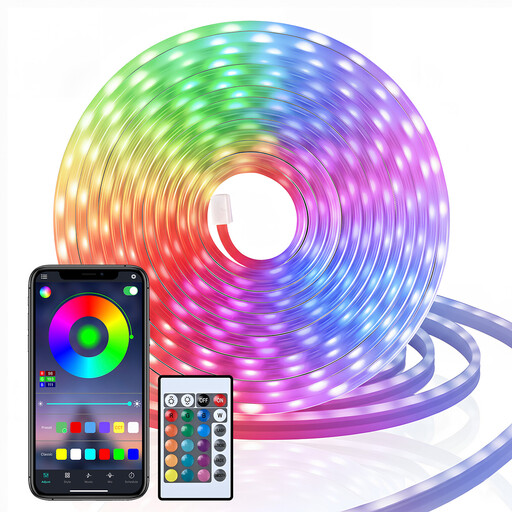
Why This Fits Their Persona: Perfect for users who want to create an atmospheric ambiance without the cost of complex screen synchronisation. Ideal for gaming rooms or as a decorative element in the living area.
This system doesn't promise screen synchronisation, instead delivering solid, dynamic lighting with a music sync function. It avoids the trap of unreliable sync systems by clearly focusing on ambiance.
Simple installation with a self-adhesive back and control via remote or app. The music sync mode reacts to ambient sound to create dynamic effects.

Why This Fits Their Persona: A creative gift idea that goes beyond simple TV lighting. Perfect for a gaming setup or a sports fan's room to create a themed, atmospheric ambiance.
This product isn't a complex sync system, but a straightforward mood light. It delivers exactly what it promises: a striking 3D effect with simple controls, without setting false expectations.
16 colour options and various modes, controllable via remote or touch. It can be powered by USB or batteries, allowing for flexible placement.
We have compiled a complete, up-to-date list of products that fully meet these strict selection criteria and all relevant safety standards.
The camera is designed to be as unobtrusive as possible. It is typically placed centrally above or below the screen. With correct calibration and positioning, it is hardly noticeable while watching TV. Most users report that they no longer consciously notice the camera after a short time, as their focus shifts to the immersive lighting experience.
Integrated systems like Ambilight have the advantage of accessing the TV's image data directly, which allows for very high precision. However, camera-based systems like Govee's have made significant progress in recent years. Modern algorithms ensure fast and accurate colour detection. Minor deviations can occur due to reflections in the room, but these can be minimised through careful calibration in the app. For most users, the difference in everyday use is minimal, while the camera's universal compatibility is a major advantage.
Most modern systems, including the Govee TV Backlight, are designed for easy self-installation. The LED strips are self-adhesive and are applied to the back of the TV. The instructions guide you step-by-step through placing the camera and connecting the cables. The entire process usually takes no more than 20 to 30 minutes. It is important to thoroughly clean the TV's surface before applying the strips to ensure a long-lasting bond.