Families new to photography
If you want to take spontaneous photos of individuals at the celebration, look for a camera that’s easy to use and has eye focus. Canon Deutschland says the EOS R50 can track people, including their eyes and faces.


For graduation portraits in bright sunlight, eye autofocus and the right lens matter more than having the highest possible megapixel count. If the screen is difficult to see outdoors, an electronic viewfinder can help; harsh shadows across faces, meanwhile, call for a suitable position or fill-in light. Canon Academy explains how focal length and distance from the background affect subject separation, while Nikon highlights the challenge of balancing shadows and bright areas in direct sunlight.
If you want to take spontaneous photos of individuals at the celebration, look for a camera that’s easy to use and has eye focus. Canon Deutschland says the EOS R50 can track people, including their eyes and faces.
If you want to deliberately blur the background, consider the lens, focal length and distance from the background together. Canon Academy explains how these factors affect subject separation.
If it’s difficult to change the time or location of your shoot, shadows, backlighting and reviewing images outdoors are important factors to plan for. Nikon notes that direct sunlight can create deep shadows and very bright highlights.
First, decide how you’ll handle shadows in strong sunlight. Then compare eye focus, the lens and how easy it is to review images outdoors, taking your planned shoot into account.
| What you need | What to check before buying | Who should pay particular attention? |
|---|---|---|
| Lighting faces in sunlight | Check whether you can find a shaded spot or change your angle; for backlighting, a reflector or compatible fill-in flash may be an option. | If I can’t easily change the shooting location, I want to be able to manage harsh shadows on faces. Around 33 % of consumers put control of lighting first. |
| Focusing on eyes in spontaneous portraits | Check that the specific model has eye autofocus for people, and test the focus before the celebration. | If you’re taking spontaneous photos of individuals, you’ll want to keep focus on the eye facing the camera. Around 27 % of consumers prioritise eye focus. |
| Making people stand out from the background | Compare the mount and maximum aperture of the lens actually being offered; bear in mind that a wide aperture reduces the area in focus. | If I want to make the background less distracting, I look at the lens and the distance from the backdrop. Around 20 % of consumers put subject separation first. |
| Carrying the camera and reviewing images | Compare the combined weight of the camera body and lens, and check whether you find the viewfinder useful outdoors. | If you’ll be using your camera in different places during the celebration, you’ll want it to be comfortable to carry and easy to use to assess your subject in bright light. Around 20 % of consumers prioritise portability and image review. |
The look of a portrait also depends on the lens, aperture and distance from the background. A kit lens may not give you the background blur you’re after.
Before you buy, check what’s included, the maximum aperture and the lens mount.
You may need an additional compatible lens to achieve the subject separation you want.
Getting a sharp eye won’t remove deep shadows from a face. Focus and lighting solve different problems.
Test the location and lighting; only factor in accessories if they’re needed for your particular shooting conditions.
Depending on the light, you may need a reflector or compatible flash accessories.
Using flash with a shutter speed faster than the usual synchronisation limit requires supported high-speed sync.
Check that this feature works with the exact camera model and flash you’ve chosen, rather than assuming it’s available with every setup.
You may need a suitable flash or other compatible accessories.
The EOS R50 is a compact APS-C mirrorless camera with interchangeable RF lenses, making it an option for straightforward portrait photography.
The Z50II is a DX mirrorless camera for anyone who often wants to use an electronic viewfinder when shooting outdoors.
The X-S20 is an APS-C mirrorless camera with interchangeable X lenses, suited to portraits and additional video recording.
The ILCE-6400 is an APS-C mirrorless camera with an E-mount.
The selection includes an APS-C mirrorless camera for individual portraits, as well as compact cameras whose product titles highlight zoom or video recording. Before the celebration, check that the image style, lens and controls suit your plans for shooting in bright daylight.
 No image available
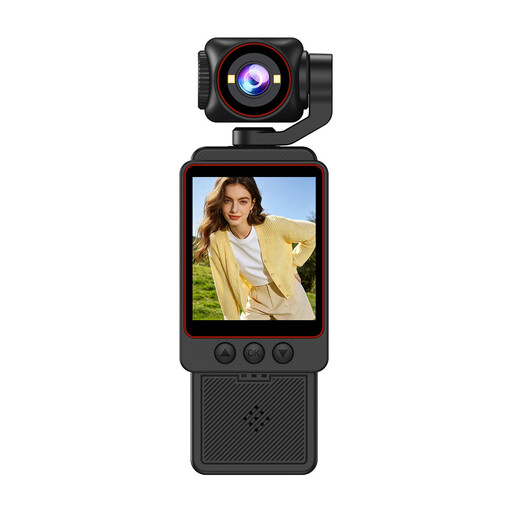
The product title lists 12x optical zoom, which can help you choose your framing at different shooting distances.
The title also describes it as a handheld POV camera with audio and video recording.
 No image available
For spontaneous individual portraits, the product title highlights eye detection for people and a 16–50 mm power zoom lens.
The title describes the model as an APS-C mirrorless camera with a tilting screen. Check whether the viewfinder and image review features suit your photography in the sun.
 No image available
The product title lists 12x optical zoom for changing your framing.
Other details in the title include 4K, Wi-Fi and 64 MP. These figures alone don’t tell you how the camera will capture portraits in bright sunlight.
 No image available
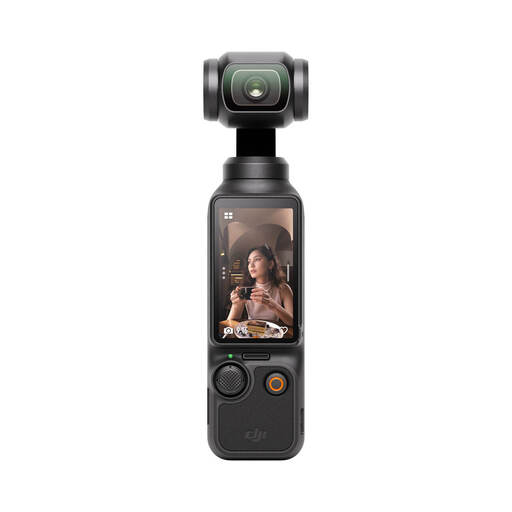
For additional celebration videos, the product title lists 4K recording at 120 fps, face and subject tracking, and fast focusing.
Other details in the title include a 1-inch CMOS sensor, 3-axis stabilisation and a rotating 2-inch touchscreen. Check that the design and image review features suit your portraits in bright daylight.
Yes. Fill-in flash can brighten shadows on faces, particularly when shooting into the light. If you also want to use flash with a wide aperture and a fast shutter speed, check for high-speed sync and make sure it’s compatible with the specific camera and flash combination.
If your model offers it, switch on eye autofocus for people and check that the eye facing the camera is sharp in your test shots. Also try the image preview and exposure at the planned location; a wide aperture reduces the area in focus.
Budget separately for a suitable compatible lens and, if needed, lighting accessories. For a typical online purchase by a consumer, there’s generally a 14-day right to cancel from the date of delivery; the European Commission lists some exceptions. Verbraucherzentrale distinguishes between the statutory guarantee and a voluntary warranty.
Not necessarily. The Federal Commissioner for Data Protection and Freedom of Information explains that use solely for personal or family purposes may be exempt from the GDPR; this exemption may no longer apply, for example, if photos of other people are published online. Any processing that then requires a legal basis must have one. Whether consent is needed in a specific case depends on the purpose and circumstances.