For individual portraits
If you’re mainly photographing individual graduates, look for reliable eye focus, the right framing and the look the lens creates.


For graduation photos featuring individuals and groups, a camera kit with a zoom lens is a flexible starting point. The key is to check exactly which lens is included. If you’re mainly taking individual portraits with a shallow depth of field and have enough room to frame your shot, a compatible fast prime lens could be a good choice. However, it won’t necessarily replace a zoom when you’re photographing groups. You should also check with the school who will be taking the photos and whether they can be published later.
If you’re mainly photographing individual graduates, look for reliable eye focus, the right framing and the look the lens creates.
If you’ll be switching between individual portraits and group shots in the same location, check the focal length range of the specific zoom kit.
If you’re putting together a ready-to-use kit, check the lens and accessories against the exact contents listed for that kit version.
A good choice if: You want to photograph individuals and groups from different distances during the same session.
The trade-off: A zoom gives you a choice of angles of view, but the standard zooms reviewed here don’t offer a maximum aperture of f/1.8.
A good choice if: Individual portraits and a softer background are your priority, and there’s enough room at the location to work with a fixed angle of view.
The trade-off: A prime lens gives you less flexibility when framing and may mean buying an extra lens. You may also need a wider angle of view for group shots.
| What you need | What to check before buying | Who is this important to? |
|---|---|---|
| Individual portraits and background | Check that the lens mount is compatible and look at the maximum aperture; Canon says the EOS R50 can detect people’s eyes and faces. | If I want to photograph individuals with a carefully composed background, the lens and eye focus matter to me. Around 31% of consumers put individual portraits first. |
| Individual portraits and group shots | Check the focal length range of the included zoom and consider whether you can get the framing you want at the location. | If I want to switch between individual portraits and group shots without changing lenses each time, the kit’s angle of view matters. Around 25% of consumers say changing their framing is their main priority. |
| A complete project kit | Check the exact kit version and everything included, such as the lens, battery and charger. | If I need to put together a ready-to-use kit for the school project, I want to know exactly which accessories are included. Around 25% of consumers focus on the complete package. |
| Taking photos in low light | Consider the maximum aperture of the lens you’ll be using and the light at the location. For groups, check how much depth of field you’ll need, too. | If the location is poorly lit, I want to choose a lens that suits the conditions while still keeping everyone in focus. Around 19% of consumers prioritise low-light performance. |
The EOS R50 kit reviewed here includes an RF-S 18–45 mm F4.5–6.3 IS STM, but not the RF 50mm F1.8 STM, which is sold separately.
First decide whether you’ll mainly be photographing individuals or groups, then compare everything included in the kit.
A manufacturer’s claim about shake compensation under test conditions doesn’t mean that moving people will stay sharp.
For portraits, check the focus performance and shooting conditions, too. Don’t assume a stabilisation test applies to every lens combination.
Nikon specifically states that the Z50II kit VOA150K001 doesn’t include a charger.
Before ordering, check the full variant name and list of accessories.
The Rhineland-Palatinate data protection authority treats taking identifiable photos of people and publishing them as separate matters that need to be considered.
Agree with the school in advance on who will take the photos, who will receive them and whether they’re intended for publication.
The EOS R50 is an APS-C camera. Canon offers it with an RF-S 18–45 mm kit lens, while the RF 50mm F1.8 STM is available separately.
The specific Z50II kit reviewed here, VOA150K001, pairs the Z50II with the NIKKOR Z DX 16–50 mm f/3.5–6.3 VR.
The X-S20 is an X-mount option if in-body stabilisation is an important factor in your choice.
The ZV-E10 II is an APS-C camera with an E-mount and a kit zoom, making it an option for additional video work.
The products below include zoom cameras for changing your framing, as well as models whose titles mention focus tracking or video features. Check that the lens, controls and framing you want are right for your location.
 No image available
The zoom lens is useful when you need to change your framing for the school project.
The product title lists an APS-C sensor, a 16–50 mm power zoom and Eye Detection for people. It also mentions 4K recording and a tilting screen.
 No image available
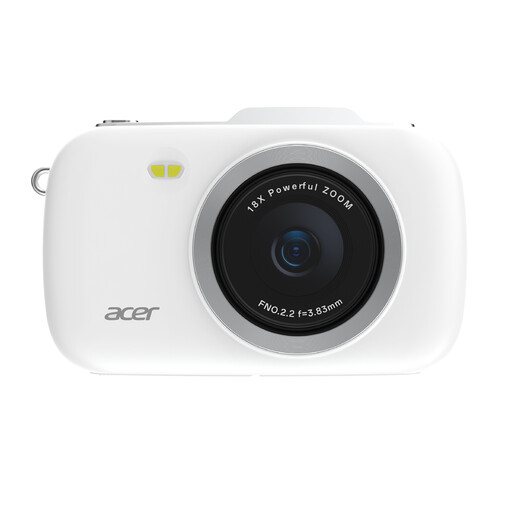
The zoom mentioned in the product title could be useful when you need to change your framing. Check in advance that it gives you the angle of view you want at the location.
The title lists 4K and 18x zoom.
 No image available
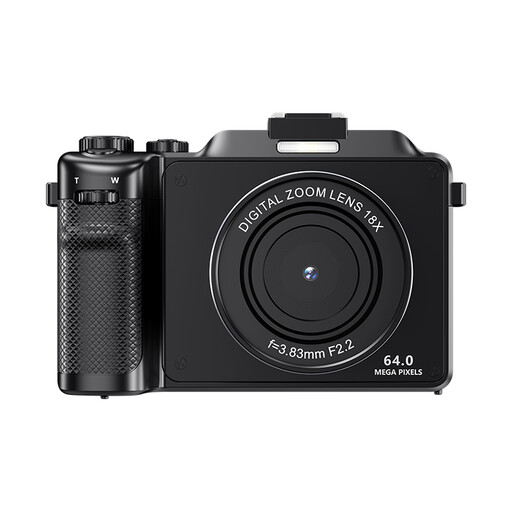
If you want to switch between different framings, check that the zoom suits the location you have in mind.
The product title lists 64 MP, autofocus, 18x zoom and a flash.
 No image available
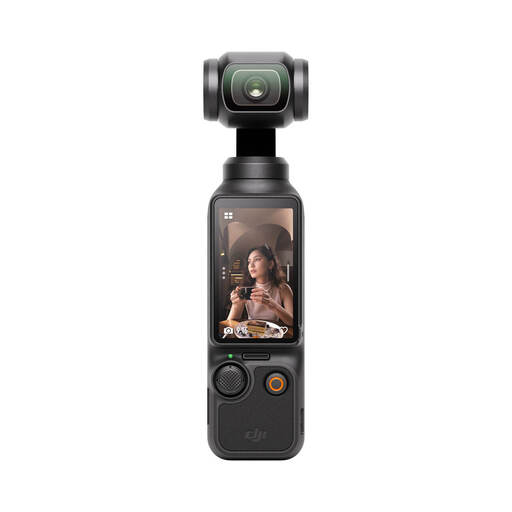
This model could be worth considering if the school project includes video as well as still photos.
The product title lists a 1-inch CMOS sensor, 4K/120-fps video, 3-axis stabilisation, and face and subject tracking. Stabilisation alone doesn’t tell you whether moving people will appear sharp.
 No image available
The optical zoom could be useful for different framings. Check that you can get the shot you want at the location.
The product title lists 8x optical zoom, 5K, 64 MP, two lenses and autofocus.
Not necessarily. If you want a wider aperture and more control over background blur, the Canon RF 50mm F1.8 STM, sold separately, is compatible with the EOS R50. Before buying, check that its fixed angle of view suits the framing you want and the distance available at the location.
Check that everything included in the kit suits your planned set-up, then try out both individual and group shots at the chosen location. The Canon standard kit reviewed here lists a battery and charger. Nikon notes that the Z50II kit VOA150K001 doesn’t include a charger.
For your statutory rights, the retailer is generally your first point of contact. A voluntary guarantee is separate from these rights. The Verbraucherzentrale describes repair or replacement as the first step towards putting things right.
Taking a photo and publishing it later need to be considered separately. For identifiable people, the Rhineland-Palatinate data protection authority lists consent as a possible legal basis and says that consent is generally required for photos on school websites. It describes a specific exception for certain event photos where individuals aren’t the main focus. Before taking or sharing photos, check with the school who is responsible, how the images will be used and what consent is needed.