
Lieferung heute & morgen

Qualitätsgarantie

Willkommens-Angebote freischalten: KOSTENLOSE Lieferung | Bis zu 80 % RABATT | Kostenlose 30-Tage-JoyPlus-Testphase
App herunterladen
As a responsible dog owner, you want to make an informed decision about your pet's nutrition. However, the search for grain-free, high-meat dog food often leads into a jungle of marketing claims. Many products don't deliver what they initially suggest. This guide will help you identify the crucial quality features and avoid common purchasing traps.
Manufacturers often use clever wording that suggests a higher quality than is actually in the food. Pay close attention to these three points to avoid being misled.
To find a truly species-appropriate dog food, you shouldn't be guided by the packaging but should examine the declaration closely. These three parameters are crucial.
An open declaration is a clear sign of quality. Here, all ingredients are listed individually, ideally with their percentages. You know exactly what you are feeding your dog. A closed declaration groups ingredients into categories (e.g., "oils and fats"). This makes it difficult to assess the quality and is often an indication of changing, low-cost raw materials.
For grain-free wet dog food, the declared meat content, consisting of muscle meat and high-quality offal like heart and liver, should be over 60%. Ensure that these are clearly defined meat types. For dry food, the position of meat meal or dried protein in the ingredients list is decisive—the higher up the list, the higher the content.
Ensure that the product is a complete food for adult dogs. This is the only way to guarantee that your dog is supplied with all essential nutrients, vitamins, and minerals. Supplementary foods are not suitable for daily, sole feeding and must be combined with other components to ensure a balanced diet.
Based on the criteria above, we have compiled a selection of products suitable for the different needs and profiles of dog owners in the UK.
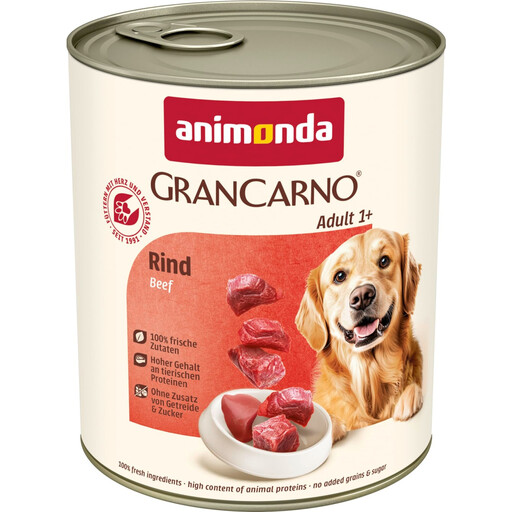
Why This Fits Their Persona: Ideal for owners who value a transparent and purist composition. This food focuses on the essentials: meat and minerals, without unnecessary additives.
The open declaration with 68% beef (heart, meat, lung, liver, udder, kidney) bypasses the trap of vague meat specifications. It is explicitly free of grain, sugar, and soy.
According to the manufacturer, it consists of 100% fresh, meaty ingredients. The visible, chunky meat pieces are a sign of gentle processing.
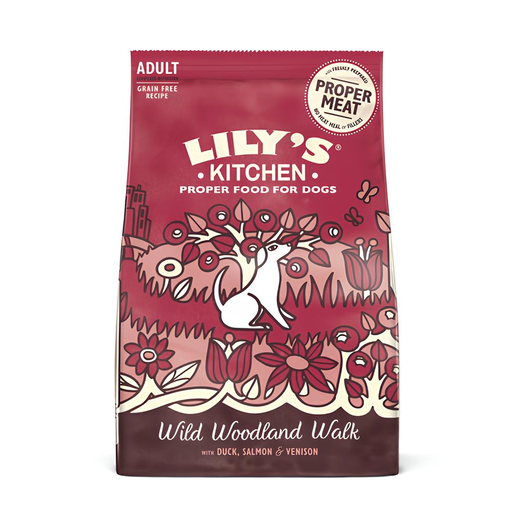
Why This Fits Their Persona: A great choice for dogs with sensitive digestion or intolerances to common proteins like chicken or beef. This dry food uses a combination of less common protein sources.
The recipe is grain-free and avoids the "fresh meat trick" by clearly declaring 35% freshly prepared meat (duck, salmon, venison) and combining it with other protein sources.
Contains prebiotics to support healthy digestion, as well as glucosamine and chondroitin to promote joint health.
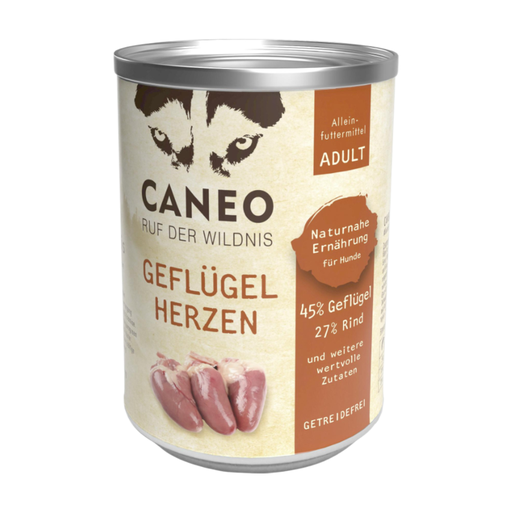
Why This Fits Their Persona: Suitable for dog owners who want to try a grain-free, high-meat diet without immediately investing in the premium segment. It offers a solid foundation at an accessible price point.
This food is explicitly grain-free and declares a high meat content of 72% meat and animal by-products, which is further broken down (45% poultry, 27% beef).
Offers a very high meat content in the canned dog food category and is designed as a complete food, which makes feeding straightforward.
We have compiled a complete, up-to-date list of products that fully meet these strict selection criteria.
1. How do I switch my dog to a new high-meat food? A food transition should always be done gradually over a period of 7 to 10 days. Start by mixing a small amount of the new food (about 25%) with the usual food. Increase the proportion of the new food every two to three days until you have completely replaced the old food. This gives your dog's digestive system time to adjust to the new composition.
2. Is a high protein content suitable for every dog? For most healthy, normally active adult dogs, a protein-rich diet based on a high meat content is beneficial and corresponds to their natural diet. For older dogs or dogs with certain health conditions (e.g., kidney disease), an adjustment of the protein content may be necessary. When in doubt, this should be discussed with a vet.
3. How can I tell if my dog is tolerating its grain-free food well? Good signs of high tolerance include stable, healthy digestion (firm, well-formed stools), a shiny coat, healthy skin without itching or dandruff, and a high and consistent energy level. Pay attention to changes in your dog's behaviour and physical condition after the food switch.