
Lieferung heute & morgen

Qualitätsgarantie

Willkommens-Angebote freischalten: KOSTENLOSE Lieferung | Bis zu 80 % RABATT | Kostenlose 30-Tage-JoyPlus-Testphase
App herunterladen
By Joybuy Product Recommendation Officer, July 29, 2026
Finding the right training treats for your dog can be a challenge, especially when you're committed to a grain-free diet. The market is flooded with options, and many products make health claims they can't back up. As a dog owner, you want to make an informed choice that supports training while promoting your pet's health.
This guide will help you identify crucial quality markers and avoid common pitfalls when buying grain-free dog snacks.
The "grain-free" label is a good start, but it's not a guarantee of a high-quality product. Watch out for these three points to avoid making a poor choice:
To find the right reward treats for your dog, you should check three core parameters. These will help you objectively assess the quality.
The ingredient list is ordered by weight, with the first ingredient being the most abundant. In high-quality treats, this should be a clearly defined type of meat.
The consistency of the treats is crucial for effective training.
Good and healthy dog treats are made without artificial attractants, colours, and preservatives. A short, easy-to-understand ingredient list is often a sign of a well-thought-out product. Vegetable glycerin is frequently used as a natural humectant and is generally considered safe.
Based on these criteria, we have compiled a selection of products suitable for various needs and dog types.
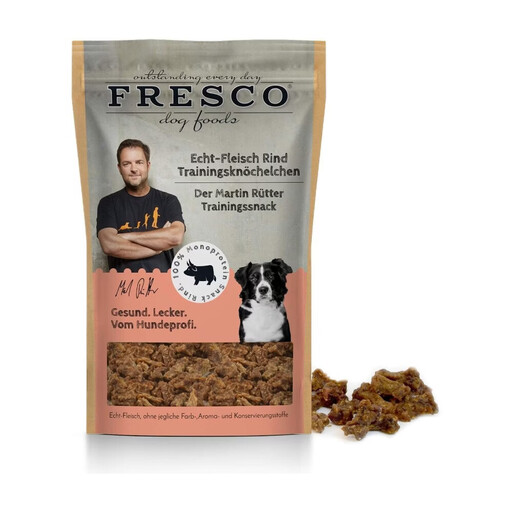
Why This Fits Their Persona: Ideal for frequent rewards due to their small, soft shape and high palatability. The single-protein beef recipe minimises the risk of intolerances, which is crucial during focused training sessions.
Relies on a very high, clearly declared meat content (92% beef, according to the manufacturer) from a single source and avoids common fillers or hidden sugars.
Single-protein recipe with high meat content; grain-free and made in Germany.
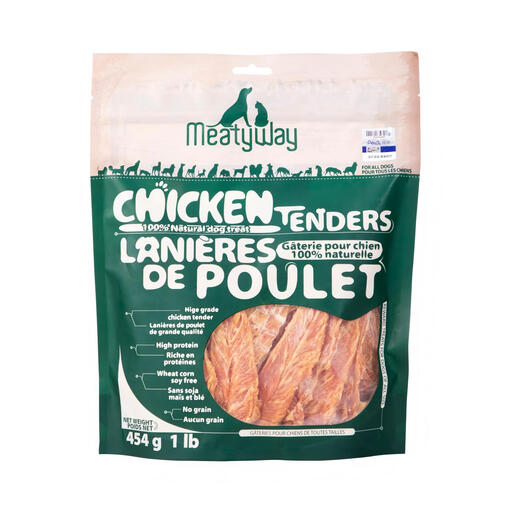
Why This Fits Their Persona: This profile seeks absolute transparency and minimal ingredients. A single-ingredient treat, which the manufacturer states is 100% chicken, perfectly meets this requirement and is ideal for elimination diets.
With only one ingredient (chicken), there is no room for hidden fillers, sugars, or misleading meat content declarations. The composition is maximally transparent.
Consists only of chicken, according to the manufacturer; free from any additives and grains.
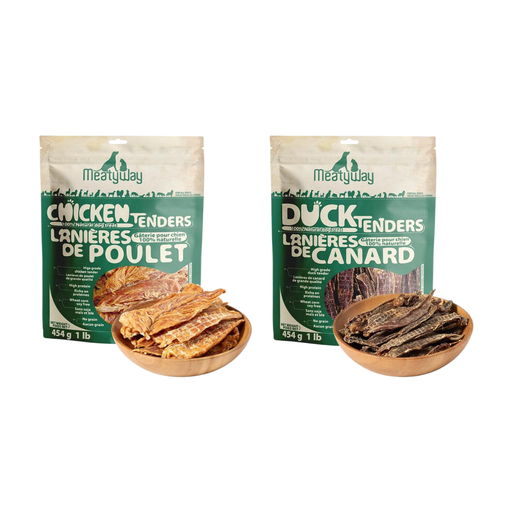
Why This Fits Their Persona: For dogs that get bored easily, this snack offers a combination of two popular proteins (chicken and duck) without compromising on the "grain-free and high meat content" principle.
The recipe remains simple and transparent by using real meat (duck breast and chicken) as the main components, rather than using cheap fillers to create variety.
Combination of two meat types (duck and chicken); grain-free recipe with no artificial additives.
We've compiled a complete, up-to-date list of products that fully meet these strict selection criteria and German safety regulations.
The amount depends on your dog's size, weight, age, and activity level, as well as the nutritional values of the snack. Treats should only make up a small part of the daily food ration, typically no more than 10% of the total calories. Follow the feeding recommendations on the packaging and reduce the main meal accordingly to prevent weight gain.
Not necessarily. While grain-free recipes are often well-tolerated, treats for puppies should be specifically tailored to their needs. Look for a soft texture to protect their baby teeth and an appropriate size to prevent choking hazards. Some products explicitly state the age from which they are suitable (e.g., "not for puppies under 4 months").
A genuinely high meat content is indicated by a transparent declaration. Look for phrases like "90% chicken meat" instead of "meat and animal by-products." If the meat content is listed as fresh meat weight, remember that the percentage in the dried final product will be lower. The most reliable indicator is a short ingredient list where a specific type of meat is listed first.