
Lieferung heute & morgen

Qualitätsgarantie

Willkommens-Angebote freischalten: KOSTENLOSE Lieferung | Bis zu 80 % RABATT | Kostenlose 30-Tage-JoyPlus-Testphase
App herunterladen
As a responsible cat owner, you want to fill your cat's bowl only with food that is truly good for them. However, the search for grain-free cat food with turkey often leads you into a maze of marketing promises and unclear ingredient lists. Many products use appealing imagery, but the reality inside the can or pouch is often quite different. This guide will help you avoid the common pitfalls and make an informed decision.
Before you make a choice, you should be aware of the most common misleading claims on the market that often lead to poor purchasing decisions.
To avoid falling into these traps, you should focus on three objective criteria that will help you assess the quality of wet cat food with turkey.
You can recognise a high-quality composition by its "transparent declaration." This means all ingredients are listed individually and with their percentage.
For cats, especially those with sensitive digestion, the type of protein source is crucial. Grain-free cat food with turkey as the single animal protein source (single-protein) is often more digestible. It minimises the risk of allergic reactions and makes it easier to identify intolerances. Check if other meats like beef, chicken, or fish are included if your cat is sensitive to them.
A species-appropriate wet food does not need unnecessary fillers and attractants. Ensure the ingredient list is free from the following components:
Here is a selection of products that are suitable for different requirements, based on their declared ingredients.
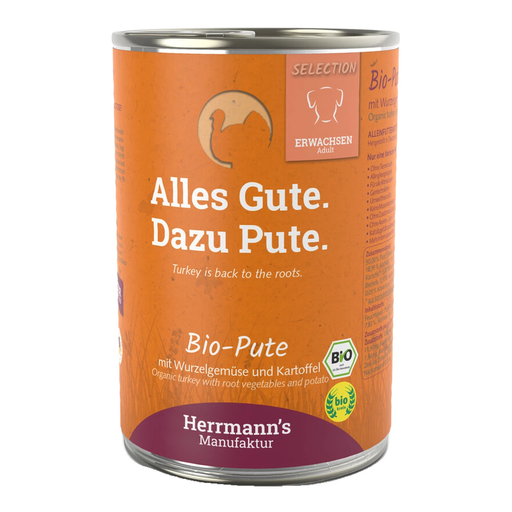
Why it's a good fit: This food is ideal for owners who demand the highest standards of purity and digestibility. It uses only turkey from certified organic farms as its single animal protein source.
It avoids the "Made with Turkey" deception by being a single-protein food. The organic certification and transparent declaration provide clarity on origin and composition.
The recipe is reduced to the essentials and consistently avoids grain, sugar, and artificial additives, which maximises digestibility for sensitive cats.
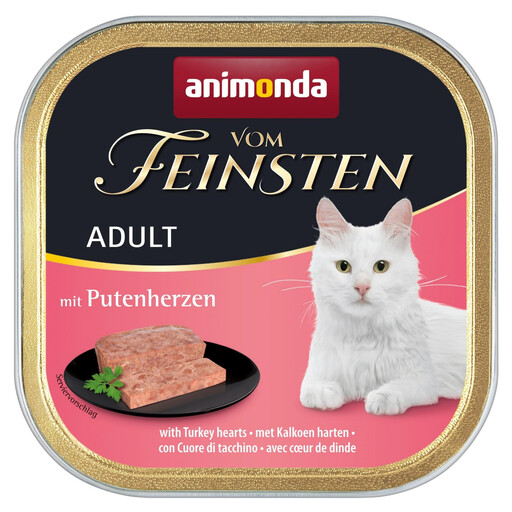
Why it's a good fit: This food provides a solid foundation for daily nutrition. It combines a high meat content with a grain-free recipe and is available in a convenient multi-pack.
It avoids the "High Meat Content" trap with a clear declaration of its 63% meat content and a precise breakdown of the included meats, including 8% turkey hearts.
The consistent avoidance of grain, soy, sugar, and artificial additives makes it a reliable choice for a species-appropriate diet without hidden, low-quality ingredients.
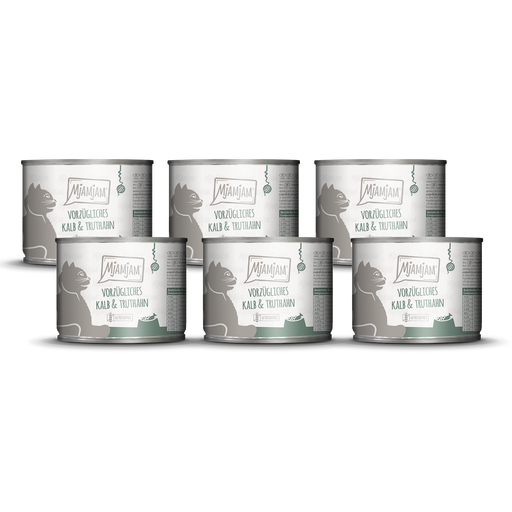
Why it's a good fit: For cats that prefer a meat-rich meal. The brand is known for a diet that mimics natural prey, with an exceptionally high meat content and a strict avoidance of unnecessary fillers.
The transparent declaration shows a meat content of 64%, composed of veal and turkey. There are no hidden fillers or vague descriptions, ensuring maximum transparency.
The very high meat content, combined with the absence of grain, sugar, and artificial binders, provides a nutrient-dense, species-appropriate meal that will win over even picky eaters.
We have compiled a complete, up-to-date list of products that fully meet these strict selection criteria and relevant pet food regulations.
1. Is a high meat content always a mark of quality? Not necessarily. The quality of the raw ingredients is what matters. A high percentage of muscle meat and nutrient-rich organs like heart and liver is more valuable than a high percentage of undefined "animal by-products." A transparent declaration provides clarity on this.
2. How can I tell if my cat is not tolerating its food? Signs of an intolerance can be varied. Common symptoms include digestive issues like diarrhoea or vomiting, skin problems such as itching and hair loss, or a general lack of energy. If you notice such signs, it is advisable to check the food's composition and, if necessary, consult a veterinarian.
3. How do I properly transition my cat to a new food? A food transition should always be done gradually to avoid overwhelming the cat's digestive system. Over a period of 7 to 10 days, mix a slowly increasing amount of the new food with the old food until you have replaced it completely.