Who would benefit from buying in bulk?

Households that eat breakfast regularly

If you have muesli or granola on many weekdays, you can plan how much to buy based on how much you actually eat. Alnatura, Kölln and Seitenbacher offer pack sizes ranging from a single 1-kg pack to multi-packs; either way, you’ll need enough dry storage space.

Shoppers looking at wholegrains and sugar

If you want to choose your recipe more carefully, compare the wholegrain ingredients listed and the nutritional information per 100 g. The Verbraucherzentrale points out that phrases such as ‘sweetened only with fruit’ do not, by themselves, tell you the total sugar content.

Shoppers with dietary or ingredient requirements

If you need to avoid certain allergens or are looking for a vegan recipe, check each variety individually. The ingredients, highlighted allergens and any ‘may contain’ warnings on the current pack matter more than the general description ‘granola’ or ‘muesli’.

What should you look for when choosing?

First, work out how much you can get through regularly and whether you’d prefer traditional flake muesli or a crunchy variety. Then compare the ingredients and nutritional values of products in the right category.

Criterion What to check when buying Who it matters most to
Amount to stock up on Total pack weight, best-before date and space for dry storage. If I eat the same breakfast on almost every weekday, I want to be able to finish the packs before opening new ones. Around 40% of shoppers put a manageable amount to stock up on first.
Wholegrains and sugar Wholegrain ingredients listed, as well as sugar and fibre per 100 g for similar products. I want a crunchy or fruity variety to match my preferences for ingredients and nutritional values, not just a claim on the front of the pack. Around 30% of shoppers prioritise this comparison.
Allergens and dietary requirements Ingredients, highlighted allergens, ‘may contain’ warnings and any dietary claim explicitly stated on the current pack. If I need to avoid certain ingredients, the labelling on the specific variety determines whether it’s suitable. This check comes first for around 20% of shoppers.
Breakfast routine A suitable pack size and availability of your preferred variety at your chosen place to shop. For weekday mornings, I want a variety I can buy again without changing my usual breakfast routine. For around 10% of shoppers, this is the top priority.

Common buying mistakes

  • Assuming the bigger box is automatically the better choice

    A multi-pack is only useful if the amount it contains suits your needs and you have enough storage space. Kölln, for example, offers packs of 4 × 1,200 g; Seitenbacher’s Sunshine box contains 9 × 750 g.

    Before you order, work out how long the total amount will last based on your usual breakfast portion, and check the best-before date.

    A large box takes up dry storage space away from heat for longer, and commits you to several packs of the same variety.

  • Assuming ‘no added sugar’ means low in sugar

    The claim doesn’t replace checking the total sugar content. Kölln says its fruit muesli with no added sugar contains 40% fruit and 22 g of sugar per 100 g. The Verbraucherzentrale also advises against treating claims about sweetness as statements about sugar content.

    Compare the sugar per 100 g and read the ingredients list before choosing between fruity and crunchy recipes.

  • Looking at just one ingredient or nutritional value in granola

    You can’t judge a recipe containing nuts and seeds by looking at a single figure. EDEKA says its organic nut and seed granola contains 17.3 g of protein, but also 37.2 g of fat and 556 kcal per 100 g.

    Read the full nutritional information and, where possible, compare crunchy products with others of the same type. One figure alone won’t tell you whether a variety meets your overall selection criteria.

  • Relying on online information alone to check for allergens

    Retailers’ product information may differ from what’s shown on the pack; EDEKA explicitly flags this possibility on its product pages.

    If you need to avoid ingredients for medical reasons, check the current pack before eating the product, including the ingredients list, highlighted allergens and any ‘may contain’ warnings.

Brands and ranges to consider

Alnatura

Maxi Muesli comes in a 1-kg pack and contains wholegrain flakes, sultanas and roasted hazelnuts. It’s a traditional muesli, not baked granola.

  • Alnatura describes the recipe as vegan and says the ingredients come from organic farming.
  • Maxi Muesli contains hazelnuts and sesame; also check the ‘may contain’ warnings on the specific pack.

Kölln

Kölln offers oat-based mueslis and crunchy mueslis, including multi-packs for a planned stock-up.

  • One documented pack format contains four 1,200 g packs of fruit muesli.
  • ‘No added sugar’ doesn’t mean low in total sugar for the fruit muesli: Kölln states that it contains 22 g of sugar per 100 g.

Seitenbacher

Seitenbacher offers a range of mueslis; its Sunshine box contains nine 750 g packs.

  • The individually packed portions can be opened one at a time if you eat muesli regularly.
  • The box commits you to a larger quantity of Sunshine muesli with wholegrain flakes and raisins.

REWE

REWE’s range includes crunchy mueslis and granolas from both own-label and manufacturer brands.

  • Different varieties and pack sizes make it easier to compare products within your preferred category.
  • Check the range at your chosen location; what’s available may depend on where you shop.

EDEKA

EDEKA sells, among other products, organic nut and seed granola in a 500 g pack.

  • For this variety, EDEKA lists nutritional values per 100 g, including protein, fat and energy.
  • EDEKA notes that availability and the information on the packaging may differ from what’s shown on the product page.

Brüggen

Brüggen describes itself as a manufacturer of cereals for own-label ranges, including traditional and crunchy mueslis.

  • Knowing this can help you see own-label products as recipes in their own right.
  • The manufacturer’s name alone doesn’t tell you the ingredients or whether a specific own-label variety is suitable for you.

Crunchy muesli for your breakfast selection

This Joybuy selection includes individual packs of crunchy muesli from 375 g to 750 g. You can compare pack sizes when planning how much to stock up on; ingredients and nutritional information on each pack also matter when choosing a variety.

Dr. Oetker Vitalis Less Sweet Pure crunchy muesli, 600 g

Dr. Oetker Vitalis Less Sweet Pure crunchy muesli, 600 g

A single pack for anyone who fancies crunchy muesli for a weekday breakfast. It contains 600 g; if you’re choosing based on sugar or allergens, check the information on the current pack.

View at Joybuy

Jeden Tag Less Sweet Crunchy Oat crunchy muesli, 750 g

Jeden Tag Less Sweet Crunchy Oat crunchy muesli, 750 g

A single 750 g pack for a regular breakfast of crunchy muesli. The ingredients list and nutritional information on the pack will help you decide whether the recipe suits your preferences for sugar, grains and allergens.

View at Joybuy
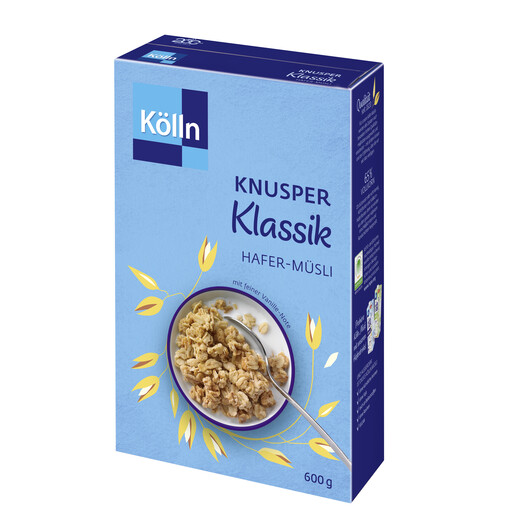
Kölln Crunchy Classic Oat crunchy muesli, 600 g

Kölln Crunchy Classic Oat crunchy muesli, 600 g

A single 600 g pack for anyone looking for a crunchy oat variety without having to store a multi-pack. To compare it with other varieties, check the ingredients and nutritional values per 100 g.

View at Joybuy
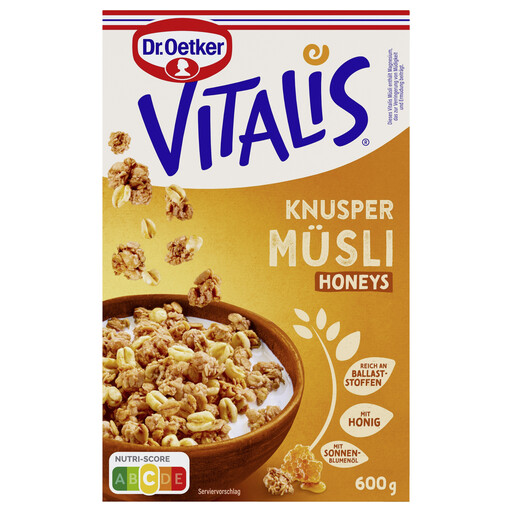
Dr. Oetker Vitalis Honey Crunchy crunchy muesli, 600 g

Dr. Oetker Vitalis Honey Crunchy crunchy muesli, 600 g

A single 600 g pack if you’re considering a honey-crunchy variety for weekday breakfasts. Before choosing, compare the sugar per 100 g and ingredients with other crunchy mueslis.

View at Joybuy
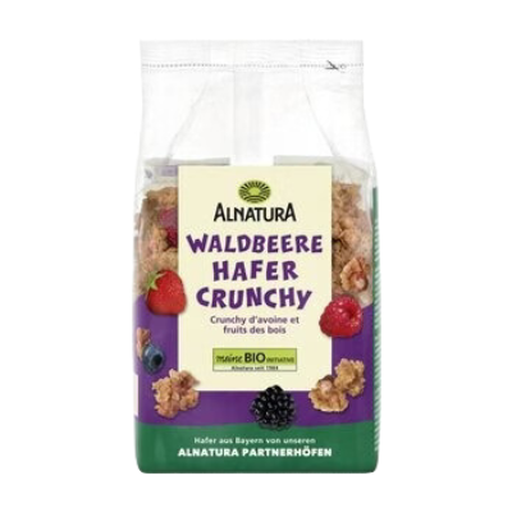
Alnatura Organic Wild Berry Crunchy Oat crunchy muesli, 375 g

Alnatura Organic Wild Berry Crunchy Oat crunchy muesli, 375 g

A single 375 g pack for anyone who’d like to start with a smaller amount of crunchy berry muesli. The ingredients list and nutritional information per 100 g are key to assessing the recipe.

View at Joybuy

Frequently asked questions

When does a multi-pack make sense for weekday breakfasts?

A multi-pack is a good choice if you’ll get through the amount it contains regularly and can store the unopened packs properly. Check the total pack weight and best-before date before choosing several packs of the same variety.

Does ‘no added sugar’ mean a muesli is low in sugar?

No, the claim doesn’t describe the total sugar content. Kölln says its fruit muesli with no added sugar contains 22 g of sugar per 100 g, so compare the nutrition table and ingredients list on the specific products.

How should you interpret the Nutri-Score on granola?

The Nutri-Score can help you compare foods in the same product category. The Verbraucherzentrale recommends comparing it only within the same category or between products with the same intended use; it doesn’t replace the ingredients list or nutritional information.

Which information matters if you have an allergy?

Check the ingredients, highlighted allergens and any ‘may contain’ warnings on the current pack. If you need to avoid an ingredient, don’t rely on the general description ‘muesli’ or an online product page alone, as its information may differ from the packaging.

How should you store opened crunchy muesli?

Follow the storage instructions on the pack; Kölln recommends storing its crunchy muesli somewhere dry and away from heat. If you buy a larger amount, open one pack at a time and keep the others sealed.