If you need to calculate the carbohydrates in your meals because you use insulin, what matters is the amount you actually eat. A single-serve pack gives you a set dry weight, while a larger pack lets you weigh out the amount you want. In either case, check the carbohydrate information and the other ingredients in your meal. Neither individual packaging nor a ‘no added sugar’ claim means a product is suitable for everyone with diabetes.
Who needs to think about portion size?
People who calculate carbohydrates for each meal
If you need to adjust your insulin dose to the carbohydrates in your meal, you need to know how much you have eaten. diabetesDE – Deutsche Diabetes-Hilfe explains how to calculate this for people with diabetes who use insulin. A single-serve pack gives you a set dry weight; with a larger pack, you can weigh out your portion.
Shoppers who check sugar information carefully
If you want to avoid added sugar, you should also read the nutritional information. Verbraucherzentrale points out that dried fruit and sweetening ingredients, among other things, can contribute to a product’s sugar content. So ‘no added sugar’ doesn’t tell you how much sugar is in the portion you eat.
People having breakfast on their own who want a set portion
For breakfast for one, a sachet can save you having to measure out the dry ingredients. Seitenbacher offers a 50 g single-serve pack of protein muesli. The products from Kölln, Alnatura and Brüggen considered here come in larger packs, so you portion them yourself.
What should you look for when choosing?
Single-serve pack
A good choice if: You want a set dry weight for breakfast for one and will include its carbohydrates in your individual calculation.
Bear in mind: The set amount isn’t a portion tailored to your individual meal. Seitenbacher lists 20.5 g of carbohydrates for its 50 g protein muesli pack.
Larger pack you portion yourself
A good choice if: You want to choose the amount yourself, for example with fruit muesli or crunchy granola.
Bear in mind: You’ll need to weigh out each portion. Sugar information and sweetening ingredients vary from product to product.
| What to check | What to look for when buying | Who it matters most to |
|---|
| Carbohydrates per portion eaten |
Check the carbohydrates per sachet, or use the nutritional information per 100 g to calculate the amount you’ve weighed out. Include the other ingredients in your meal too. |
If I need to record my meal to calculate my insulin, I need a reliable carbohydrate figure for what I actually eat. This is the main concern for around 36% of consumers. |
| Sugar and sweetening ingredients |
Check ‘of which sugars’ in the nutritional information, as well as dried fruit, syrups and honey in the ingredients list. |
When I choose a fruity muesli, I want to know how much sugar it contains rather than relying on ‘no added sugar’ alone. Around 29% of consumers put this distinction first. |
| Individually wrapped portion |
Check whether the pack contains individual sachets and how many grams each one contains. |
When I’m having breakfast away from home, I don’t want to weigh out a portion from a large pack. A ready-portioned sachet is the main priority for around 21% of consumers. |
| Ingredients and allergens |
Read the ingredients list, any highlighted allergens and, where relevant, precautionary allergen information for the specific variety. |
If I need to avoid certain ingredients, ‘protein muesli’ or ‘vegan granola’ isn’t enough information. Around 14% of consumers prioritise checking the exact ingredients. |
Which common misconceptions make comparing products harder?
-
Assuming ‘no added sugar’ means low in sugar
The claim doesn’t tell you how much sugar is in the finished muesli. GLOBUS lists 22 g of sugar per 100 g for Kölln Früchte Hafer-Müsli ohne Zuckerzusatz.
As well as the ingredients list, check the ‘of which sugars’ and carbohydrate figures, and work them out for the amount you plan to eat.
-
Assuming the pack size is the right portion for your meal
A set sachet size makes it easier to keep track of the dry weight, but it isn’t necessarily the right amount for your individual needs. Seitenbacher lists 20.5 g of carbohydrates for its 50 g protein muesli pack.
Include the sachet or the amount you’ve weighed out, as well as any other carbohydrate-containing ingredients in your meal, in your personal plan.
-
Judging crunchy granola by ‘organic’ or ‘wholegrain’ alone
These claims don’t tell you everything about the recipe. Alnatura lists date syrup in its Knusper-Granola Kerne & Saaten. The ingredients list for Brüggen Knuspermüsli Classic, according to Böttcher AG, includes glucose syrup, sugar and honey.
Compare the sweetening ingredients and nutritional information for each variety before deciding on your portion.
-
Guessing allergens from the product name
Ingredients can vary, even between similar mueslis and granolas. According to the product information, the Seitenbacher protein muesli sachet contains milk and soya ingredients; Alnatura lists spelt in its Knusper-Granola.
Check the full ingredients and allergen information on the specific pack.
Brands and product ranges to help you choose
Seitenbacher
The protein muesli is available in a 50 g single-serve pack, giving you a set dry weight.
- Seitenbacher lists 20.5 g of carbohydrates, 8.5 g of sugar and 15 g of protein per pack.
- The pack contains milk chocolate, cane sugar and fructose, among other ingredients. The set amount doesn’t mean it’s suitable for everyone with diabetes.
Kölln
Früchte Hafer-Müsli ohne Zuckerzusatz is aimed at shoppers who want to portion a larger pack themselves.
- Kölln describes this variety as a wholegrain oat muesli with 40% fruit and no added sugar.
- The recipe contains dried fruit. GLOBUS lists 64 g of carbohydrates and 22 g of sugar per 100 g for this variety.
Alnatura
Knusper-Granola Kerne & Saaten is a granola option in a 350 g pack, with portions weighed out as needed.
- Alnatura lists 76% wholegrain oat flakes, as well as kernels and linseeds. The variety is described as vegan.
- According to Alnatura, the recipe contains 14% date syrup and spelt. ‘Vegan’ doesn’t tell you the portion size or carbohydrate content.
Brüggen
The Knuspermüsli Classic considered here comes in a 1.5 kg multipack rather than individual portions.
- The pack lets you weigh out the dry amount you want.
- The ingredients list provided by Böttcher AG includes glucose syrup, sugar and honey.
REWE und EDEKA-Eigenmarken
With supermarket ranges and own-label products, check the information for the individual muesli or granola, not just the retailer’s name.
- REWE has a cereals and muesli category; EDEKA24 lists products from brands including Kölln and Alnatura.
- Gut & Günstig Früchte Müsli, listed on EDEKA24, is shown as containing 24.3 g of sugar per 100 g. This figure doesn’t apply to other products in the supermarket ranges.
Joybuy products you can portion yourself
These crunchy cereal products come in larger packs and may suit shoppers who want to weigh out their own portions. A product name or pack size doesn’t replace checking the nutritional information for the amount you actually eat.
 No image available
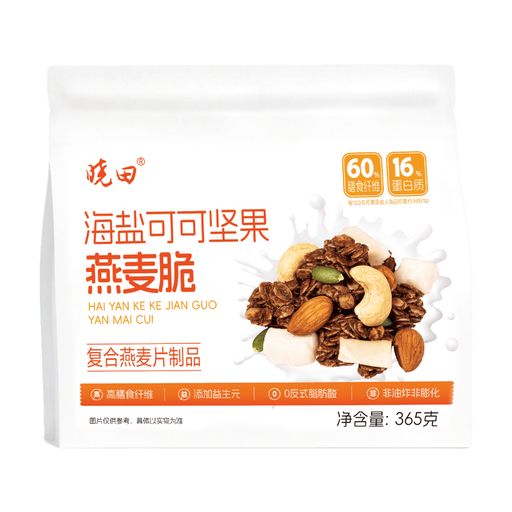
Xiao Tian Sea Salt Cocoa Nut Oat Crunch, 365 g
If you’re having breakfast on your own from a larger pack, you’ll need to weigh out the amount you want. The pack contains 365 g. Check the product label for the carbohydrate information for the portion you eat.
View at Joybuy
 No image available
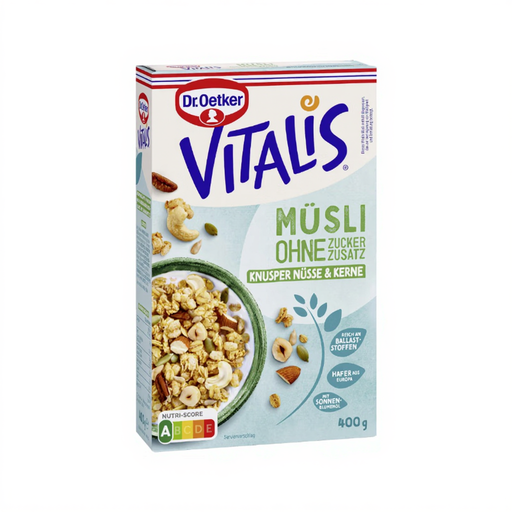
Dr. Oetker Vitalis No Added Sugar Crunchy Nut Muesli, 400 g
If you want to portion your own crunchy nut muesli with no added sugar, check the label for this variety. The pack contains 400 g. ‘No added sugar’ doesn’t mean you can skip weighing your portion or checking the carbohydrate and ‘of which sugars’ figures.
View at Joybuy
Frequently asked questions
Is muesli with no added sugar automatically suitable for people with diabetes?
No, that claim alone doesn’t answer the question. Dried fruit and other sweetening ingredients can contribute to the sugar content. Also check the carbohydrates and ‘of which sugars’ figures for the amount you actually eat.
Why isn’t the carbohydrate figure per 100 g enough?
When calculating a meal, what matters is how much you actually eat. diabetesDE – Deutsche Diabetes-Hilfe explains how to calculate carbohydrates when you have diabetes and use insulin. As well as the muesli you’ve weighed out, remember to include milk, yoghurt or a plant-based drink if you have one.
Is a single-serve pack better than weighing out your own portion?
Not necessarily. A sachet gives you a set dry weight, while a larger pack lets you choose the amount yourself. Compare the carbohydrates in the portion you’ll eat with your personal meal plan, rather than treating the pack size as a recommended portion.


