A fibre-focused breakfast
You want to compare the fibre content of different mixes using their nutrition information and choose a suitable base for a leisurely weekend breakfast.


For a fibre-focused weekend breakfast, start by checking the nutrition information for the specific mix. Under EU rules, a product can be described as “high in fibre” if it contains at least 6 g of fibre per 100 g or 3 g per 100 kcal. Whether a wholegrain base, fruit muesli or crunchy mix is right for your breakfast also depends on its sugar content, ingredients and allergens – not just its name.
You want to compare the fibre content of different mixes using their nutrition information and choose a suitable base for a leisurely weekend breakfast.
You want to combine fruit and wholegrains, while distinguishing between added sugar and sugar from ingredients such as dried fruit.
You’re looking for a crunchy mix for breakfast bowls or as a topping. Along with texture, sugar content and ingredients matter when you’re sharing breakfast with others.
Start by comparing fibre and sugar per 100 g for granola and muesli. Then use the ingredients and allergen information to decide which texture and combination is right for your breakfast.
| What to check | What to look for | Who it matters to |
|---|---|---|
| Fibre | Fibre per 100 g. Under EU rules, a product described as “high in fibre” must contain at least 6 g per 100 g or 3 g per 100 kcal. | If fibre content is particularly important to me at breakfast, I want to be able to compare mixes on the same basis. For around 50% of consumers, this clear figure is the main priority. |
| Sugar and fruit | “Of which sugars” per 100 g and the ingredients list; “no added sugar” does not mean sugar-free. | I want fruit flavour, but I also want to know how much sugar the mix contains overall – including sugar from dried fruit. This is a key priority for around 30% of consumers. |
| Texture and ingredients | Crunchy pieces, as well as cereals, nuts, milk ingredients and the allergen information on the current pack. | For a shared breakfast, I want a crunchy mix that suits everyone’s ingredient requirements. This combination comes first for around 20% of consumers. |
These terms describe different nutritional values. Seitenbacher lists 11 g of fibre and 20 g of sugar per 100 g for “Die geröstete Ballaststoffquelle”; Brüggen Fruit Muesli, listed by REWE, contains 9.5 g of fibre and 20.3 g of sugar per 100 g.
Compare both figures on the same 100 g basis before choosing a mix.
Dried fruit contains sugar. Kölln explicitly points out that its Fruit Oat Muesli with no added sugar is not “sugar-free”.
As well as checking the ingredients list, look at “of which sugars” in the nutrition table.
Depending on the mix, gluten-containing cereals, nuts, milk ingredients or related “may contain” warnings may be relevant. You can’t assume that the allergen information for another variety from the same brand applies.
If you need to avoid certain ingredients, check the allergen information on the pack you’re actually buying.
EDEKA notes that some products may not be available in every store, and that the information on packaging may differ from online details.
Check availability at your local store before shopping, then check the information on the pack.
These examples show how much the ingredients can vary between muesli varieties. The nutrition values quoted apply only to the specific product named.
The muesli range includes a toasted variety called “Die geröstete Ballaststoffquelle”.
The organic muesli range includes a variety of options. Basis Muesli is one example for comparing nutrition values.
The range includes oat mueslis and crunchy varieties. For a fruity option, there’s Fruit Oat Muesli with no added sugar.
Brüggen makes traditional and crunchy mueslis, among other products. One specific example is the Fruit Muesli listed by REWE.
The range includes Mühlenklassiker Vollkorn Basis-Müsli, an example of a wholegrain mix.
Here you’ll find crunchy and fruity breakfast mixes, as well as oats to use as a base for your own creation. Oats aren’t a ready-made granola, so compare the nutrition information and ingredients on each pack before choosing.
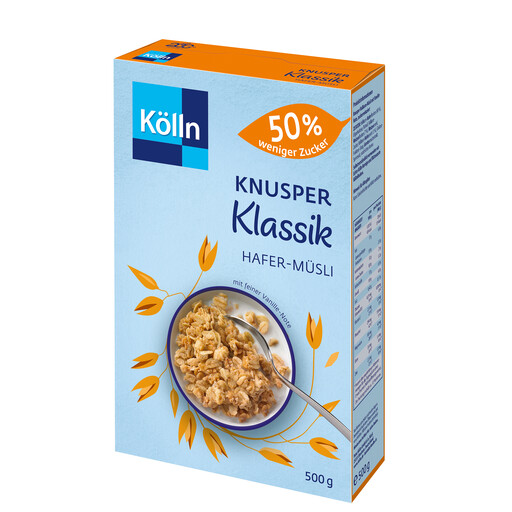 No image available
A crunchy oat muesli for anyone who likes a bit of crunch at the weekend. Check the fibre and sugar per 100 g, along with the allergen information on the pack. The “50% Less Sugar” in the product name is no substitute for comparing the figures.
 No image available
This crunchy muesli is worth considering if texture matters to you. You can compare its sweetness with another mix and check its fibre content using the nutrition information per 100 g. Remember to check the allergen information, too.
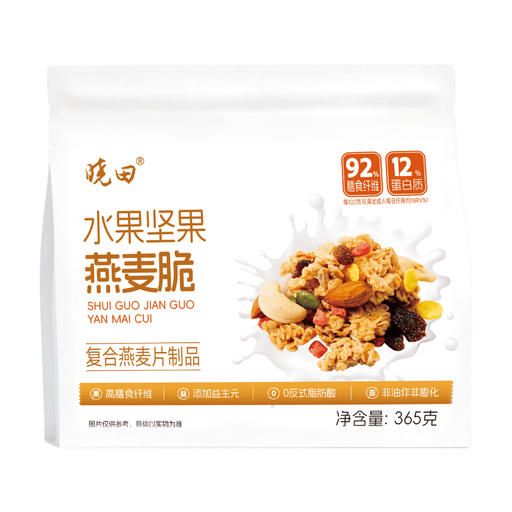 No image available
This fruit and nut oat mix is a good option for a breakfast with fruity and crunchy elements. If you’re choosing it for its fibre content, check the sugar per 100 g on the pack as well. If you need to avoid certain ingredients, the allergen information is essential.
 No image available
A fruit muesli option if you’re looking for a mix with no added sugar. However, the fruit content and “no added sugar” claim don’t tell you how much sugar it contains overall. Check “of which sugars” and fibre per 100 g to compare.
 No image available
Oats are a good base if you want to put together your own weekend breakfast rather than buy a ready-made granola mix. You’ll need to add other ingredients for fruit or crunch; check the fibre content and information on the pack.
Under EU rules, this claim is permitted if the product contains at least 6 g of fibre per 100 g or at least 3 g per 100 kcal. Even without the claim, you can compare products by their fibre content per 100 g.
No. Kölln explains that dried fruit still contributes sugar to its Fruit Oat Muesli with no added sugar. You’ll find the sugar content of the specific mix under “of which sugars” in the nutrition information.
You can’t tell from the muesli’s description alone: what matters is its fibre content and how much you eat. The German Nutrition Society recommends that adults get at least 30 g of fibre a day from their overall diet.
Check the ingredients and allergen information on the current pack, including any “may contain” warnings. Depending on the mix, gluten-containing cereals, nuts or milk ingredients may be relevant. The brand name alone isn’t enough to make this decision.
Not necessarily. EDEKA notes that some products may not be available in every store. Check availability at your local store, and refer to the pack you buy for ingredients and nutrition information.