Families with changing tastes
If you serve several varieties at the weekend, each pack doesn’t have to last for every breakfast. A smaller pack limits how much you have of one variety that no one may want to eat again.


For the occasional weekend breakfast together, a single pack of around 500 to 750 g is often more flexible than a multipack. Work out the amount you plan to serve per bowl × number of people × number of breakfasts, then compare the result with the pack size. A multipack is more likely to suit you if you regularly eat the same variety and can store the packs appropriately. Make sure the ingredients and allergen information are suitable for everyone eating.
If you serve several varieties at the weekend, each pack doesn’t have to last for every breakfast. A smaller pack limits how much you have of one variety that no one may want to eat again.
The specific recipe matters as much as the quantity. Check the ingredients, declared allergens and possible traces for each variety against the needs of everyone eating.
If you regularly have the same mix for breakfast and have suitable storage space for several unopened packs, you can include a multipack in your quantity calculations.
First, work out how much of one variety you’re likely to eat. Then you can decide whether a single pack will be enough or whether it makes sense to stock up for longer.
A good choice if: You’re planning just one breakfast together or want to offer a choice of varieties.
Consider: You’ll have less of one variety in stock, but a single pack may not be enough for several breakfasts.
A good choice if: Several people want to eat the same mix regularly.
Consider: You may have more of one variety left over if tastes change.
A good choice if: You’ll continue to eat the same variety regularly after the weekend.
Consider: Several packs need storage space, and the quantity should match how much you actually eat.
| Criterion | What to check when buying | Who it matters to |
|---|---|---|
| Suitable quantity | Calculate the planned grams per bowl × number of people × number of breakfasts, then compare the result with the pack size. Any serving suggestion on the pack is a guide for that specific product. | If we’re planning just one or two breakfasts together, I don’t want to store a large amount of the same variety once it’s opened. Around 40% of consumers would consider the right pack size their most important criterion. |
| A recipe that suits everyone | Compare the ingredients list, allergen information and, for similar products, the sugar content per 100 g. | Before everyone eats from the same pack, I need to know whether its ingredients are suitable for those sharing it. For around 30% of consumers, checking the recipe would be their main concern. |
| Stock and storage | Compare the total quantity and number of individual packs with your regular consumption, and follow the storage instructions for your chosen variety. | If we eat the same mix during the week too, I want to be able to store several packs and keep opened ones properly. Around 30% of consumers would consider stock their most important concern. |
For example, Kölln lists four-packs containing 1,150 g per pack. For a single breakfast, the total quantity may be far more than the family wants to eat of one variety.
Work out how much you need for the weekend first. Choose a larger quantity only if you expect to keep eating the same variety afterwards.
According to the German consumer advice centre, wording such as ‘naturally sweet’ or ‘sweetened only with fruit’ does not reliably tell you how much sugar a food contains.
For similar mueslis, compare the nutrition information per 100 g and read the ingredients list.
Ingredients and possible traces of allergens can vary between recipes. Pack size won’t help if the variety you choose isn’t suitable for someone eating with you.
Check the information on the specific variety against the needs of everyone at the table.
A larger pack may stay open across several breakfasts. Alnatura advises keeping its chocolate and oat crunchy muesli in a dry place and away from heat. For the Seitenbacher muesli considered here, the advice is to store it in a cool place in a well-sealed pack.
Choose a quantity that suits your breakfast plans and follow the storage instructions on the specific pack.
Kölln offers oat mueslis and crunchy mueslis, as well as multipacks.
The range includes muesli and crunchy varieties, including products in 750 g packs.
The muesli range includes a mix in a 750 g pack.
The REWE range includes 500 g packs of crunchy muesli and a 750 g five-grain muesli.
EDEKA lists a basic muesli in a 500 g pack.
H. & J. Brüggen describes itself as a producer of traditional and crunchy mueslis, including fruit and chocolate recipes.
These 450 g, 600 g and 750 g packs are worth considering when planning a breakfast together. The selection includes muesli and crunchy muesli, so compare the specific recipe as well as the quantity.
 Image unavailable
The 600 g pack could suit you if you’re planning a medium quantity of crunchy muesli for breakfast together. Compare the pack size with the number of bowls you’ll be serving, and check the information for this specific variety to make sure it suits everyone eating.
 Image unavailable
The 750 g pack could suit your plans if you want to serve the same oat crunchy muesli at several breakfasts. Before buying, check the ingredients and allergen information on the specific pack.
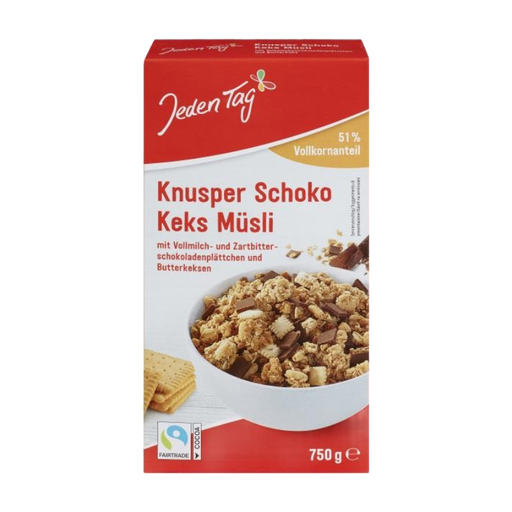 Image unavailable
This 750 g pack is an option if several people want to share a chocolate crunchy muesli. Match the quantity to the breakfasts you have planned, and check the ingredients and allergen information for this variety.
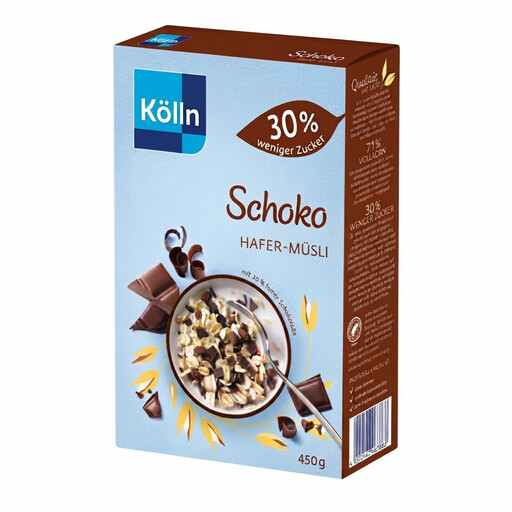 Image unavailable
The 450 g pack keeps the amount of this chocolate oat muesli to a minimum if you only need a little of the same mix. To compare sugar content, check the nutrition information per 100 g on the specific pack—not just the variety name.
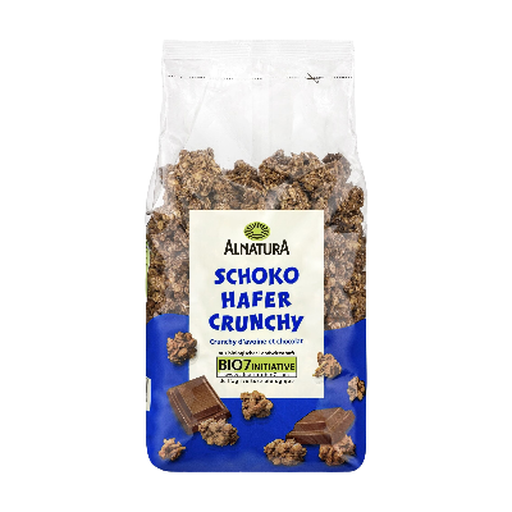 Image unavailable
You could plan to serve the 750 g pack of chocolate and oat crunchy muesli across several breakfasts. Check the ingredients and allergen information for this variety, and follow the storage instructions on the pack.
Multiply the amount you plan to serve per bowl by the number of people eating and the number of breakfasts when you’ll serve that variety. Compare the result with the pack size. Any serving size shown on the pack is just a guide for that particular product.
Read the ingredients list and the allergen and traces information for the specific variety. If recipes vary, don’t rely on the labelling of another product from the same brand.
No, you can’t tell the sugar content from this wording. The German consumer advice centre recommends checking the nutrition information. For similar products, compare the sugar content per 100 g and the ingredients list.
The Nutri-Score alone won’t tell you whether the pack size is right or whether the product contains specific ingredients or allergens. If a product displays it, also check the ingredients list and nutrition information for that particular variety.
Follow the storage instructions for the product and reseal the pack as directed after opening. Alnatura advises keeping its chocolate and oat crunchy muesli in a dry place and away from heat. For the Seitenbacher muesli considered here, the advice is to store it in a cool place in a well-sealed pack.