For a fibre-conscious weekly shop, the nutrition information tells you more than whether a product is called granola or muesli. Compare the fibre per 100 g and take your usual portion into account. Unroasted wholegrain muesli and crunchy granola differ in ingredients and texture, so check the sugar, allergens and pack size for both, too, and make sure they suit your household’s needs.
Who should consider their options?
Breakfast shoppers keeping an eye on fibre
You want to know how much fibre a muesli or granola actually contains when doing your weekly shop. Compare the figure per 100 g with your usual portion, rather than relying on terms such as ‘wholegrain’ alone.
Households that eat breakfast regularly
If you’re shopping for several breakfasts or people, consider the pack size, how quickly you’ll use it and how to store it. For example, Alnatura offers a 1 kg Maxi Muesli pack, with instructions to store it in a dry place away from heat.
Shoppers who prefer fruity or crunchy varieties
You want to choose the texture you like while also considering the sugar content and ingredients. Kölln points out that its fruit and oat muesli with no added sugar still contains sugar from the fruit.
What matters when doing your weekly shop?
Start by comparing the nutrition information and ingredients for the specific variety. Then decide which pack size suits your regular consumption and how much storage space you have at home.
| Factor |
What to check |
Who it matters most to |
| Fibre content |
Compare the fibre per 100 g and relate it to your usual portion. A wholegrain claim alone doesn’t tell you the fibre content. |
If you’re looking for a clear picture of the fibre in your regular breakfast, you’ll want to know what’s going into your bowl. Around 36% of consumers prioritise this. |
| Pack size and storage |
Check the pack contents against how much you actually use each week, and follow the storage instructions. |
If you want one pack to last for several breakfasts, the key question is whether you can use it up in time and store it properly. Around 22% of consumers prioritise this kind of stock planning. |
| Sweetness and texture |
Check the sugar per 100 g and read the ingredients list. Don’t assume ‘no added sugar’ and ‘less sugar’ mean the same thing. |
If you’re after a fruity or crunchy variety, you’ll also want to know how sweet it is. Around 21% of consumers prioritise balancing flavour with the sugar content. |
| Ingredients and allergens |
Check the ingredients, highlighted allergens and ‘may contain’ information on the pack you’re buying. |
If anyone in your household needs to avoid certain ingredients, it’s the specific recipe that matters. Labels such as ‘vegan’ or ‘wholegrain’ don’t automatically rule out other allergens. Around 21% of consumers put this ingredients check first. |
Common buying mistakes
-
Assuming ‘no added sugar’ means ‘sugar-free’
Kölln explains that its fruit and oat muesli with no added sugar contains natural sugars from dried fruit. So the ‘no added sugar’ claim doesn’t tell you the total sugar content.
Also check the sugar per 100 g in the nutrition information.
-
Choosing granola based on a comparative claim alone
A claim that a product contains less sugar is relative. It doesn’t replace checking the actual sugar content or the ingredients list for the specific crunchy muesli variety.
Compare the sugar per 100 g, ingredients and portion you plan to eat with the information for a muesli alternative.
-
Buying a large pack without considering how much you’ll use
A larger pack is handy for your weekly shop if your household uses it regularly and you can store it as instructed on the pack.
Choose a size that suits your usual consumption and check the storage instructions before buying.
-
Assuming wholegrain or vegan means allergen-free
According to Seitenbacher, its Müsli Ballaststoff & Frucht contains several grains, soya and almonds, among other ingredients. A wholegrain claim or vegan recipe doesn’t replace checking the specific ingredients.
If you have allergies or coeliac disease, check the allergen information and ‘may contain’ advice on the pack you buy.
Brands and retailer ranges to consider
Seitenbacher
Müsli Ballaststoff & Frucht is a specific example you can use to compare declared fibre content.
- Seitenbacher states that this variety contains 12 g of fibre per 100 g and 5 g per stated 40 g portion.
- Ingredients include wheat, oats, spelt, barley, soya and almonds, among others; check the pack if you have allergies.
Alnatura
The 1 kg Maxi Muesli pack may suit households looking to match their regular consumption to a larger pack.
- Alnatura advises storing Maxi Muesli in a dry place away from heat.
- A larger pack is only suitable for your store cupboard if it matches how much you use and how you can store it.
Kölln
Its fruit and oat muesli with no added sugar shows why you should consider fruit content and sugar content separately.
- Kölln describes this variety as containing 54% wholegrain and 40% dried fruit.
- Kölln points out that dried fruit contains sugar, so ‘no added sugar’ doesn’t mean sugar-free.
Brüggen
The manufacturer describes both traditional mueslis and baked crunchy varieties, and also produces products for retailer own-label ranges.
- Brüggen says its crunchy varieties are made by mixing cereal ingredients with syrup before baking.
- Check the ingredients on the pack of the specific own-label product you’re buying.
REWE
REWE stocks muesli and granola in a range of pack sizes, which you can plan into the rest of your weekly shop.
- The range includes both own-label and other brands, so you can compare specific pack sizes.
- Product availability depends on the store you select.
EDEKA
Bio Basis Müsli Cerealien-Mix is an example of a variety where you can check the wholegrain content and specific ingredients together.
- EDEKA states that this product contains 75% wholegrain flakes made from oats, wheat and barley.
- EDEKA recommends checking the product packaging, as its information may differ from the product page.
Muesli and crunchy muesli at Joybuy
This selection includes fruity mueslis and crunchy varieties for your regular breakfast supplies. To help you choose, compare the information on each pack about fibre, sugar, ingredients and pack contents.
 No image available
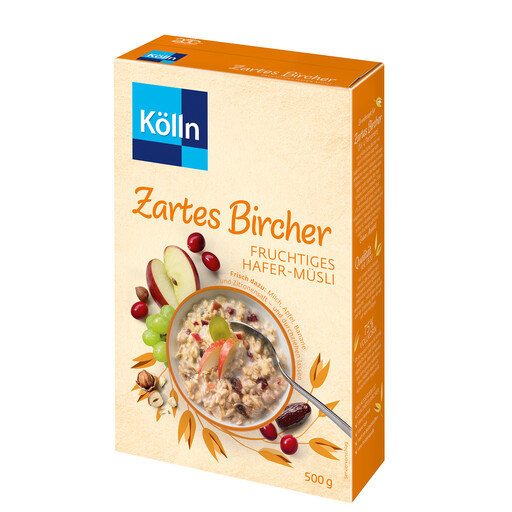
Kölln Bircher Fruit Muesli, 500 g
A fruity muesli for regular breakfasts. Before buying, compare the fibre and sugar content, and check the allergen information on the pack.
View at Joybuy
 No image available
Dr. Oetker Vitalis Less Sweet Pure Crunchy Muesli, 600 g
For anyone looking for a crunchy breakfast option. Alongside the Less Sweet wording, check the actual sugar content and ingredients on the pack.
View at Joybuy
 No image available
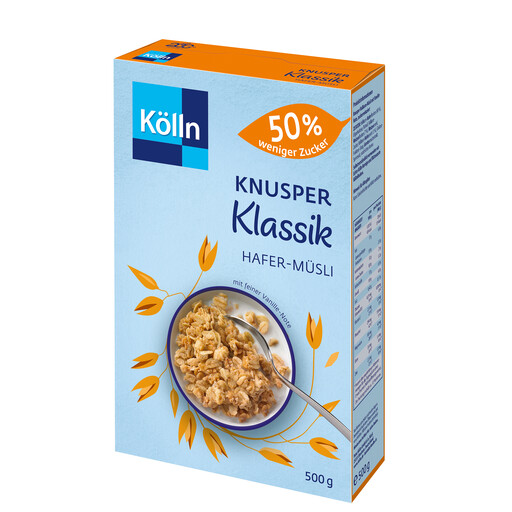
Kölln Crunchy Oat Muesli 50% Less Sugar
If you’re choosing a crunchy oat variety, check the sugar content and actual pack size on the product itself before planning how much to stock up on.
View at Joybuy
 No image available
Kölln 50% Fruit Muesli No Added Sugar, 500 g
For a fruity muesli with no added sugar. This doesn’t mean it’s sugar-free, so the sugar per 100 g on the pack is still important.
View at Joybuy
 No image available
Jeden Tag Less Sweet Crunchy Oat Muesli, 750 g
For households that regularly get through a larger pack of crunchy muesli. Match the pack contents to your weekly consumption, and check the nutrition information and ingredients.
View at Joybuy
Frequently asked questions
How can I check the fibre content of granola or muesli?
Check the fibre per 100 g in the nutrition information and relate it to your usual portion. For example, Seitenbacher states that its Müsli Ballaststoff & Frucht contains 12 g per 100 g and 5 g per stated 40 g portion. These figures apply to this specific variety.
Is muesli with no added sugar also sugar-free?
No. Fruit can contribute to the total sugar content even when no sugar has been added. Kölln explicitly points this out for its fruit and oat muesli with no added sugar, so check the sugar per 100 g.
How should I store a larger pack of muesli?
Follow the instructions on the specific pack. For its Maxi Muesli, Alnatura advises storing it in a dry place away from heat. Also consider how quickly your household will use the pack.
Is the allergen information on an online product page enough?
If you have allergies, the information on the pack you’re buying is what matters. EDEKA notes that details on its product page may differ from those on the packaging, so check the ‘may contain’ information before eating the product, too.


