
Lieferung heute & morgen

Qualitätsgarantie

Willkommens-Angebote freischalten: KOSTENLOSE Lieferung | Bis zu 80 % RABATT | Kostenlose 30-Tage-JoyPlus-Testphase
App herunterladen
Grape gummy bears are available in many varieties: classic fruit gums, soft chewy sweets, peelable gummy candies or Japanese konjac jelly. However, the eye-catching packaging of Asian sweets can often hide important differences in ingredients, pack size and consistency.
Three typical buying mistakes occur particularly often:
If you're looking for vegan gummy sweets, you should specifically check the ingredients list for gelatine, beeswax or other animal-derived components. According to the product information, KASUGAI Frutia Grape Gummy uses pectins as a gelling agent among other ingredients; no animal ingredients are listed. However, an official vegan certification is not evident from the information provided.
Classic fruit gums and peelable products often contain gelatine. This applies, for example, to Amos Peelerz Grape Gummy Candy and ENNJOI Peeling Gummy 2.0 Grape Flavor. According to their ingredient lists, these products are therefore not suitable for a vegan or vegetarian diet.
With sugar-free grape gummies, it's worth checking the sweeteners. According to the product data, ORIHIRO Purun and Plus Grape Mix contains erythritol as well as aspartame and sucralose. Aspartame is labelled with a warning that it is a source of phenylalanine. This is relevant for people with a corresponding intolerance.
Grape gummies can taste of dark grapes, green grapes or a sweet-and-sour fruit blend. What matters are details such as:
The ENNJOI Grape & Pineapple Frozen Gummy Bear combines grape with pineapple. If you prefer a clearer grape character, KASUGAI Frutia Grape Gummy contains concentrated grape juice as an ingredient. YOYO Gummy Jelly Grape Plus is described as containing 12% grape juice and a liquid or juicy filling inside the gummy.
Pack sizes in our selection range from around 60 to 80 g up to 130 g. Small bags are ideal as a single portion or for trying out. Larger packs are more practical for households, parties or regular snacking.
Storage also affects the consistency. Most products should be stored in a cool, dry place away from direct sunlight. After opening, it is advisable to seal the pack tightly so that the gummy sweets do not dry out or absorb moisture.
With konjac jelly, you should also follow the packaging instructions. The elastic consistency is noticeably different from classic gummy sweets. Young children should only be given sweets under supervision and in accordance with the age recommendation.
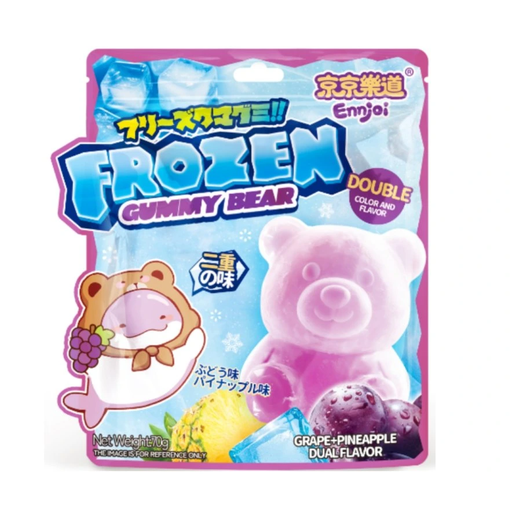
Why this product fits the profile: The 70g pack offers a manageable introduction to Asian sweets with a soft, chewy consistency and a combined grape and pineapple flavour.
The product data lists weight, flavour, ingredients and nutritional values per 100g. This makes it easy to compare this pack with other grape-flavoured gummy sweets before buying.
70g pack content, soft texture, grape and pineapple flavour, and no gelatine listed in the ingredients.
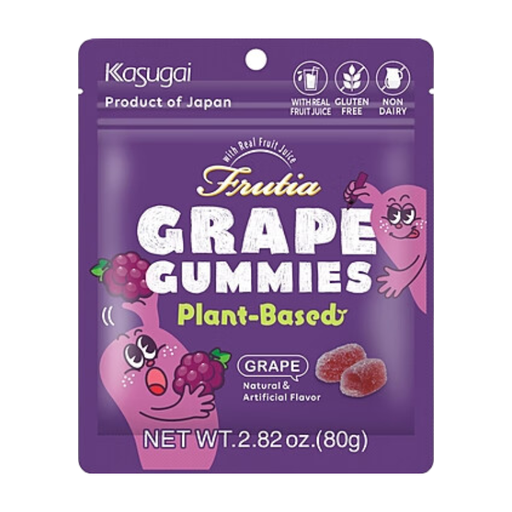
Why this product fits the profile: According to the product information, these Japanese gummy sweets use apple and concentrated grape juice as well as pectin, appealing to buyers who want to avoid animal-based gelling agents.
The term "plant-based" is substantiated by the listed pectins and the absence of gelatine in the product data. If required, certification should be checked on the packaging as well.
80g content, Japanese origin, grape juice concentrate and a plant-based gelling structure with an elastic, chewy consistency.
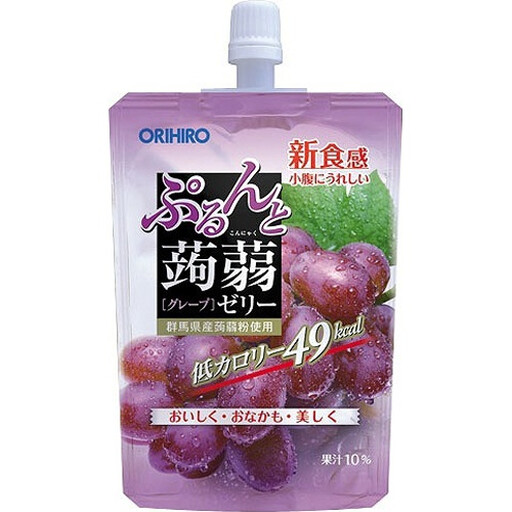
Why this product fits the profile: The 130g pack and the konjac jelly are ideal for buyers looking for a gel-like alternative to traditional grape fruit gums.
The nutritional information shows 36 kcal and 9g of sugar per 100g. In addition, sugar and sweeteners are listed separately in the ingredients list.
130g content, konjac powder, grape and apple juice, and a soft, springy jelly texture.
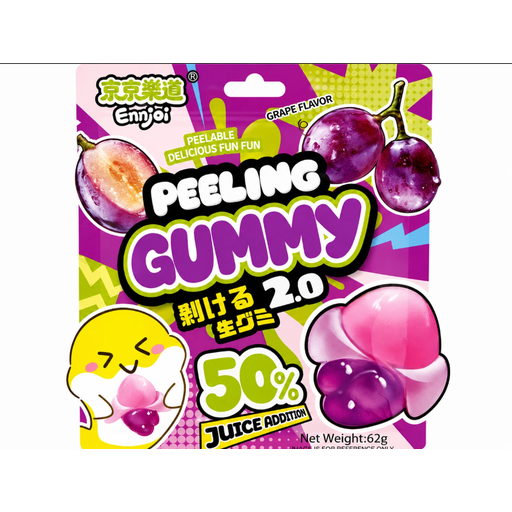
Why this product fits the profile: The two-layer structure is aimed at adults and older children who want to try a peelable outer layer and a softer centre when snacking.
The product description explicitly mentions gelatine. This makes it clear before purchase that the product is not vegan or vegetarian.
62g content, 8.5% concentrated grape juice and a peelable outer layer with a soft chewy centre.
We have compiled a complete, regularly updated list of products that fully meet these strict selection criteria and the safety regulations in force in the EU.
Not automatically. Classic products and many peelable gummy sweets contain gelatine. Plant-based varieties often use pectin or other gelling agents. The ingredients list and any certification on the packaging are what matter.
That depends on the recipe and the portion size. According to the product information, ORIHIRO Purun and Standing Grape has 36 kcal per 100g. ORIHIRO Purun and Plus Grape Mix is listed as a sugar-free variant with 0 kcal and 0g of sugar per 100g, but it contains sweeteners and a source of phenylalanine. Nutritional information should therefore always be read in full.
The specific best-before date is on the packaging. After opening, grape gummy bears should be stored tightly sealed, in a dry place away from heat, and consumed as soon as possible. If the surface changes, there is an unusual smell or the consistency has noticeably dried out, the product should not be eaten.