Photographers who want to capture seed detail
If you want to capture individual grass seeds and fine textures in close-up, look at the magnification ratio, lens compatibility and working distance – not just the megapixel count.


For spontaneous close-ups on walks, a robust compact camera with a close-up mode is a practical option. If you want individual seeds to appear as large as possible in the frame, consider a mirrorless camera with a suitable macro lens. Compare the magnification ratio of the specific lens, and bear in mind that there may be little room for lighting when you’re very close to your subject. Wind, extra luggage and the protection ratings of the model you choose will also affect your decision.
If you want to capture individual grass seeds and fine textures in close-up, look at the magnification ratio, lens compatibility and working distance – not just the megapixel count.
For walks, a camera that lets you capture plants and nearby subjects without changing lenses could be a good fit. Check how close the specific model can focus and what sort of framing it offers.
When grass stems are moving, a fast shutter speed matters; focus bracketing is better suited to still subjects. If you expect damp paths or dust, check the protection ratings for the exact camera model.
The right choice depends on what matters most for your trip: magnifying individual seeds, capturing moving stems, travelling light or protecting your gear from the elements.
A good fit if: You want to photograph reachable seed heads on walks without changing lenses. OM Digital Solutions lists close-ups from 1 cm for the Tough TG-7; Ricoh Imaging Europe lists a digital microscope mode from 1 cm and six macro LEDs for the PENTAX WG-90.
Trade-off: A shooting distance of 1 cm does not, by itself, indicate 1:1 magnification. At close range, you’ll also need to leave room for lighting.
A good fit if: You’re happy to carry and use an extra lens with a stated magnification ratio. Nikon Germany lists 1:1 magnification for the NIKKOR Z MC 50 mm 1:2.8 on compatible Z cameras in DX format; Canon Germany gives a 1:2 ratio for the RF 35mm F1.8 MACRO IS STM, which is compatible with the EOS R50.
Trade-off: You’ll need to pack both the camera body and lens. For focus bracketing, the individual shots need to be taken with a sufficiently still subject.
A good fit if: Landscapes and whole plants matter more to you than highly magnified seed details. According to Canon Germany, the Canon RF-S 18-45mm offers up to 0.25x magnification in manual close-up focus; Sony Germany lists 25x optical zoom for the RX10 IV.
Trade-off: According to Sony Germany, the RX10 IV’s short focusing distance applies at the wide-angle end: around 3 cm, compared with around 72 cm at the telephoto end. With the Canon standard zoom, check the framing at the specific focus setting you plan to use.
| Priority | What to check before buying | Who will find this especially important? |
|---|---|---|
| Size and detail in the frame | The magnification ratio of the specific lens, or the framing available in close-up mode at the intended setting. | If I want to show individual seed details as large as possible, I look at the magnification ratio rather than just the shortest focusing distance. Around 31% of consumers prioritise seed magnification. |
| Moving stems | Adjustable shutter speed and focus; plan to use focus bracketing only with subjects that are still enough. | In windy conditions, I want to minimise motion blur rather than rely on a series of shots. Around 25% of consumers focus above all on moving stems and sharpness. |
| Luggage and changing lenses | The overall size of the kit you’ll actually take with you, and the lens’s close-focusing capability. | If I’m taking my camera on walks regularly, a compact kit matters more to me than the highest possible magnification. Around 25% of consumers put lightweight travel gear first. |
| Protection outdoors | The manufacturer’s information for the exact model; with mirrorless cameras, check the body and attached lens separately. | On damp or dusty paths, I want to know what protection ratings apply to the camera I’m taking with me. Around 19% of consumers give weather protection the greatest weight. |
Shooting distance and magnification ratio describe different things. There may also be little room to position a light directly in front of your subject.
Compare the framing available in a compact camera’s close-up mode with the stated magnification ratio of the specific interchangeable lens.
The Canon EOS R50 kit with the RF-S 18-45mm has different close-up capabilities from the separately sold RF 35mm F1.8 MACRO IS STM.
Check the exact kit name and choose only the components you need that are compatible with your camera. An additional macro lens expands your kit and is another item to carry.
For the Sony RX10 IV, Sony Germany lists around 3 cm at the wide-angle end and around 72 cm at the telephoto end; both distances are measured from the front of the lens.
Check the focus range at the zoom setting you want to use for seed heads.
For a composite focus series, the individual shots need to line up closely enough. This can be difficult if your subject is moving in the wind.
When photographing moving stems, start by choosing a suitable shutter speed. Save focus bracketing for still subjects and check that the specific camera model supports the feature.
A focus series requires a stable set-up and, when conditions are suitable, extra work to combine the images.
The Tough TG-7 is a robust compact camera for capturing nearby subjects while you’re out and about.
The WG-90 is a robust compact camera alternative with a digital microscope mode.
The EOS R50 is a starting point for a mirrorless travel kit; close-up performance depends on the lens attached.
The Z50II is part of the Nikon Z system; a compatible macro lens is an additional item for your kit.
The RX10 IV pairs a fixed zoom lens with a camera for a range of travel subjects, without the need to change lenses.
The following Joybuy offers are compact camera options for travel and vlogging. For grass seeds, you’ll also need to check whether the close-focusing range gives you the framing you want.
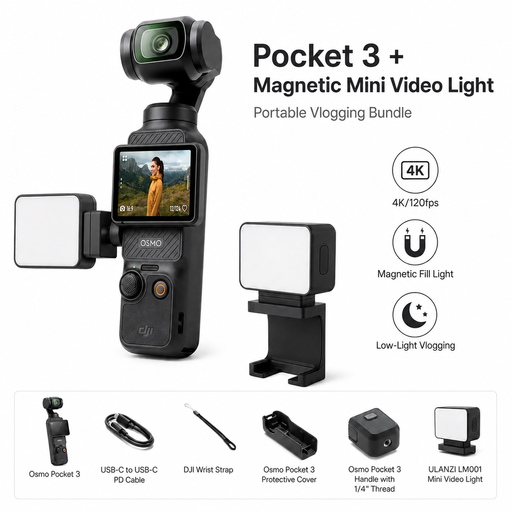 Image unavailable
The product description presents this set as a vlogging camera for travel; for grass seeds, check whether the close-focusing range gives you the framing you want.
The product description lists a 1-inch CMOS sensor, 4K/120fps, a 3-axis gimbal and a ULANZI magnetic mini video light.
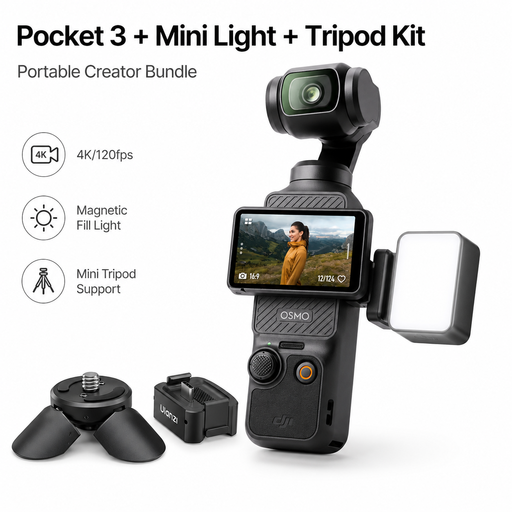 Image unavailable
According to the product description, this set is designed for travel and vlogging; check the close-focusing range for small subjects.
The description lists a 1-inch CMOS sensor, 4K/120fps, a 3-axis gimbal, a magnetic mini video light, a Pocket 3 adapter and a mini tripod base.
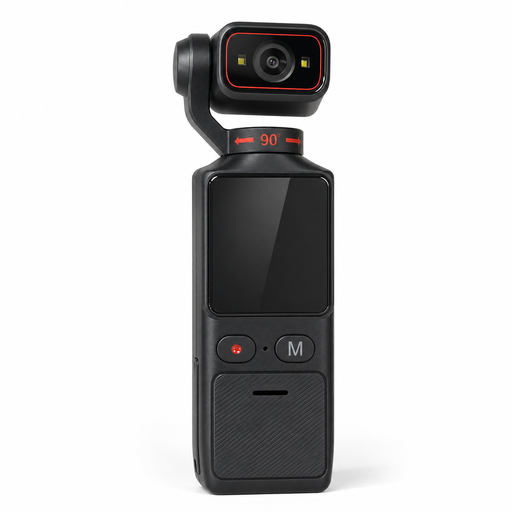 Image unavailable
The product description lists vlogging and outdoor use; for grass seeds, check whether the close-focusing range is suitable for your subject.
The description lists 4K, electronic image stabilisation, a 180° rotating lens, Wi-Fi and a 1.69-inch touchscreen.
Not just because it’s described as having close-up focus: Canon Germany lists up to 0.25x magnification for the RF-S 18-45mm in manual close-up focus. Compare the framing offered by the specific lens with your subject; Nikon Germany specifies a 1:1 magnification ratio for the NIKKOR Z MC 50 mm 1:2.8.
Only if the seed head stays still enough throughout the series for the individual shots to line up. When stems are moving, a suitably fast shutter speed should come first; Canon Academy highlights the risk of motion blur when photographing plants in the wind.
Check the close-focus setting on your complete kit, the framing you can achieve and whether there’s room for light in front of the lens. For a focus series, Canon Academy recommends a stable set-up and subjects that remain still.
No. A short shooting distance does not tell you the magnification ratio. OM Digital Solutions lists close-ups from 1 cm for the Tough TG-7, while Ricoh Imaging Europe lists a digital microscope mode from 1 cm for the PENTAX WG-90. Compare these figures separately with the magnification ratio of a specific lens.